Information Overload vs. Strategic Intensity: Lessons from the Silicon Prairie’s Top Boards
![[HERO] Information Overload vs. Strategic Intensity: Lessons from the Silicon Prairie’s Top Boards](https://cdn.marblism.com/a8wlmi5JvcI.webp)
In the high-velocity tech corridors of North Texas: often called the "Silicon Prairie": the boardroom atmosphere is changing. If you walk into a C-Suite meeting in Richardson’s Telecom Corridor or a strategy session in a shiny new Plano headquarters, you’ll notice a common enemy. It isn't the competition. It isn’t even the economy.
It is the noise.
Leaders today are drowning in a sea of data, yet they are starving for wisdom. We call this the "Information Overload" crisis. For national executives watching the rapid expansion of hubs like the Dallas-Fort Worth metroplex: where giants like AT&T, Goldman Sachs, and Toyota have anchored massive operations: there is a vital lesson to be learned. Technical mastery of data is no longer the differentiator. The real edge lies in what we call Strategic Intensity.
At Becoming More Counseling, Coaching, & Consulting, we believe that "Everyone becomes what they want to, only some people think about becoming more." To become more as a leader, you have to move beyond the data dump and master the internal mechanics of decision-making.
The Information Trap: When More is Actually Less
We live in an era where the "Information" pillar of leadership is overfed while the other pillars atrophied. In the Silicon Prairie, tech boards are bombarded with real-time analytics, KPIs, and market forecasts. But as many directors are discovering, having the most information doesn't lead to having the best strategy.
In fact, research published in Frontiers in Psychology (2024/2026) titled "Emotions and Decision-Making in Boardrooms" suggests that high volumes of information can actually trigger defensive emotional responses. When the brain is overwhelmed by data, it often retreats into "safe" or "status quo" decision-making to reduce cognitive load.
This is the Information Trap. You think you’re being diligent, but you’re actually becoming paralyzed.
 Suggested Image: A sleek, modern boardroom overlooking a high-tech city skyline, symbolizing the intersection of data and high-stakes leadership.
The I³ Framework: Your Blueprint for Clarity
To break through the noise, we utilize the I³ Framework. It consists of three non-negotiable pillars: Information, Interpretation, and Intensity. When these three align, a leader moves from a "machine managing other machines" to a person of true influence.
1. Information (The Facts)
Information is the raw material. It’s the "what." In a boardroom context, this includes your P&L statements, your churn rates, and your market share. However, Information without the other two pillars is just noise. High-performing boards in high-growth environments don't just ask for more reports; they ask for better filters. They understand that proximity is overrated and that the quality of the data matters far more than the quantity.
2. Interpretation (The "So What?")
This is where leadership truly begins. Interpretation is the ability to look at a data set and ask, "What does this actually mean for our mission in 2027?"
Many leaders fail because of the Interpretation Gap. They present the facts but fail to provide the narrative. In the Silicon Prairie, where tech shifts happen overnight, the ability to interpret a market dip as either a "temporary glitch" or a "fundamental shift" is the difference between a billion-dollar pivot and a bankruptcy filing.
3. Intensity (The Conviction and Emotional Regulation)
Intensity is the most misunderstood pillar. It isn't about volume or aggression. In the I³ Framework, Intensity is about the conviction behind the decision and the emotional regulation required to stay the course.
As I wrote in my book, I³ – Unlock the Inner Strength Behind Your Negative Emotions, "Leadership is defined not by the best of times, but the worst of times."
When the "Information" is bad and the "Interpretation" is scary, a leader’s "Intensity" determines whether the team panics or performs. High-end research shows that the most effective board members are those who can regulate their own emotional intensity to foster a "climate of cognitive challenge" without triggering emotional conflict.
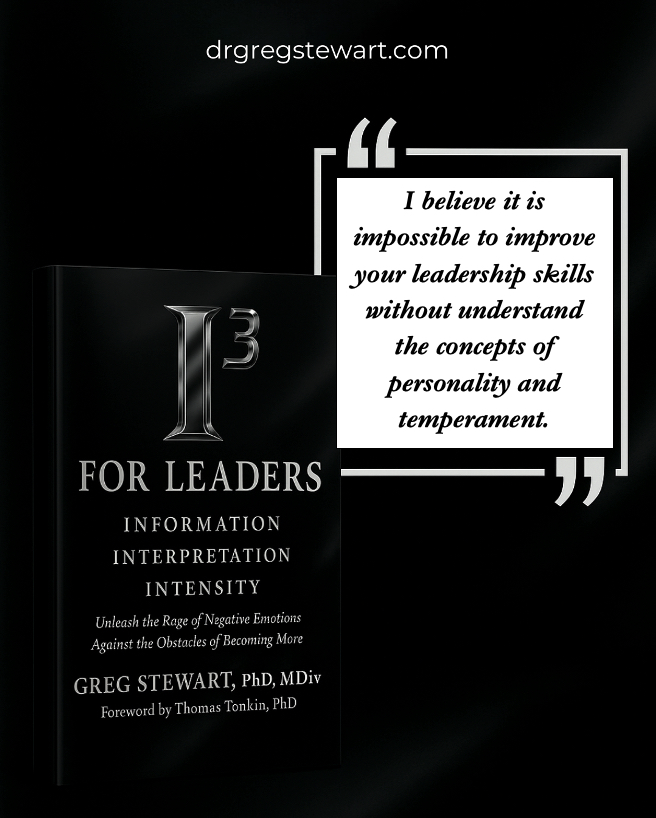
Lessons from the Front Lines: DFW as a National Microcosm
Why look at the Silicon Prairie? Because the expansion in North Texas: like the massive new Goldman Sachs campus in Dallas or the constant tech influx in Frisco: represents the peak of high-velocity leadership.
In these environments, the boards that thrive are those that practice Strategic Intensity. They don't just "manage" the information; they use it as a catalyst for growth. They understand that internal change must precede external change.
When a leader feels the "rage" of a missed quarterly goal or a failed product launch, the average manager tries to suppress that emotion. But a leader using the I³ Framework learns to "unleash the rage of your negative emotions against the obstacle of becoming more." They turn that frustration into the fuel for deeper Interpretation and more focused Intensity.
 Suggested Image: A close-up, professional portrait of a leader showing focused determination and calm authority.
The Science of the Boardroom
The Frontiers in Psychology study mentioned earlier highlights a critical truth: emotional intensity impacts decision quality. If the intensity is too low, the board lacks the drive to take necessary risks. If it’s too high and unregulated, it leads to "groupthink" or erratic pivots.
Strategic Intensity is the "Goldilocks zone" of leadership. It’s the ability to hold a high-stakes vision with a steady hand. This is why executive presence coaching is becoming a "secret weapon" for leaders from New York to California who are looking at the Texas model of growth. They realize that to lead a billion-dollar organization, you first have to lead your own internal state.
Moving Beyond the Breaking Point
We often see leaders reach a "breaking point" where the information overload becomes too much to bear. They start making mistakes. They lose their 10% advantage: that slight edge in influence and gravitas that makes them effective.
If you find yourself in that position, remember: you are not your data. You are the interpreter of that data. Your job is to bring the intensity that transforms information into action.
 Suggested Image: A stylized graphic of the I³ Framework: Information, Interpretation, Intensity: showing them as interconnected gears.
Your Next Step: Join Us Tomorrow
Leading at the highest levels requires a new set of tools. The I³ Framework isn't just a theory; it’s a survival guide for the modern executive. Whether you are navigating the Silicon Prairie or a boardroom in midtown Manhattan, the principles remain the same: Duty and Discipline must come before Dopamine.
We want to help you master these pillars.
Join us TOMORROW for our Free Lunch and Learn Webinar.
- When: Thursday, March 26th, 12:00 PM – 1:00 PM CT
- Topic: Mastering the I³ Framework for Executive Leadership
- The Bonus: We are giving away a $1,000 coaching package to one lucky attendee.
Don’t just manage the noise. Become the leader who cuts through it.

Ready to start your journey of becoming more? Call 469-485-0387 to schedule a consultation or learn more about our executive coaching programs.
Internal change precedes external change. It's time to think about becoming more.
For more insights on leadership and personal growth, visit our Leadership Blog or explore our latest podcasts.