The Great Flattening: Leadership Development Coaching for Managers Who Just Lost Their Teams
![[HERO] The Great Flattening: Leadership Development Coaching for Managers Who Just Lost Their Teams](https://cdn.marblism.com/C-4MowxGbbq.webp)
You walked into the boardroom as a director with twelve direct reports and a budget that moved the needle. You walked out with a title, a desk, and the organizational equivalent of a participation trophy.
Welcome to The Great Flattening.
This isn't a recession. This isn't a "temporary restructure" that'll bounce back once the economy stabilizes. Gartner estimates that 20% of organizations will eliminate over half their middle management positions through 2026, using AI to flatten structures and cut layers that executives now see as redundant (Gartner, 2024). If you're reading this from a cubicle in a DFW corporate tower or a government office in Rockwall, TX, you already know the truth: the org chart just got thinner, and your team disappeared in the white space.
The question isn't whether this is fair. The question is what you do with the leadership muscle you've spent a decade building when nobody reports to you anymore.
The Identity Wound No One Talks About
Losing your team isn't just a job change. It's an identity amputation.
For years, your authority came from your ability to develop people, drive operational results, and translate executive strategy into ground-level execution. You were the connector tissue between the boardroom vision and the boots-on-the-ground reality. You mentored. You problem-solved. You held the institutional knowledge that kept entire departments from walking off cliffs (Korn Ferry Institute, 2025).

And then, in one restructure, the org chart deleted your purpose.
Research confirms what you're feeling in your gut: when organizations eliminate middle management layers, they don't just cut salary lines: they remove "mentorship, development pathways, institutional knowledge, decision-making capacity, and the human relationships that hold organizations together" (Harvard Business Review, 2025). For managers accustomed to being the operational linchpin, this represents a fundamental identity shift that traditional career counseling never addresses.
You weren't just good at managing people. You were the person who managed people. And now you're an individual contributor with a director's résumé and a skill set the company no longer needs.
Why Traditional Leadership Development Coaching Fails Here
Here's the paradox that'll make your head spin: research shows that managers are the "number one influence on whether employees are engaged, healthy, and growing" (Gallup, 2024). Yet organizations are systematically eliminating the roles that do exactly that.
The managers who survived the cut? They're drowning. The average manager today oversees twelve employees compared to five in 2013: triple the load from 2015 (McKinsey & Company, 2025). There's no bandwidth for meaningful mentorship or professional development. There's barely time to approve PTO requests.
Traditional leadership development coaching focuses on scaling your team or strengthening your executive presence or building high-performing cultures. All of which sounds fantastic if you still have a team to scale, presence to project, or a culture to influence.
But when your team evaporates overnight, those frameworks ring hollow. You don't need coaching on leading others. You need coaching on weaponizing everything you know about leadership dynamics, team psychology, and operational execution: and redirecting it toward a completely different value proposition.
You need to learn how to weaponize utility.
The Utility Shift: From Authority to Execution
In a flattened organization, your value is no longer rooted in the number of people who report to you. It's rooted in your ability to execute with consistency and turn knowledge into actionable outcomes (Deloitte Insights, 2026).
This is where most displaced managers get stuck. They keep trying to lead like they still have a team. They offer strategic input in meetings. They mentor colleagues who didn't ask for it. They volunteer to "coordinate cross-functional initiatives" because it feels like the people-manager work they're wired to do.
But in a flat org structure, that behavior reads as overstepping. It looks like someone who can't let go of a role they no longer hold.
The shift you need to make is brutal in its simplicity: stop trying to lead others and start becoming the most operationally lethal individual contributor in the room.
This is where organizational leadership consulting in Texas: particularly for massive (10k+ employee) firms in law, government, and corporate sectors: gets real. The companies that remain competitive post-flattening aren't just cutting managers and calling it a day. They're "investing in management training to strengthen leadership in flatter organizations" and equipping former managers with "AI tools to enhance decision-making and productivity" (Forbes, 2025).
Translation: they're weaponizing the skill sets of displaced managers by redirecting leadership capacity into execution engines.
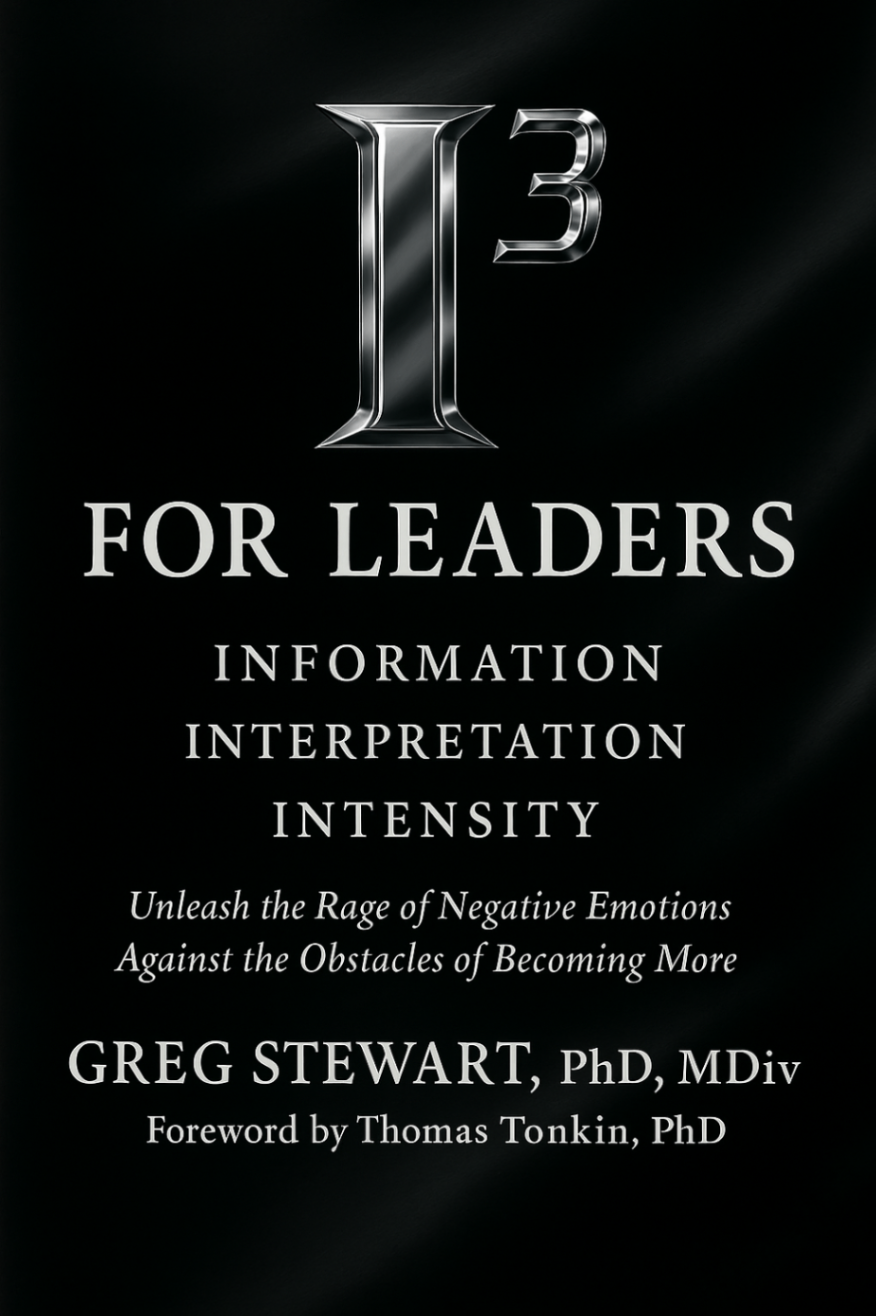
The I³ Framework for Managers Without Teams
Here's where the I³ Framework: Information, Interpretation, Intensity: becomes your operational playbook (learn more about the framework here).
Information: You still have access to institutional knowledge, cross-departmental dynamics, and operational patterns that newer employees don't see. Your value now is pattern recognition and strategic context. What you know about how this organization actually works is gold: if you can translate it into execution velocity.
Interpretation: As a former manager, you're trained to read team dynamics, anticipate friction points, and decode the subtext in executive memos. That interpretive capacity doesn't disappear when your team does. It just shifts to helping leadership navigate complexity at scale without needing thirteen layers of management to filter information.
Intensity: This is the emotional piece most leadership development coaching ignores. You're angry. You're grieving. You're second-guessing every career decision that led you to this cubicle. And traditional coaching tells you to "process the loss" and "find new meaning."
That's not wrong. But it's incomplete.

The I³ Framework says: weaponize that intensity. Rage against the org chart is wasted energy. Rage channeled into becoming the highest-output, most strategically indispensable individual contributor in your division? That's the Iron Man Core that separates displaced managers who rebuild from those who stagnate.
What Leadership Development Coaching Actually Does Here
Executive leadership coaching for managers who've lost their teams isn't about helping you "find your next role" or "pivot to consulting." It's about three specific skill translations:
1. Reframing Authority
Your authority used to come from your position. Now it comes from your utility. Leadership development coaching teaches you how to influence without a org chart, how to drive outcomes without direct reports, and how to become the go-to operator leadership can't afford to lose: even in a flat structure.
2. Redirecting Emotional Capital
You spent years investing in your team's growth. That emotional capacity doesn't vanish: it just needs a new target. Coaching helps you redirect that developmental energy into your own skill acceleration, strategic positioning, and operational impact.
3. Building the Post-Flattening Playbook
Forward-thinking organizational leadership consulting in Texas focuses on helping displaced managers translate leadership competencies into new contexts. That might mean moving into high-stakes project leadership, becoming the strategic operator who executes what C-suite envisions, or leveraging your management experience in external consulting or advisory roles.
The managers who thrive post-flattening aren't the ones clinging to their old identity. They're the ones who take everything they learned about team dynamics, problem-solving, and operational execution: and weaponize it in a structure that no longer rewards people management.
The Bottom Line
The Great Flattening isn't going away. Whether you're in a DFW law firm, a Rockwall-based government agency, or a 10k+ employee corporate giant, the middle management extinction event is real, and it's accelerating.
But here's what the org chart can't delete: the leadership capacity you've built, the institutional knowledge you carry, and the operational muscle memory that made you effective in the first place.
You don't need coaching that treats this like a typical career transition. You need coaching that helps you weaponize everything you know about leadership: and redirect it toward a completely different game.
If you're a senior manager or director who just lost your team and you're trying to figure out what the hell comes next, let's talk. This is exactly the work we do with displaced leaders across the Greater Dallas–Fort Worth area.
Call 469-485-0387 and let's build your post-flattening playbook.
References
Deloitte Insights. (2026). The utility economy: Redefining value in flat organizations. Deloitte University Press.
Forbes. (2025). How AI is reshaping middle management in enterprise organizations. Forbes Leadership Council.
Gallup. (2024). State of the global workplace report. Gallup Press.
Gartner. (2024). The future of organizational design: Flattening hierarchies through 2026. Gartner Research.
Harvard Business Review. (2025). When the middle disappears: The human cost of organizational flattening. Harvard Business Publishing.
Korn Ferry Institute. (2025). The great restructure: What happens to institutional knowledge when middle management vanishes? Korn Ferry.
McKinsey & Company. (2025). The overloaded manager: Why span of control is breaking leadership capacity. McKinsey Quarterly.