7 Mistakes You’re Making with Executive Presence Coaching (And How to Command a Virtual Room)
![[HERO] 7 Mistakes You’re Making with Executive Presence Coaching (And How to Command a Virtual Room)](https://cdn.marblism.com/mnlK3-EmEU0.webp)
Free Webinar! March 26th, 12:00-1:00 CT with a chance to win a $1,000 coaching package!

We are living in an era where leadership is no longer confined to the head of a mahogany table. Today, your "stage" is often a 1080p webcam & a grid of silent faces on a screen. At Becoming More Counseling, Coaching, & Consulting, we are seeing a recurring challenge: brilliant leaders who commanded physical rooms for decades are suddenly feeling invisible in the digital space.
Executive presence isn’t a trait you’re born with: it’s a skill you refine. However, many of the traditional approaches to executive coaching are failing because they ignore the psychological shifts required for 2026 leadership. We are thrilled to help you navigate this transition using Dr. Greg Stewart’s I³ framework: Information, Interpretation, & Intensity.
As Dr. Greg often says, "Leadership is defined not by the best of times, but the worst of times." If you feel your influence waning in virtual environments, it’s time to look at the internal obstacles holding you back.
1. Prioritizing Content Over Connection
We often see leaders spend forty hours perfecting a slide deck & zero minutes thinking about how the audience will feel. This is a failure of Information. According to Harvard Business Review, executive presence is 20% about what you know & 80% about how you communicate it.
When you focus solely on data, you become a machine managing other machines. In the virtual room, Information must be curated for impact. If your input doesn’t move the needle or solve a core problem, it’s just digital noise.
2. Treating Coaching as a "Quick Fix"
Many C-Suite leaders enter coaching expecting a "personality transplant" in three sessions. Real transformation requires Duty & Discipline before Dopamine. Research published in the Journal of Applied Psychology suggests that behavioral changes in leadership take six to twelve months to stick.
We are convinced that internal change must precede external change. You cannot command a room: virtual or otherwise: until you have mastered the internal discipline to stay the course when the initial excitement of coaching fades.

3. Misinterpreting Virtual Silence
This is a classic Interpretation error. In a physical room, you can feel the energy. In a virtual room, silence is often interpreted as boredom or dissent. This leads to "over-talking" to fill the void, which erodes your authority.
Dr. Greg’s book, I³ for Leaders, teaches us that "Everyone becomes what they want to, only some people think about becoming more." A leader with high executive presence interprets silence as a space for reflection. They don’t panic; they use that space to ask high-value questions.
4. Ignoring the "Intensity" of the Screen
Virtual communication flattens your energy. If you bring "average" energy to a Zoom call, you appear lethargic. To command a virtual room, you must dial up your Intensity by about 20%. This isn’t about being loud; it’s about the intentionality of your eye contact (with the lens, not the screen) & the clarity of your voice.
We are seeing leaders in the DFW market: from the Frisco "Silicon Prairie" to the downtown Dallas towers: struggle with this "flatness." By utilizing the I³ framework, you learn to project an "Iron Man Core" of spiritual & emotional strength that penetrates the digital barrier.
5. Allowing Ego to Block Feedback
Even the most accomplished leaders can become defensive. When a coach points out that your virtual presence feels "cold" or "unapproachable," the ego often rationalizes it as "the technology's fault."
True executive presence requires the vulnerability to acknowledge your gaps. As outlined in our post on Mastering Emotional Intelligence, your influence is directly tied to your self-awareness. If you can’t lead yourself through a critique, you can’t lead a team through a crisis.
6. The "Human Skills" Gap
In 2026, AI can handle the data. What AI cannot do is provide the "Human Edge." Many executive coaching programs focus too much on tactical management & not enough on the human element.
Whether you are a manager who just lost a team during The Great Flattening or a CEO steering a global ship, your ability to interpret the underlying emotions of your team is your greatest asset. Dr. Greg’s I³ framework emphasizes perceiving these "hidden" signals to respond with clarity & calm.
7. Fearing Negative Emotions
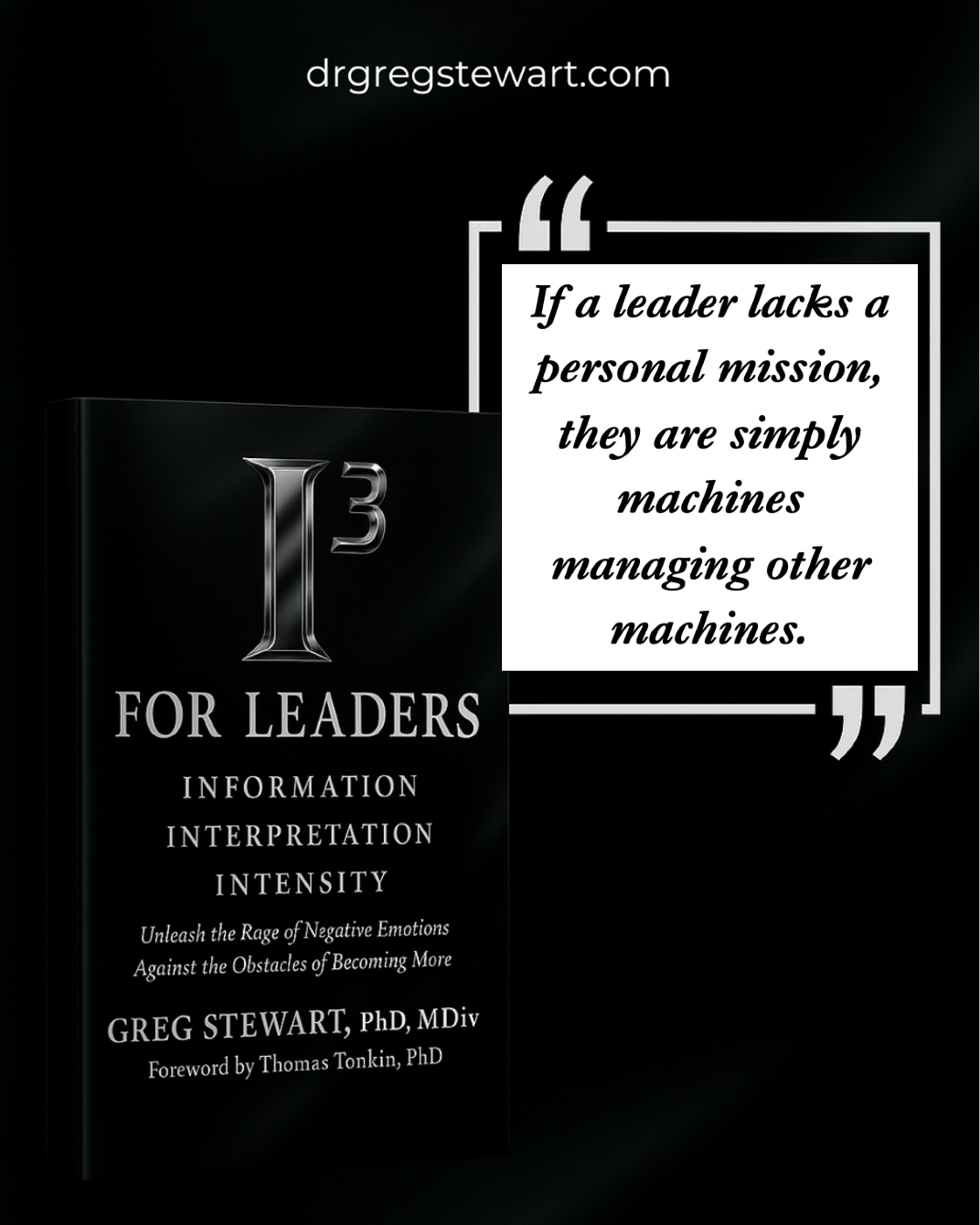
Most leaders try to suppress frustration, fear, or anger, especially in a professional setting. We believe this is a mistake. In I³ – Unlock the Inner Strength Behind Your Negative Emotions, Dr. Greg encourages leaders to "unleash the rage of your negative emotions against the obstacle of becoming more."
In a virtual room, if you are feeling frustrated by a lack of engagement, don’t ignore it. Use that intensity to pivot the conversation. Authenticity: even when it's uncomfortable: is a cornerstone of modern executive presence.
How to Command the Virtual Room Using I³
To move from "just another face on the screen" to a leader who commands attention, you need a strategy rooted in the I³ framework.
Information: Be the Curator, Not the Cloud Before you log on, ask: "What is the one piece of information that changes the game today?" High-end leaders like those featured in Forbes understand that brevity is the soul of presence. Your virtual slides should be visual, but your words should be the primary source of value.
Interpretation: Master the Temperature Learn to read the "digital room." Are people multitasking? Is there a tension in the chat? A leader with presence acknowledges these realities. If the meeting is dragging, call it out. Your ability to interpret the group's state & shift it in real-time is what defines your strategic leadership.
Intensity: Focus Your Presence Your physical posture matters, even if they can only see your shoulders. Lean in. Use hand gestures that stay within the frame. Most importantly, use the "Intensity" of your mission to drive the meeting. If you lack a personal mission, you are simply a machine managing other machines.
The DFW Edge: Why Local Context Matters
In North Texas, we are seeing a massive influx of corporate headquarters. This growth brings a unique set of challenges. Executive presence in a DFW-based Fortune 500 company requires a blend of "Texas-sized" vision & global-scale agility. We have worked with leaders across the Metroplex who have used the I³ framework to navigate complex change management while maintaining their cultural identity.

Conclusion: Will You Become More?
Executive presence isn't about "acting" like a leader; it's about becoming one. It's about overcoming the internal obstacles that others wish they could. Whether you are leading a team of five or five thousand, the principles remain the same: Information must be filtered, Interpretation must be accurate, & Intensity must be intentional.
We are here to support your journey. If you are ready to stop "firefighting" & start leading with a presence that transcends the screen, let’s talk.
Call 469-485-0387
Join us for our upcoming webinar to dive deeper into these strategies & see how the I³ framework can transform your leadership culture.
Free Webinar! March 26th, 12:00-1:00 CT with a chance to win a $1,000 coaching package!
We look forward to seeing you there & helping you unlock the inner strength required to lead in the modern age. Remember: Everyone becomes what they want to, only some people think about becoming more.

For more insights on leadership & emotional intelligence, visit our Leadership Blog or listen to our latest episodes on the Becoming More Podcast.