Anger is Just Fear in a Suit
![[HERO] Anger is Just Fear in a Suit: Leading with Emotional Intelligence](https://cdn.marblism.com/R9WjckLVh3Q.webp)
The boardroom went silent. The VP of Operations had just torn into his team over missed Q1 projections. Everyone felt it—that electric charge of anger filling the room. But here's what nobody said out loud: he wasn't angry. He was terrified.
Terrified of losing credibility. Terrified of the CEO's scrutiny. Terrified of being exposed as the leader who couldn't deliver.
Anger is just fear in a suit.
As a leader, you've probably worn that suit yourself. We all have. The question isn't whether you experience anger or fear; it's whether you're going to let those emotions run your leadership or whether you're going to weaponize them against the real obstacles standing between you and becoming more.
The Hidden Architecture of Leadership Emotions
Here's what two decades of executive leadership coaching in the DFW area has taught me: the best leaders don't eliminate negative emotions. They decode them.
Research confirms what you've probably experienced firsthand: anger frequently functions as a protective response to more vulnerable feelings like fear (Lench et al., 2018). When fear goes unacknowledged—fear of failure, inadequacy, or loss of control—anger becomes the armor we wear instead of admitting vulnerability. This dynamic happens in seconds: fear triggers shame about feeling afraid, which then fuels anger, creating a reactive cycle before you even realize what's happening.
But emotional intelligence provides the circuit breaker. It's the difference between being hijacked by your emotions and harnessing them as strategic intelligence.
The I³ Framework: From Emotional Reaction to Strategic Response
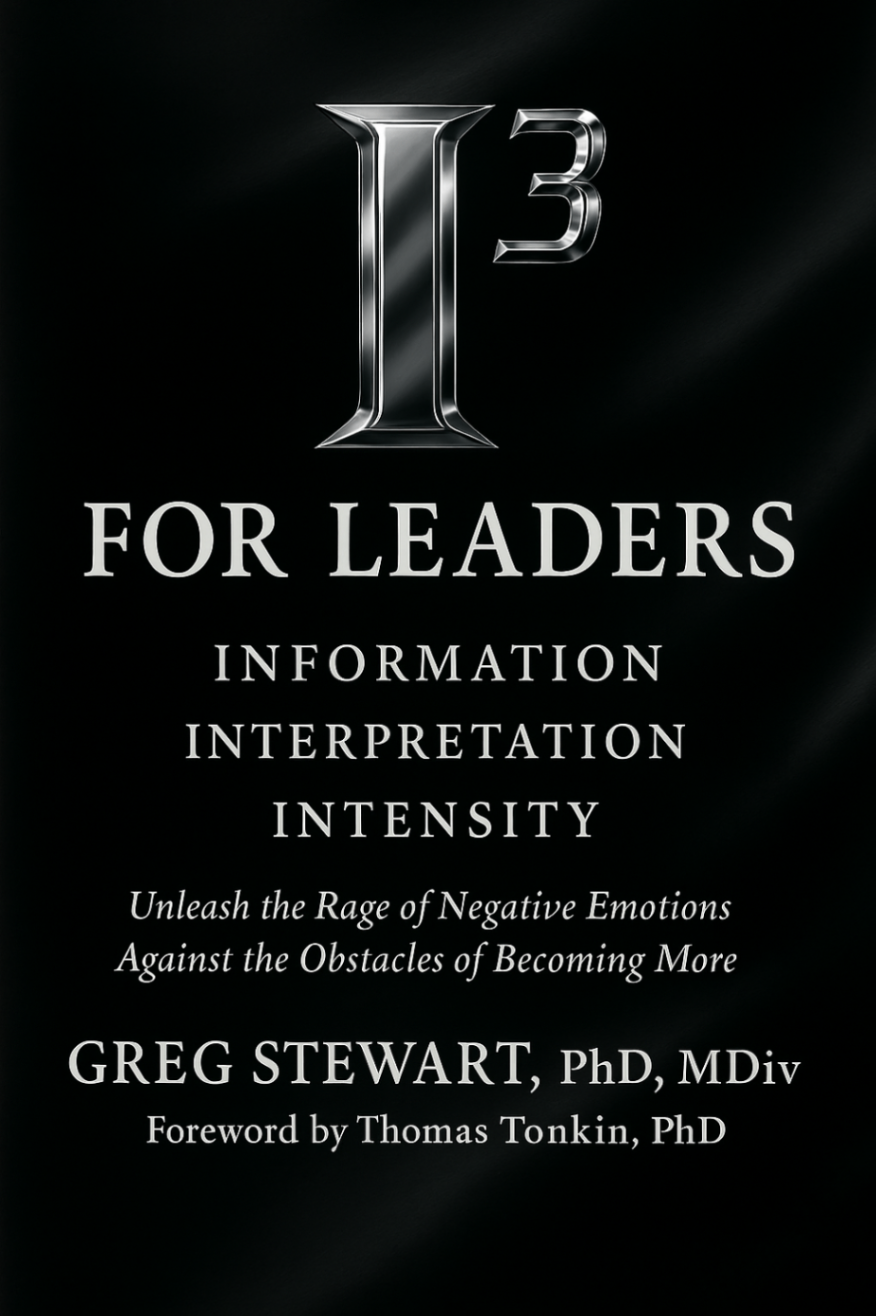
In my book I³ for Leaders, I break down a framework that transforms how high-performers process negative emotions. The three components—Information, Interpretation, and Intensity—give you a systematic approach to leadership development coaching that goes beyond surface-level anger management.
Information: What Is Your Anger Actually Telling You?
Anger is a messenger, not an enemy. When that flash of rage hits during a budget meeting or a difficult personnel decision, your first move isn't to suppress it or express it; it's to interrogate it.
Information asks: What triggered this emotional response?
Was it the number on the spreadsheet? The tone someone used? The memory of a previous failure? Your anger carries data about what you value, what you fear, and where your boundaries have been crossed. Leaders who skip this step end up reacting to symptoms instead of addressing root causes.
A senior leader I worked with in Rockwall discovered her explosive responses during strategy sessions weren't about her team's performance—they were about her fear of becoming irrelevant as the organization scaled. That's Information. That's gold.
Interpretation: The Story You're Telling Yourself
Here's where most executive coaching Dallas professionals see leaders get stuck. You've identified the trigger, but now you're building a narrative around it. And that narrative? It's probably catastrophizing.
Interpretation asks: What meaning am I assigning to this situation?
Your brain is wired for survival, not accuracy. When fear activates, your interpretation defaults to worst-case scenarios. "They questioned my decision" becomes "They don't respect me." "We missed targets" becomes "I'm not cut out for this role."
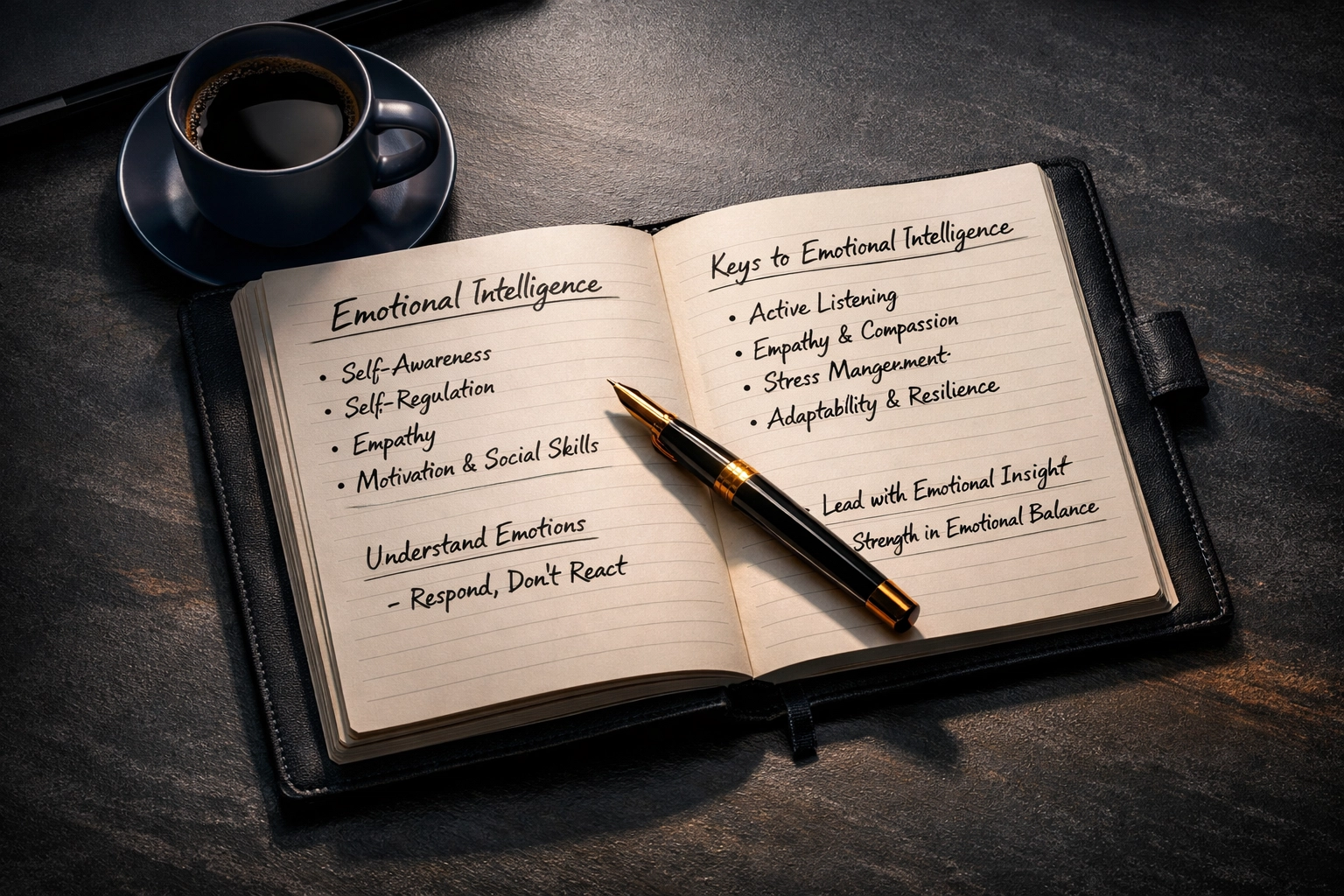
According to Harvard Business Review research, emotionally intelligent leaders create space between stimulus and response—what Goleman (1998) identified as the hallmark of self-regulation. This pause allows you to challenge your initial interpretation. Is it accurate? Is it helpful? Is it moving you toward your mission or away from it?
One of the core principles in I³ for Leaders is this: "Everyone becomes what they want to, only some people think about becoming more." Your interpretation either locks you into reactive patterns or liberates you to become more than your fear suggests.
Intensity: Calibrating Your Response
The final component is Intensity—matching your emotional output to the actual threat level. Most leadership anger is radically out of proportion to the triggering event. A missed email generates the same physiological response as a genuine crisis.
Intensity asks: What level of response does this situation actually warrant?
Research on emotional intelligence and coping strategies shows that higher emotional intelligence correlates strongly with active, problem-focused coping rather than passive avoidance or disproportionate reactivity (Saklofske et al., 2012). Leaders with high emotional intelligence don't just feel less; they feel more accurately.
This is where executive presence coaching becomes critical. Your team is watching. They're calibrating their own anxiety levels based on yours. When you respond to a setback with appropriate intensity—concerned but not panicked, direct but not destructive—you model the emotional regulation your entire organization needs.
Weaponizing Negative Emotions Against Internal Obstacles
Let's be clear: the goal isn't to become an emotionless robot. The goal is to take the raw energy of negative emotions—anger, fear, frustration—and redirect it toward the obstacles that actually matter.
As I write in I³ for Leaders: "Unleash the rage of your negative emotions against the obstacle of becoming more."
Your anger at market conditions? Worthless. Your anger at your own complacency? That's fuel.
Your fear of what your board thinks? Paralyzing. Your fear of becoming the leader who played it safe when boldness was required? That's transformative.
The leaders we work with at Becoming More Counseling, Coaching, & Consulting aren't trying to eliminate negative emotions. They're learning to weaponize them against internal obstacles—the limiting beliefs, the comfort zones, the settled-for versions of leadership that keep them from becoming more.
This is what separates competent managers from transformational leaders. "Leadership is defined not by the best of times, but the worst of times." And the worst times reveal whether you're going to be controlled by your anger and fear or whether you're going to control them.
The Iron Man Core: Spiritual Strength in Leadership
There's a spiritual dimension to this work that gets overlooked in traditional leadership development coaching. I call it the Iron Man Core—the internal fortitude that comes from aligning your leadership with something bigger than quarterly results.
When you lead from mission instead of fear, the entire I³ framework shifts. Information becomes clearer because you're not defending ego. Interpretation becomes more accurate because you're anchored in purpose. Intensity becomes appropriate because you're focused on the long game, not immediate validation.

This is why so many C-suite leaders in the Greater Dallas–Fort Worth area are investing in this kind of deeper work. They're recognizing that external change—in their teams, their organizations, their markets—can only follow internal change. You can't lead others through transformation you haven't experienced yourself.
Practical Application: The Next Time Anger Shows Up
Here's your action plan for the next time that anger-fear cocktail hits:
- Pause. Physically step back. Take three deep breaths. Create space between stimulus and response.
- Information. Ask: "What exactly triggered this? What am I actually responding to?"
- Interpretation. Ask: "What story am I telling myself about this situation? Is it accurate?"
- Intensity. Ask: "Does my response match the actual threat level? What does appropriate leadership look like right now?"
- Redirect. Channel the energy toward the real obstacle—not the person, the circumstance, or the surface-level problem, but the internal barrier keeping you from leading with clarity and courage.
This isn't soft skills. This is survival skills for leaders navigating complexity, uncertainty, and high stakes.
Your Next Step
If you're a senior leader in the DFW area who's tired of being hijacked by emotions you can't name and reactions you can't control, it's time for a different approach. Executive leadership coaching isn't about becoming less human; it's about becoming more intentional with your humanity.
The leaders who master the I³ framework don't just manage their anger better. They transform their entire leadership presence. They make better decisions under pressure. They build stronger teams. They create cultures where emotional intelligence isn't a buzzword; it's a competitive advantage.
Ready to stop letting anger wear the suit and start leading with the emotional intelligence your role demands?
Call 469-485-0387 and let's talk about what executive coaching could look like for you. Or explore more leadership insights at our leadership blog.
Because at the end of the day, your anger isn't the problem. It's the unexamined fear underneath it. And the obstacle isn't out there in your organization. It's in here, in the gap between who you are as a leader and who you're capable of becoming.
References:
Goleman, D. (1998). Working with emotional intelligence. Bantam Books.
Lench, H. C., Tibbett, T. P., & Bench, S. W. (2018). Exploring the toolkit of emotion: What do fear and anger do for us? Social and Personality Psychology Compass, 12(11), e12419.
Saklofske, D. H., Austin, E. J., Mastoras, S. M., Beaton, L., & Osborne, S. E. (2012). Relationships of personality, affect, emotional intelligence and coping with student stress and academic success: Different patterns of association for stress and success. Learning and Individual Differences, 22(2), 251-257.