Leadership Capacity Matters: Why AI Transformation is a Leadership Development Coaching Problem
![[HERO] Leadership Capacity Matters: Why AI Transformation is a Leadership Development Coaching Problem](https://cdn.marblism.com/aGH7HQOCeFq.webp)
Free Webinar! May 21st, 12:00-1:00 CT with a chance to win a $1,000 coaching package
The corporate landscape in 2026 is littered with the remnants of failed digital transformations. Billions of dollars have been poured into Large Language Models, generative agents, and predictive analytics, yet the needle of organizational performance often remains stubbornly unmoved. The mistake is predictable. Boards and C-Suites treat Artificial Intelligence as a technical procurement issue when it is, in reality, a leadership capacity crisis.
As the pace of change accelerates, the constraints on your organization are rarely found in your server rooms. They are found in your boardrooms. John Maxwell famously spoke of the Law of the Lid: that leadership ability is the lid that determines a person’s level of effectiveness. When it comes to AI, the "lid" is not your CTO’s technical prowess; it is the collective emotional and cognitive capacity of your executive team to interpret and integrate a new reality.
At Becoming More Counseling, Coaching, & Consulting, we operate under a foundational mantra: Everyone becomes what they want to, only some people think about becoming more. If your leadership team is simply reacting to the AI wave, they are managing machines. If they want to lead through it, they must first master the internal obstacles that prevent them from scaling their own influence.
The I³ Framework: Decoding the AI Transformation Problem
AI transformation fails because leaders lack a systematic way to process the sheer volume of disruption. We solve this through the I³ Framework: Information, Interpretation, and Intensity. When these three "locks" are not synchronized, the leadership engine stalls, and the technical investment is wasted.
Lock 1: Information vs. The Illusion of Insight
The first lock is Information. AI provides an unprecedented deluge of data. However, data is not information until it is curated for strategic utility. Many C-Suite leaders are currently suffering from cognitive overwhelm: a state where more data leads to slower decisions.
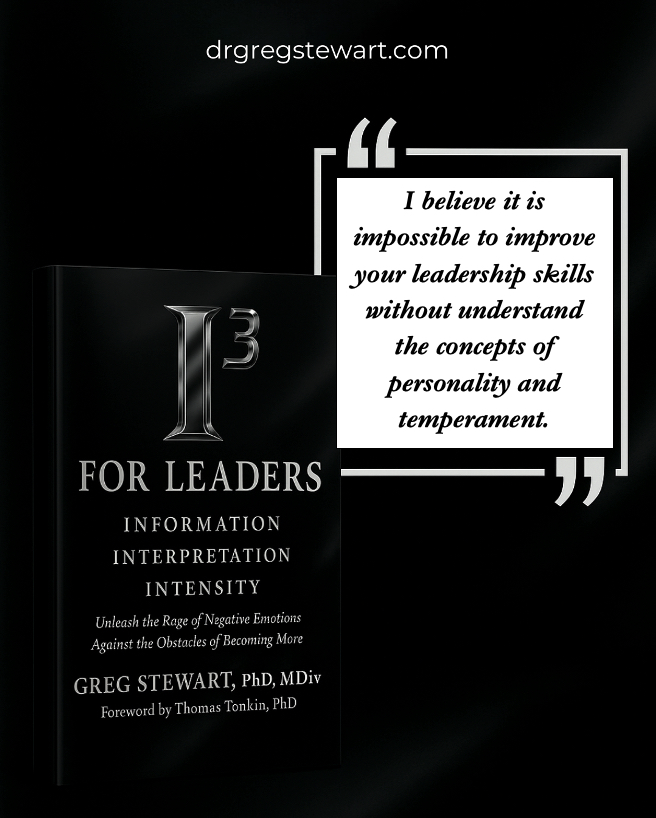
In my book, I3 for Leaders, I emphasize that internal change must precede external change. A leader who cannot filter the noise of high-frequency data will inevitably act on the wrong signals. AI transformation requires a leader to upgrade their internal "Information" architecture. You must move past the dopamine hit of "new tech" and focus on the duty of strategic relevance.
This is where the "Leadership Engine" often breaks down. If the information entering your executive system is fragmented, the output will be chaotic. Leadership development coaching provides the disciplined environment necessary to recalibrate how you consume and categorize the data that AI generates.

Lock 2: The Interpretation Gap and the Risk of Misalignment
The second lock: and perhaps the most critical in the context of AI: is Interpretation. AI can tell you what is happening or what might happen next, but it cannot tell you what it means for your specific organizational culture or long-term vision.
This is the Interpretation Gap. When a leadership team lacks a unified interpretive lens, they drift into silos. HR sees AI as a talent risk; Finance sees it as a cost-cutting tool; Operations sees it as an efficiency play. Without a coach to facilitate the alignment of these interpretations, the organization tears itself apart at the seams.
Leadership is defined not by the best of times, but the worst of times. The "worst of times" in a transformation is the middle phase: the "neutral zone" where the old ways are gone, but the new ways haven't yet yielded an ROI. During this phase, the leader’s ability to provide a clear, inspirational interpretation of the data is the only thing that maintains morale and strategic momentum.
We often see high-performing leaders struggle here because they rely on technical logic rather than executive presence. They fail to realize that their team is not looking for another spreadsheet; they are looking for a sense of certainty.
Lock 3: Intensity and Emotional Calibration
The third lock is Intensity. This refers to the emotional and psychological energy a leader brings to the transformation. AI creates an environment of high stakes and high anxiety. If a leader’s "Intensity Thermostat" is set too high, they create a culture of panic and burnout. If it is too low, they project a lack of urgency that leads to stagnation.
Most leaders attempt to suppress the negative emotions that come with disruption: fear of obsolescence, the frustration of technical glitches, and the anger of lost control. Our philosophy is different: Unleash the rage of your negative emotions against the obstacle of becoming more.
Instead of being paralyzed by the anxiety of AI transformation, a coached leader learns to use that intensity as a fuel for discipline. This is "Duty and Discipline before Dopamine." It is the refusal to seek the easy path, opting instead for the refined professional standards required to navigate a complex, tech-driven marketplace.
In our consulting work, we use sensory anchors and performance psychology to help leaders calibrate their intensity. Just as a high-end professional environment uses subtle fragrance and classic excellence to set a tone of authority, a leader must use the Panama Canal Method to regulate their internal emotional flow, ensuring they remain the "calm in the storm."
Why Technical Training Is Only Half the Story
According to recent research, only 20% of AI transformations actually succeed in delivering their promised value. The common denominator among the 80% that fail is a lack of leadership alignment. You cannot train your way out of a leadership capacity problem with a weekend coding bootcamp for executives.
You must build the "Interior Mastery" of the leaders themselves. If the leader’s internal lid is low, no amount of sophisticated software will raise the organizational floor. AI is an accelerant; if your leadership culture is toxic or fragmented, AI will only help you become toxic and fragmented faster.
Executive leadership development coaching is the process of reinforcing the "Iron Man Core" of your senior leaders. It is about spiritual and psychological development that allows them to overcome internal obstacles others wish they could. When a leader masters their own Information, Interpretation, and Intensity, they become a Leadership Engine that drives the rest of the company forward.
Classic Excellence: The Future of Executive Leadership
As we move deeper into 2026, the novelty of AI will fade, leaving behind a stark reality: the organizations that thrive will be those led by humans who have mastered their own nature. We call this "Classic Excellence." It is a commitment to sophisticated surroundings, refined standards, and the unwavering pursuit of becoming more.
C-Suite and HR leaders must recognize that their primary responsibility is not the implementation of technology, but the development of the people who will lead that technology. This requires a shift from managing tasks to coaching capacity.
Take the Next Step
Is your leadership team prepared to handle the intensity of the AI era? Are you acting on high-quality information, or are you just busy? Do you have a unified interpretation of your future, or are you operating in silos?
We invite you to join us for an exclusive deep dive into these concepts.
Primary CTA: The Leadership Engine Webinar Join us for our free webinar, "The Leadership Engine: Mastering the I³ Framework for 2026," on Thursday, May 21st, 12:00–1:00 CT. We will discuss how to identify the "locks" in your organization and provide actionable strategies to increase your leadership capacity. Attendees will also have a chance to win a $1,000 coaching package to help kickstart their transformation.
Book a Consult Call If you are ready to move beyond the technical and address the core leadership challenges facing your organization, let’s talk. Call 469-485-0387 to schedule a private consultation with Dr. Greg Stewart.
Download Our White Paper For a deeper dive into emotional calibration and executive presence, download our signature guide: The Panama Canal Method: Your 3-Step Guide to Mastering Executive Presence and Emotional Calibration.
Leadership is not about the tools you use; it is about the person you become while using them. It is time to think about becoming more.
Call 469-485-0387