The ROI of High-End Executive Presence Coaching: Why Today's Leaders are Prioritizing EQ Over IQ

Technical mastery is no longer the ceiling for success in today’s leadership landscape. Across boardrooms, executive teams, and people functions nationwide, a shift is occurring. C-Suite executives, HR leaders, and senior leadership teams are recognizing that while technical IQ gets a leader into the room, it is Executive Presence and Emotional Intelligence (EQ) that determine how long they stay there.
As Artificial Intelligence (AI) automates the analytical, the human edge: the "social brain": becomes the ultimate differentiator. The return on investment (ROI) for developing this edge is not just a soft metric; it is a hard financial reality.
The Interpretation Gap: Where Silence Fills with Fear
In high-stakes environments, information rarely moves in a vacuum. When a leader lacks presence, they create an "Interpretation Gap." This is the space between what is said and what is heard. In the absence of clear, confident authority, teams fill the silence with fear, speculation, and resistance.
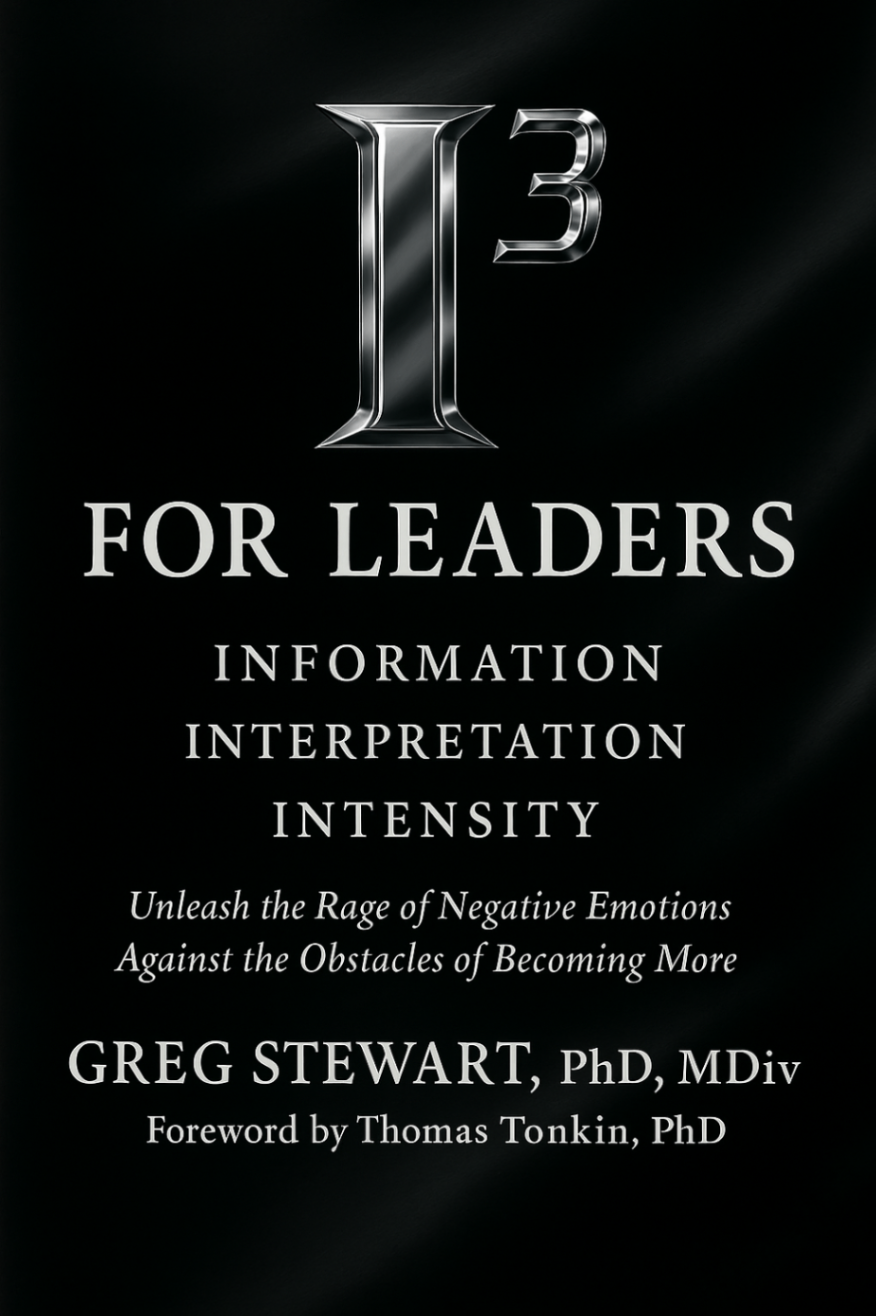
As Dr. Greg Stewart explores in Chapter 4 of I³ for Leaders, many leaders operate from the "Basement" of their personality. This is the internal space where unexamined fears and reactive patterns dictate external behavior. A leader who has not mastered their internal world cannot hope to master an external organizational transformation.

The I³ Framework: Calibrating the Social Brain
At Becoming More, we utilize the I³ Framework: Information, Interpretation, and Intensity: to bridge this gap. This process, often referred to as The Panama Canal Method, allows leaders to navigate high-pressure situations with the same precision as a ship moving through a series of locks.
- Information: Mastering the data and the "what" of leadership.
- Interpretation: Identifying the "Basement" processors that distort reality. This is the shift from impulsive, automatic behaviors to purposeful, disciplined thinking.
- Intensity: Calibrating emotional reaction. As detailed in Chapter 5, high-end coaching teaches leaders to be the "thermostat" of the room, regulating the heat of the organization rather than just reflecting it.

The Hard Math of Soft Skills
The financial argument for Executive Presence coaching is supported by global research. Organizations that view leadership development as a luxury are falling behind those that treat it as a technical requirement.
1. Revenue and Shareholder Growth
Research from Korn Ferry demonstrates that CEOs with high social and relational capabilities drive significantly higher revenue growth. In a study of technology-driven transformations, high-scoring CEOs led companies to an 8.7% annual revenue growth within four years, compared to just 3.2% for lower-scoring peers. Furthermore, high-EQ CEOs delivered 20% higher annual revenue growth and 26% higher EBITDA margins in their first four years.
2. The Multiplier Effect
McKinsey research indicates that well-designed leadership coaching can generate a 5x to 20x ROI. This return is found in increased productivity, innovation, and the successful execution of organizational transformations. When leadership transitions are managed through presence-focused coaching, the "ramp-up" time to full effectiveness is shortened, saving months of potential lost productivity.
3. Retention and Engagement
Harvard Business Review (HBR) notes that executive coaching programs can produce a 529% ROI, a figure that rises to 788% when employee retention is included. In today’s competitive talent market, where top-tier leaders and high-capacity teams are difficult to retain, a leader’s ability to inspire trust and reduce turnover is a critical financial lever. High-EQ leaders are 5.2x more likely to inspire their teams and 4.7x more likely to be high-performing themselves.

AI Cannot Replicate the Human Social Brain
As the tech world leans further into AI, the value of the "Social Brain" rises. Korn Ferry points out that while AI can analyze data, it cannot navigate complex stakeholder trust, negotiate ethical trade-offs, or lead a cross-functional team through a cultural RIF (Reduction in Force) event.
Leadership is about influence, and influence is an internal game first. John Maxwell famously stated that "Leadership is influence, nothing more, nothing less." But that influence is limited by the "Law of the Lid." A leader’s internal capacity: their mastery over their negative emotions and their ability to stay calibrated under pressure: is the lid on their organization’s growth.
Duty and Discipline Before Dopamine
Executive excellence is not found in the pursuit of temporary highs or reactive "dopamine" leadership. It is found in the "Refining Fire" of character development. At Becoming More, we believe that "Everyone becomes what they want to, only some people think about becoming more."
Leadership is defined not by the best of times, but by the worst of times. When markets tighten, when restructures strain culture, or when transformation fatigue tests trust, the leaders who have done the internal work are the ones who stand firm. They follow a code of Duty and Discipline before Dopamine.
Mastering Your Presence
To survive the next decade of disruption, today’s leaders must move beyond the "Information" lock and master "Interpretation" and "Intensity." This is not soft training; it is the calibration of your most powerful asset: your mind.
If you are ready to close the interpretation gap and unlock the ROI of true executive presence, it is time for a deeper dive.
Call 469-485-0387 to schedule a strategy consultation.
For a structured approach to this calibration, download our white paper: "The Panama Canal Method: Your 3-Step Guide to Mastering Executive Presence and Emotional Calibration."
Internal change must precede external change. The obstacles you face are merely the refining fire of your growth. Unleash the rage of your negative emotions against the obstacle of becoming more.
References
- McKinsey & Company. The ROI of Leadership Coaching in Digital Transformation. 2023.
- Korn Ferry Institute. How the Right CEO Powers Tech Transformation. 2024.
- Korn Ferry Institute. Unlocking CEO Success: The Social Brain and Financial Outcomes. 2025.
- Harvard Business Review. The Measurable ROI of Emotional Intelligence in the C-Suite. 2026.
- Stewart, Greg. I³ for Leaders: Information, Interpretation, Intensity. Becoming More Publishing, 2024.
- Maxwell, John C. The 21 Irrefutable Laws of Leadership. Thomas Nelson.