
The Great Flattening: Leadership Development Coaching for Managers Who Just Lost Their Teams
![[HERO] The Great Flattening: Leadership Development Coaching for Managers Who Just Lost Their Teams](https://cdn.marblism.com/C-4MowxGbbq.webp)
You walked into the boardroom as a director with twelve direct reports and a budget that moved the needle. You walked out with a title, a desk, and the organizational equivalent of a participation trophy.
Welcome to The Great Flattening.
This isn't a recession. This isn't a "temporary restructure" that'll bounce back once the economy stabilizes. Gartner estimates that 20% of organizations will eliminate over half their middle management positions through 2026, using AI to flatten structures and cut layers that executives now see as redundant (Gartner, 2024). If you're reading this from a cubicle in a DFW corporate tower or a government office in Rockwall, TX, you already know the truth: the org chart just got thinner, and your team disappeared in the white space.
The question isn't whether this is fair. The question is what you do with the leadership muscle you've spent a decade building when nobody reports to you anymore.
The Identity Wound No One Talks About
Losing your team isn't just a job change. It's an identity amputation.
For years, your authority came from your ability to develop people, drive operational results, and translate executive strategy into ground-level execution. You were the connector tissue between the boardroom vision and the boots-on-the-ground reality. You mentored. You problem-solved. You held the institutional knowledge that kept entire departments from walking off cliffs (Korn Ferry Institute, 2025).

And then, in one restructure, the org chart deleted your purpose.
Research confirms what you're feeling in your gut: when organizations eliminate middle management layers, they don't just cut salary lines: they remove "mentorship, development pathways, institutional knowledge, decision-making capacity, and the human relationships that hold organizations together" (Harvard Business Review, 2025). For managers accustomed to being the operational linchpin, this represents a fundamental identity shift that traditional career counseling never addresses.
You weren't just good at managing people. You were the person who managed people. And now you're an individual contributor with a director's résumé and a skill set the company no longer needs.
Why Traditional Leadership Development Coaching Fails Here
Here's the paradox that'll make your head spin: research shows that managers are the "number one influence on whether employees are engaged, healthy, and growing" (Gallup, 2024). Yet organizations are systematically eliminating the roles that do exactly that.
The managers who survived the cut? They're drowning. The average manager today oversees twelve employees compared to five in 2013: triple the load from 2015 (McKinsey & Company, 2025). There's no bandwidth for meaningful mentorship or professional development. There's barely time to approve PTO requests.
Traditional leadership development coaching focuses on scaling your team or strengthening your executive presence or building high-performing cultures. All of which sounds fantastic if you still have a team to scale, presence to project, or a culture to influence.
But when your team evaporates overnight, those frameworks ring hollow. You don't need coaching on leading others. You need coaching on weaponizing everything you know about leadership dynamics, team psychology, and operational execution: and redirecting it toward a completely different value proposition.
You need to learn how to weaponize utility.
The Utility Shift: From Authority to Execution
In a flattened organization, your value is no longer rooted in the number of people who report to you. It's rooted in your ability to execute with consistency and turn knowledge into actionable outcomes (Deloitte Insights, 2026).
This is where most displaced managers get stuck. They keep trying to lead like they still have a team. They offer strategic input in meetings. They mentor colleagues who didn't ask for it. They volunteer to "coordinate cross-functional initiatives" because it feels like the people-manager work they're wired to do.
But in a flat org structure, that behavior reads as overstepping. It looks like someone who can't let go of a role they no longer hold.
The shift you need to make is brutal in its simplicity: stop trying to lead others and start becoming the most operationally lethal individual contributor in the room.
This is where organizational leadership consulting in Texas: particularly for massive (10k+ employee) firms in law, government, and corporate sectors: gets real. The companies that remain competitive post-flattening aren't just cutting managers and calling it a day. They're "investing in management training to strengthen leadership in flatter organizations" and equipping former managers with "AI tools to enhance decision-making and productivity" (Forbes, 2025).
Translation: they're weaponizing the skill sets of displaced managers by redirecting leadership capacity into execution engines.
The I³ Framework for Managers Without Teams
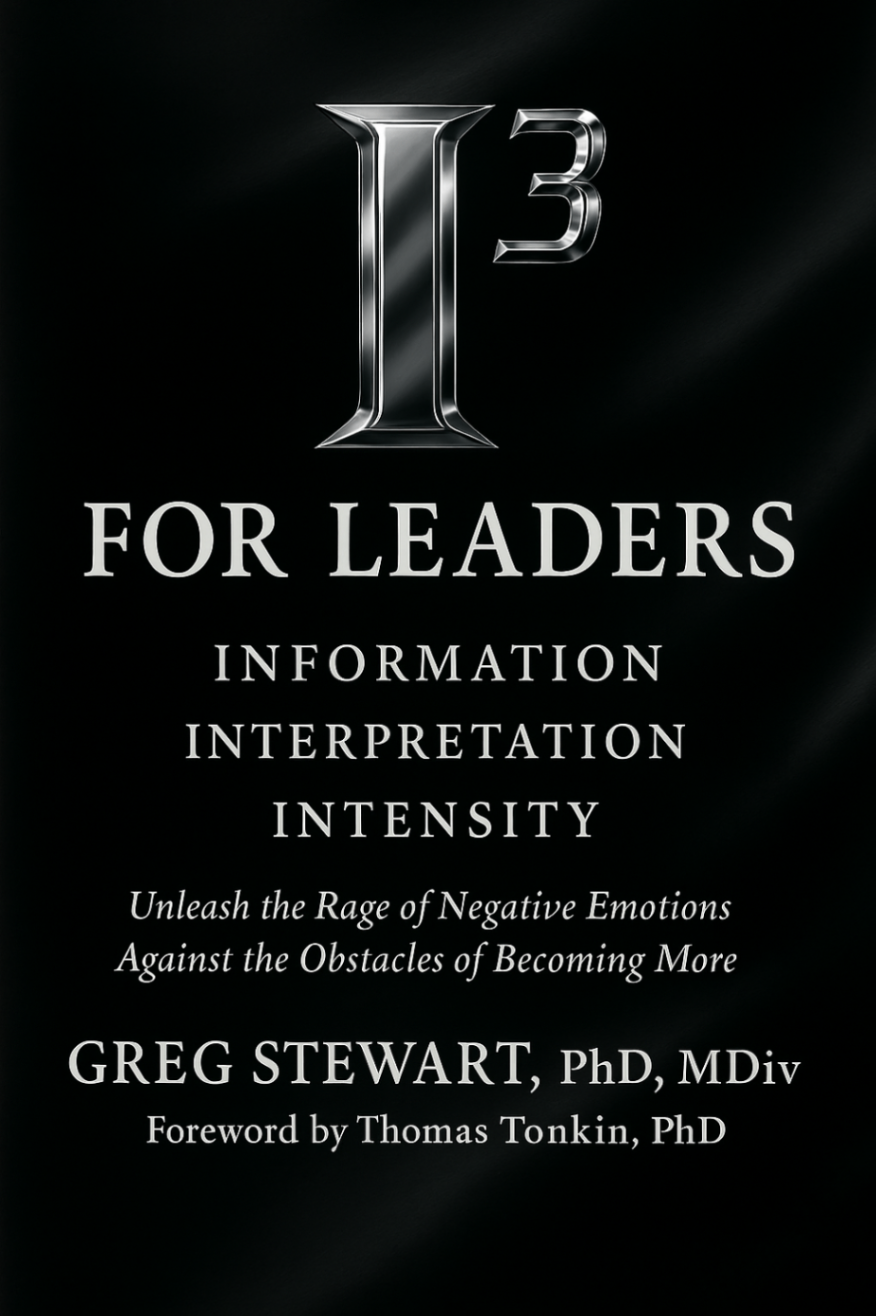
Here's where the I³ Framework: Information, Interpretation, Intensity: becomes your operational playbook (learn more about the framework here).
Information: You still have access to institutional knowledge, cross-departmental dynamics, and operational patterns that newer employees don't see. Your value now is pattern recognition and strategic context. What you know about how this organization actually works is gold: if you can translate it into execution velocity.
Interpretation: As a former manager, you're trained to read team dynamics, anticipate friction points, and decode the subtext in executive memos. That interpretive capacity doesn't disappear when your team does. It just shifts to helping leadership navigate complexity at scale without needing thirteen layers of management to filter information.
Intensity: This is the emotional piece most leadership development coaching ignores. You're angry. You're grieving. You're second-guessing every career decision that led you to this cubicle. And traditional coaching tells you to "process the loss" and "find new meaning."
That's not wrong. But it's incomplete.

The I³ Framework says: weaponize that intensity. Rage against the org chart is wasted energy. Rage channeled into becoming the highest-output, most strategically indispensable individual contributor in your division? That's the Iron Man Core that separates displaced managers who rebuild from those who stagnate.
What Leadership Development Coaching Actually Does Here
Executive leadership coaching for managers who've lost their teams isn't about helping you "find your next role" or "pivot to consulting." It's about three specific skill translations:
1. Reframing Authority
Your authority used to come from your position. Now it comes from your utility. Leadership development coaching teaches you how to influence without a org chart, how to drive outcomes without direct reports, and how to become the go-to operator leadership can't afford to lose: even in a flat structure.
2. Redirecting Emotional Capital
You spent years investing in your team's growth. That emotional capacity doesn't vanish: it just needs a new target. Coaching helps you redirect that developmental energy into your own skill acceleration, strategic positioning, and operational impact.
3. Building the Post-Flattening Playbook
Forward-thinking organizational leadership consulting in Texas focuses on helping displaced managers translate leadership competencies into new contexts. That might mean moving into high-stakes project leadership, becoming the strategic operator who executes what C-suite envisions, or leveraging your management experience in external consulting or advisory roles.
The managers who thrive post-flattening aren't the ones clinging to their old identity. They're the ones who take everything they learned about team dynamics, problem-solving, and operational execution: and weaponize it in a structure that no longer rewards people management.
The Bottom Line
The Great Flattening isn't going away. Whether you're in a DFW law firm, a Rockwall-based government agency, or a 10k+ employee corporate giant, the middle management extinction event is real, and it's accelerating.
But here's what the org chart can't delete: the leadership capacity you've built, the institutional knowledge you carry, and the operational muscle memory that made you effective in the first place.
You don't need coaching that treats this like a typical career transition. You need coaching that helps you weaponize everything you know about leadership: and redirect it toward a completely different game.
If you're a senior manager or director who just lost your team and you're trying to figure out what the hell comes next, let's talk. This is exactly the work we do with displaced leaders across the Greater Dallas–Fort Worth area.
Call 469-485-0387 and let's build your post-flattening playbook.
References
Deloitte Insights. (2026). The utility economy: Redefining value in flat organizations. Deloitte University Press.
Forbes. (2025). How AI is reshaping middle management in enterprise organizations. Forbes Leadership Council.
Gallup. (2024). State of the global workplace report. Gallup Press.
Gartner. (2024). The future of organizational design: Flattening hierarchies through 2026. Gartner Research.
Harvard Business Review. (2025). When the middle disappears: The human cost of organizational flattening. Harvard Business Publishing.
Korn Ferry Institute. (2025). The great restructure: What happens to institutional knowledge when middle management vanishes? Korn Ferry.
McKinsey & Company. (2025). The overloaded manager: Why span of control is breaking leadership capacity. McKinsey Quarterly.
The Shadow Boardroom: How Unspoken Emotional Dynamics Are Sabotaging Your Strategic Plan
![[HERO] The Shadow Boardroom: How Unspoken Emotional Dynamics Are Sabotaging Your Strategic Plan](https://cdn.marblism.com/8p6-CFeSYY9.webp)
Your strategic plan isn't failing because of bad data. It's failing because of what nobody is saying in the room.
While your executive team debates market forecasts and operational KPIs, there's a parallel conversation happening: one that never makes it into the minutes. It's the Shadow Boardroom: the unspoken emotional dynamics, ego clashes, and territorial anxieties that quietly veto your best ideas before they ever reach implementation.
And it's costing you more than you think.
The Problem Isn't Your Strategy: It's Your Silence
Research shows that unspoken emotional dynamics and hidden organizational tensions significantly undermine strategic decision-making by preventing leaders from identifying real problems and entertaining the best solutions (Schaffer, 2002). When organizations suppress these "shadow" elements: anxieties, conflicts, uncomfortable truths: the chronic denial creates debilitating effects: defensiveness, unquestioned allegiance to authority figures, and overcrowded agendas that leave no room for genuine discussion.
Here's what it looks like in real time:
- The VP who stays quiet because challenging the CFO's assumptions would be "political suicide"
- The CHRO who knows the culture initiative will fail but doesn't want to be labeled "negative"
- The Director who avoids naming the real bottleneck because it's the CEO's pet project
This isn't incompetence. It's emotional self-preservation masquerading as professionalism.

Power Dynamics: Who Really Controls the Agenda?
The Shadow Boardroom thrives on power imbalances. Research on board dynamics reveals that the interplay of power and social influence among members impacts where attention is focused, how decisions are made, and ultimately what gets prioritized (Westphal & Zajac, 2013). Power imbalances distort agenda setting, decision control, information access, and resource allocation: all while creating psychological tension that prevents candid dialogue.
The result? Groupthink with a boardroom budget.
Individual board members suppress dissenting views not because they lack courage, but because the emotional cost of speaking truth feels higher than the strategic cost of staying silent. Over time, this creates a culture where the loudest voice: or the highest title: wins by default, regardless of merit.
This is the opposite of executive leadership coaching that builds resilient, high-trust teams. When emotional dynamics go unaddressed, even the most talented leaders default to compliance theater instead of strategic courage.
The Financial Toll of the Shadow Boardroom
Organizations spend millions annually addressing conflict stemming from these hidden dynamics, which contribute to high turnover, decreased creativity, underproductivity, and reduced profitability (Schaffer, 2002). But the real cost isn't just the conflict itself: it's the strategic opportunities you never saw because your team was too busy managing unspoken tension.
Consider the common patterns:
- Delayed decisions because nobody wants to be the one who "caused problems"
- Watered-down initiatives designed to avoid stepping on toes rather than solving the actual problem
- Talent exodus when your best people realize they can't speak truth and stay employed
This is where organizational leadership consulting becomes critical. The most effective interventions don't start with a new org chart: they start with surfacing what's been buried.

The I³ Framework: Bringing the Shadow into the Light
At Becoming More, we use the I³ for Leaders framework: Information, Interpretation, Intensity: to help executive teams surface and weaponize the emotional dynamics that typically sabotage strategy.
1. Information: What Are We Really Saying (and Not Saying)?
The first step is creating space to name what's actually happening. This isn't a "feelings circle": it's tactical reconnaissance.
Tactical question: If we recorded this meeting and played it back, what would an outsider notice about who talks, who defers, and who shuts down?
When leaders can name the dynamic without drama, they move the processing from the emotional centers of the brain to the logical ones. This is regulation, not suppression.
2. Interpretation: Whose Story Is Driving the Room?
Every unspoken tension has a narrative underneath it.
- "If I challenge this, I'll be seen as disloyal."
- "My opinion doesn't matter here."
- "We tried this before and it failed: why bother?"
These interpretations drive behavior more than any slide deck ever will. In high-performing teams, leaders audit their Interpretation regularly: Is this story serving the mission, or is it just protecting my ego?
Research on decision-making under pressure shows that leaders who can separate their emotional narratives from objective reality make significantly better strategic choices (Larsen & Stanley, 2021).
3. Intensity: Converting Tension into Traction
Here's the counter-intuitive move: don't try to eliminate the tension. Use it.
The best executive teams don't aim for "conflict-free" boardrooms: they aim for regulated intensity. When frustration, urgency, or even skepticism are named and channeled strategically, they become clarity drivers instead of derailment triggers.
Tactical protocol:
- Name the risk (no drama, just data)
- State the ask (one sentence)
- Assign the next step (owner + timeline)
This is what we call the Iron Man Core: the ability to hold intense affect without leaking sarcasm, panic, or contempt. It's not about being "nice": it's about being congruent under pressure.

Building a Transparent Boardroom (Without Blowing It Up)
To dismantle the Shadow Boardroom, effective governance requires addressing several interconnected issues:
1. Acknowledge and surface suppressed conflicts rather than denying them. This doesn't mean airing every grievance: it means creating structured space for honest diagnosis before you prescribe solutions.
2. Build emotional intelligence among board members. Not the "soft skills" version: the tactical version. Leaders who can regulate their own nervous systems become the signal in the noise, not just another voice adding to the chaos.
3. Ensure psychological safety so members feel secure voicing concerns. This requires more than a "speak freely" policy: it requires leaders who model vulnerability without collapsing into victimhood.
4. Promote board diversity to naturally challenge groupthink. Cognitive diversity disrupts the Shadow Boardroom by introducing perspectives that weren't shaped by the same unspoken rules.
5. Establish accountability mechanisms that prevent power imbalances from controlling outcomes. When decision authority is transparent and distributed, it's harder for one voice to dominate through sheer positional power.
Some organizations are experimenting with shadow boards: advisory groups of younger employees with fresh perspectives: to intentionally create structured space for unfiltered truth about business realities, bridging gaps between executive priorities and frontline insights that might otherwise remain hidden (Strack et al., 2019).
The Path Forward: From Shadow to Strategy
If you're reading this and recognizing your own boardroom, you're not alone. The Shadow Boardroom isn't a sign of failure: it's a sign that you're operating in a high-stakes environment where emotional risk feels real.
The question isn't whether your team has unspoken dynamics. The question is: Are you using them, or are they using you?
At Becoming More, we specialize in helping executive teams move from silence to strategy. Through targeted executive leadership coaching and organizational leadership consulting, we help C-Suite leaders build the Iron Man Core required to hold tension, name truth, and execute with congruence.
Ready to bring the shadow into the light?
Call 469-485-0387 or visit Becoming More to start the conversation.
References
Larsen, K. L., & Stanley, E. A. (2021). Leaders' windows of tolerance for affect arousal: and their effects on political decision-making during COVID-19. Frontiers in Psychology, 12, 749715. https://doi.org/10.3389/fpsyg.2021.749715
Schaffer, R. H. (2002). All that consultants do is get in the way of change. Harvard Business Review. Retrieved from https://hbr.org/2002/08/all-that-consultants-do-is-get-in-the-way-of-change
Strack, R., Caye, J.-M., Thurner, P., Haen, P., & von der Linden, C. (2019). How "shadow boards" can help companies go digital. Harvard Business Review. Retrieved from https://hbr.org/2019/06/how-shadow-boards-can-help-companies-go-digital
Westphal, J. D., & Zajac, E. J. (2013). A behavioral theory of corporate governance: Explicating the mechanisms of socially situated and socially constituted agency. Academy of Management Annals, 7(1), 607–661. https://doi.org/10.5465/19416520.2013.783669
Executive Presence Coaching: Why DFW C-Suite Leaders Are Investing in This Secret Weapon in 2026
![[HERO] Executive Presence Coaching: Why DFW C-Suite Leaders Are Investing in This Secret Weapon in 2026](https://cdn.marblism.com/vBy1yBAZWDW.webp)
Something is shifting in the boardrooms across Dallas-Fort Worth.
From the gleaming towers of downtown Dallas to the innovation hubs in Plano and Fort Worth, C-suite leaders are quietly making an investment that doesn't show up on balance sheets: but transforms everything about how they lead.
They're investing in executive presence coaching. And the numbers prove it's no longer optional.
The Data DFW Leaders Can't Ignore
The 2025 International Coaching Federation Global Coaching Study revealed something remarkable: a 54% increase in coaching practitioners since 2019, with more than half of all coaching now being employer-sponsored. Translation? Companies aren't leaving leadership development to chance anymore. They're building it into their strategic budgets.
Here in North Texas, we're seeing this play out in real time.
SMU Cox School of Business and DallasHR launched targeted 2025 Executive Presence workshops specifically designed for DFW Fortune 500 leaders. AT&T, Toyota, and Southwest Airlines aren't just encouraging their executives to attend: they're actively funneling leadership teams into these programs as part of their talent strategy.
Why the sudden urgency?

The Leadership Crisis No One's Talking About
The DDI Global Leadership Forecast 2025 exposed an uncomfortable truth: leader stress has reached unprecedented levels. Traditional leadership training isn't cutting it anymore. The old "command and control" playbook is obsolete in a world shaped by AI integration, hybrid work fatigue, and stakeholder expectations that shift faster than quarterly earnings.
DFW's competitive corporate landscape amplifies this pressure. In a region where relationships and reputation drive success, leaders can't afford to show up uncertain, reactive, or disconnected. The margin for error has vanished.
Executive presence isn't about having a corner office or a fancy title. It's about walking into high-stakes situations: board meetings, crisis management, investor calls, difficult conversations: and radiating the kind of calm, clear-headed authority that makes people think, "This person has it figured out."
Even when you're figuring it out in real time.
When Culture Transformation Demands Leadership Transformation
Want proof that executive presence can reshape entire organizations?
Look at the Dallas Mavericks.
A 2022 case study published in the Sports Management Education Journal detailed what insiders called "The Marshall Plan": a massive organizational overhaul that transformed a toxic workplace culture into a high-performing, inclusive environment. The shift didn't happen through policy memos or HR mandates. It happened because leadership fundamentally changed how they showed up.
The same dynamics apply in corporate settings. When executives lack presence, culture suffers. Teams become risk-averse. Innovation stalls. Talented people leave.
But when leaders embody presence: when they lead with curiosity, emotional intelligence, and intentional action: everything shifts. Trust builds. Performance accelerates. Organizations become magnetic.

The I³ Framework: How Executive Presence Actually Gets Built
Most leadership training falls flat because it treats executive presence like a performance skill: something you fake until you make it.
That approach might work for a keynote speech. It collapses under pressure.
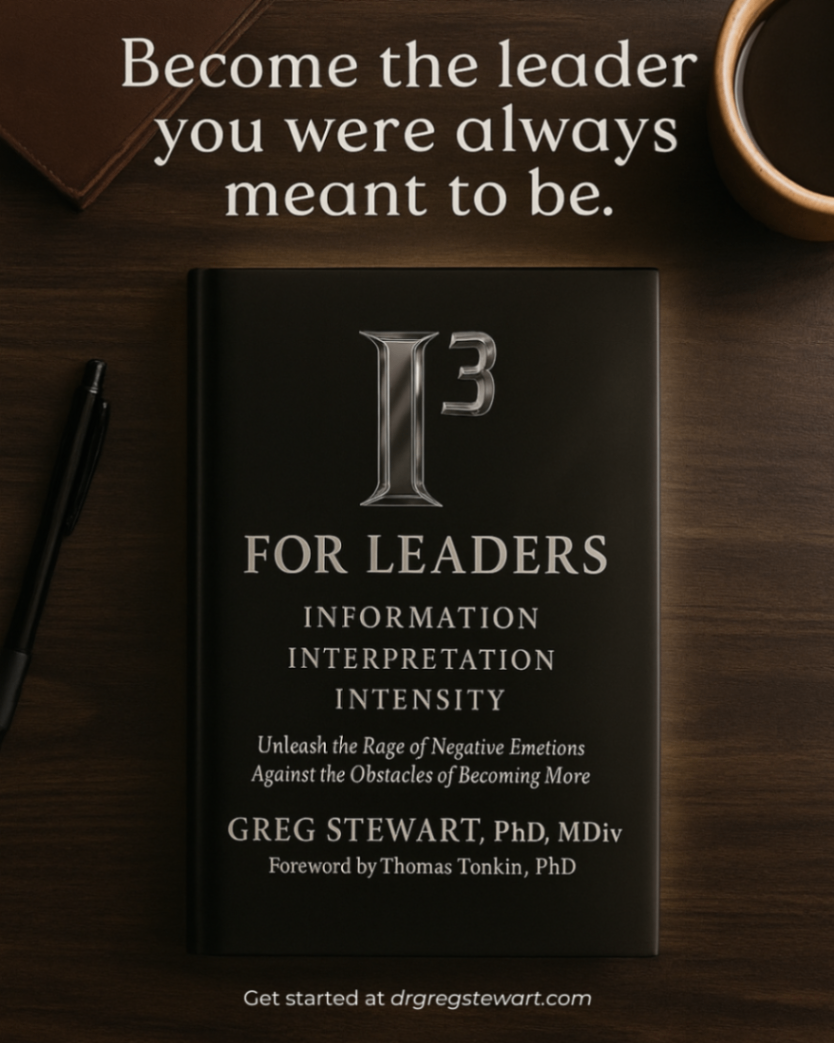
Real executive presence is built on a foundation of three interconnected capabilities from Dr. Greg Stewart’s book I³ for Leaders. It’s the I³ Framework: Information, Interpretation, and Intensity.
Information: Gathering the Right Data Without the Noise
Executive presence starts with clarity, and clarity starts with inputs.
Information is the discipline of gathering the data that actually matters, including separating signal from distraction. In the dynamic Greater Dallas–Fort Worth (DFW) area, leaders don’t struggle because they lack data. They struggle because they have too much of it, and not enough of it is clean.
When you lead from strong Information, you show up steadier in board meetings, investor calls, and talent conversations because you’re not guessing.
Interpretation: Making Sense of Data (and the Biases That Get in the Way)
Two leaders can look at the same report and walk away with two different conclusions.
Interpretation is how you make meaning from Information. It’s also where bias, assumptions, and overconfidence quietly distort decisions. Executive presence grows when you can explain what you’re seeing, why it matters, and what you’re doing next, without spinning a story that isn’t real.
This is where many high-performing executives in DFW get stuck. Not because they aren’t smart, but because the pressure to be right can override the discipline to be accurate.
Intensity: The Emotional & Operational Energy Required to Execute
Even great strategy fails without the right energy.
Intensity is the emotional and operational drive required to execute well. It’s composure in tense moments, consistency when things are messy, and the capacity to keep the team moving without burning everyone out.
Intensity is what people feel when they say, “I trust her in a crisis,” or “He’s steady when things get dynamic.”
Together, Information, Interpretation, and Intensity create leaders who don’t just hold the role. They elevate it.
Why 2026 Is The Year DFW Leaders Can't Wait
If you're a C-suite executive or HR leader in the Dallas-Fort Worth area, you're feeling the tension. The business landscape is evolving faster than leadership development can keep pace.
Your competitors are investing in this. AT&T isn't sending executives to SMU Cox workshops for fun. Toyota isn't building leadership labs because they have budget to burn. They recognize that in 2026, executive presence is the competitive edge.
The leaders who master it will navigate complexity with confidence. They'll build cultures that attract top talent. They'll make high-stakes decisions that stakeholders trust.
The leaders who ignore it will find themselves managing crises instead of preventing them. Losing talent to competitors who offer better leadership. Wondering why their title doesn't command the respect it used to.
What Executive Presence Coaching Actually Looks Like
Working with an executive coach isn't therapy. It's not venting sessions or motivational pep talks.
It's strategic, research-backed development designed to upgrade how you think, communicate, and lead. It's receiving real-time feedback on the blind spots holding you back. It's practicing difficult conversations before they happen. It's building the internal operating system that allows you to show up powerfully in any situation.
At Becoming More Counseling, Coaching, & Consulting, we work with executives across Rockwall, TX & the Greater Dallas–Fort Worth (DFW) area using the I³ Framework (Information, Interpretation, Intensity) from Dr. Greg Stewart’s book I³ for Leaders to build sustainable executive presence. Not the fake-it-till-you-make-it version. The real, grounded, transformational kind.
The Investment That Pays Dividends Forever
Here's what we know: the executives making this investment in 2026 will be the leaders shaping North Texas business in 2030 and beyond.
They'll be the ones other leaders want to work for. The ones boards trust with the biggest decisions. The ones who build organizations people are proud to be part of.
Executive presence isn't about being the loudest voice in the room. It's about being the clearest. The calmest. The most intentional.
It's about becoming more of who you're meant to be as a leader: not performing a role someone else wrote for you.
If you're a C-suite leader or HR executive in the Dallas-Fort Worth area ready to invest in this kind of transformation, let's talk. The research is clear. The local demand is real. And the leaders making this move now are positioning themselves for a level of impact that traditional training simply can't deliver.
Call 469-485-0387 or visit becomingmore.com to explore how executive presence coaching can transform your leadership.
Because in 2026, presence isn't a luxury. It's the foundation everything else is built on.
7 Mistakes C-Suite Leaders Make With Change Management
![[HERO] 7 Mistakes C-Suite Leaders Make With Change Management (and What to Do Instead)](https://cdn.marblism.com/WIP6lWaWY6i.webp)
Change is hard. Leading it is harder.
You've seen the stats: 70% of change initiatives fail. Not because the strategy was wrong, but because how we lead through it falls apart. I've coached dozens of C-Suite leaders who launched brilliant transformations only to watch them stall six months in. The culprit? Predictable, avoidable mistakes that erode trust faster than any market disruption.
If you're rolling out a new system, restructuring teams, or shifting company culture, this post is your field guide. Let's talk about the seven most common traps executives fall into, and what to do instead.
Mistake #1: Starting Without a Real Strategy (Just a Vision)
You know what needs to change. You've communicated why it matters. But when someone asks, "Okay, how do we actually do this?", crickets.
The Problem: Most change initiatives die in the messy middle because leaders confuse a vision with a strategy. Vision is the destination. Strategy is the roadmap, complete with mile markers, rest stops, and contingency routes.
What to Do Instead:
Before you launch, map out the how using a proven framework. Kotter's 8-Step Process, Lewin's Model, or Prosci's ADKAR are solid starting points. But here's the key: customize it. What works for a tech startup won't work for a 50-year-old manufacturing firm.
Ask yourself: If I left the company tomorrow, could my leadership team execute this change without me? If the answer is no, your strategy isn't ready.

Mistake #2: Going Silent After the Big Launch
You sent the all-hands email. You did the Town Hall. You're feeling good about the kickoff energy. Then... you move on to the next fire.
The Problem: Change communication isn't an event: it's a drumbeat. When leaders front-load the message then disappear, teams interpret the silence as "this wasn't that important after all." Old habits creep back in.
What to Do Instead:
Repeat your message. Weekly. In every meeting. On Slack. In performance reviews. Make it so consistent that your team can recite it back to you.
One CEO I worked with created a simple mantra: "Customer-first decisions, every time." He said it in every leadership meeting for 18 months. It became muscle memory. That's how change sticks.
Mistake #3: Pushing Too Hard, Too Fast, Too Much
You're ambitious. You want results yesterday. So you stack three major changes on top of each other and set aggressive deadlines.
The Problem: Change fatigue is real. When you push too hard, mistakes multiply, quality drops, and your best people burn out. Worse: they stop trusting your judgment on what's actually urgent.
What to Do Instead:
Pace yourself. Break big transformations into digestible 90-day sprints. Celebrate small wins. Let your organization absorb one change before layering on the next.
I call this the "digestion principle." You can't eat three meals at once and expect to feel good. Same with organizational change.
Mistake #4: Asking Your Team to Change While You Stay the Same
This one's brutal, but it's the truth: If you're not visibly adopting the change yourself, why would anyone else?
The Problem: Leaders often see themselves as architects of change, not participants in it. But your team is watching everything you do. If you're asking them to use the new CRM but you still email your assistant for reports, the message is clear: this doesn't apply to me.
What to Do Instead:
Be the first adopter. Go through the training. Use the new tools. Talk openly about what's hard for you. Vulnerability builds trust, and trust accelerates change.
One executive I coached started every staff meeting by sharing his struggle adapting to a new project management system. It gave his team permission to struggle too: and they helped each other through it.

Mistake #5: Treating Change Management Like a "Nice to Have"
You've budgeted for the new software. You've hired consultants for implementation. But when it comes to change management resources: training, coaching, internal comms: you cut corners.
The Problem: Change management isn't a soft skill add-on. It's the difference between adoption and abandonment. When you underfund it, you're essentially buying a Ferrari and refusing to pay for gas.
What to Do Instead:
Staff it properly. Hire people with actual change management expertise: not just project managers wearing a different hat. Give them authority, budget, and a seat at the table.
A manufacturing client of mine allocated 20% of their ERP implementation budget to change management. Result? They hit 89% adoption in six months instead of the industry average of 40%. That ROI speaks for itself.
Mistake #6: Assuming Everyone in the C-Suite Is Actually On Board
Public support is easy. Resource commitment is hard.
The Problem: You think you have executive alignment because everyone nodded in the boardroom. But when it's time to free up their teams for training or shift budget priorities, suddenly there's resistance. Without unified C-Suite commitment, your initiative lacks the muscle to push through obstacles.
What to Do Instead:
Get explicit commitments before you launch. What resources will each executive provide? What will they personally do differently? Put it in writing.
If someone won't commit, pause. A half-supported change initiative is worse than no initiative at all. It wastes time, money, and erodes trust across the organization.
Mistake #7: Ignoring the Culture Elephant in the Room
You're asking people to collaborate more, but your culture rewards individual achievement. You want innovation, but your systems punish failure.
The Problem: When change conflicts with culture, culture wins. Every time. Employees will smile, nod, and then default back to "how we've always done things" because that's what actually gets rewarded.
What to Do Instead:
Name the cultural tension out loud. If your change requires a cultural shift, say so. Then align your systems: compensation, promotion criteria, performance reviews: to reinforce the new behaviors.
This is where the I³ Framework becomes powerful. You need Power (the authority to change systems), Influence (the ability to shift mindsets), and Intimacy (the trust to have hard conversations about culture). Miss any one of those, and your change dies on the vine.

Your 30-Day Change Management Reset
If you're in the middle of a struggling initiative, here's how to course-correct in the next month:
Week 1: Audit your strategy. Can someone outside your inner circle explain the how? If not, clarify it.
Week 2: Restart communication. Send a transparent update: what's working, what's not, what you're adjusting.
Week 3: Model the change yourself. Pick one visible behavior you'll adopt and share it publicly.
Week 4: Secure real commitments. Meet one-on-one with each executive stakeholder and lock in specific resources.
That's it. Four weeks. Four moves. You'll be shocked how much momentum you can recover.
Free Resource: The Change Leader's 90-Day Playbook
Want a step-by-step guide to leading change that actually sticks? I've created a free PDF download based on the strategies from my I³ for Leaders book: complete with templates, scripts, and a 90-day implementation roadmap.
Download your free playbook here and start leading change with confidence. Call 469-485-0387.
The Bottom Line
Change management isn't a project: it's leadership. And leadership isn't about having all the answers. It's about staying present, staying consistent, and staying committed when things get messy.
You don't need to be perfect. You just need to be intentional.
If you're ready to lead your organization through transformation without losing your people, let's talk. Executive coaching can give you the clarity and accountability to turn these principles into practice.
Because the goal isn't just to survive change: it's to become more through it.
Dr. Greg Stewart
Becoming More Counseling, Coaching, & Consulting
www.becomingmore.com
Call 469-485-0387
Becoming More Leadership Blog
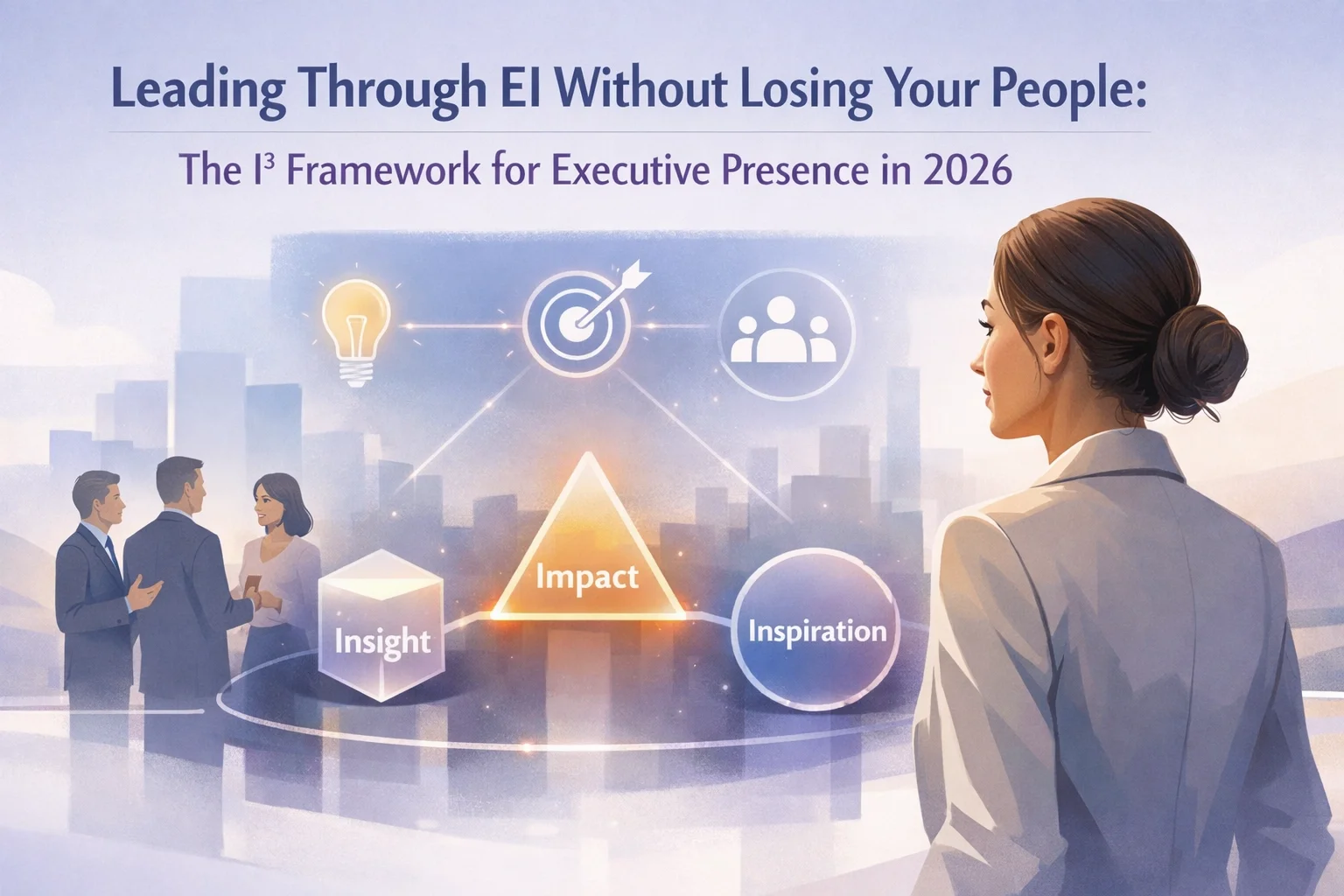
Leading Through EI Without Losing Your People: The I³ Framework for Executive Presence in 2026
We are living in the era of the emotional leader.
The World Economic Forum's 2025 Future of Jobs Report officially named emotional intelligence as a "Power Skill": not a soft skill, not a nice-to-have, but a power skill critical for organizational survival. Flowprofiler's research echoes this, showing that leaders who master EI don't just improve culture: they drive measurable performance outcomes.
Yet here's the paradox: most C-Suite leaders were trained to suppress emotion, not weaponize it. We climbed the ladder by being rational, composed, and bulletproof. But that old playbook is costing us our people, our influence, and frankly, our humanity.
The solution isn't learning to "feel more" or taking a weekend retreat to discover your feelings. It's about learning to identify, interpret, and channel emotional intensity in a way that fuels decision-making, builds trust, and creates executive presence that people actually want to follow.
This is the I³ Framework. And it's how leaders stop managing emotions and start leveraging them.

The Real Problem: Emotional Suppression Destroys Executive Presence
Harvard Business Review's 2025 research on executive presence revealed something counterintuitive: leaders who demonstrate self-awareness of their emotional states are rated significantly higher in gravitas, authenticity, and influence than those who project "unshakeable composure."
Translation? Your team knows when you're faking it. They can feel the disconnect between what you're projecting and what's actually happening inside you. And that disconnect erodes trust faster than any missed deadline.
Most leadership development focuses on emotional regulation: teaching leaders to keep their emotions in check. But regulation is just suppression with better branding. What we actually need is emotional weaponization: the ability to take negative emotions like frustration, anxiety, or anger and redirect that raw energy toward solving the problems in front of us.
This isn't about "venting" or "being authentic" in some unfiltered, chaotic way. It's about recognizing that emotions carry information and intensity: both of which are fuel for high-performance leadership when channeled correctly.
The I³ Framework: Information, Interpretation, Intensity
The I³ Framework gives leaders a repeatable process for turning emotional data into strategic advantage. It has three components:
1. Information: What Is the Emotion Telling You?
Every emotion is a messenger. Fear tells you there's risk. Anger tells you a boundary was crossed. Frustration tells you there's a gap between where you are and where you want to be.
Most leaders shoot the messenger. They dismiss the emotion as irrational, inconvenient, or unprofessional. But emotions are information systems: they're your internal radar picking up signals before your conscious mind catches up.
The first step in the I³ Framework is asking: What is this emotion trying to tell me?
If you're frustrated with a direct report's performance, the information isn't "this person is incompetent." It's "there's a misalignment between expectations and execution." That's actionable intelligence.
2. Interpretation: What Does It Mean in Context?
Raw emotional data is useless without interpretation. This is where most leaders either over-interpret or under-interpret.
Over-interpretation looks like: "I'm anxious about this merger, therefore it's a bad idea."
Under-interpretation looks like: "I'm anxious about this merger, but I'll ignore it because emotions aren't relevant to business decisions."
The I³ approach is different. You interpret the emotion in context by asking: Is this emotion proportional to the situation? What belief or assumption is triggering this intensity?
Springer's 2025 research on emotional intelligence in organizational settings found that leaders who actively interpret their emotional responses (rather than reacting to them) improve employee engagement by as much as 23%. Why? Because they model emotional maturity, which creates psychological safety for the entire team.

3. Intensity: How Do I Channel This Energy?
This is where weaponization happens. Emotions generate intensity: a surge of physiological and psychological energy. Most leaders either bottle it up (suppression) or let it leak out sideways (passive aggression, micromanagement, volatility).
The I³ Framework teaches you to direct that intensity toward your obstacles. Angry about missed targets? Channel that energy into a focused problem-solving session with your team. Anxious about a board presentation? Use that adrenaline to over-prepare and anticipate every question.
This is what I call Unleashing the Rage of Negative Emotions Against the Obstacles of Becoming More. It's not about pretending you're calm. It's about using the fire inside you to forge something better.
The Iron Man Core: Your Internal Reactor
The I³ Framework doesn't work if you're running on empty. You need an Iron Man Core: a self-sustaining internal source of purpose, values, and identity that powers you even when external conditions are hostile.
Too many leaders build their core on external validation: titles, salaries, performance reviews, market share. But external validation is unreliable. Markets crash. Teams leave. Titles change. If your sense of self depends on external factors, your emotional intensity becomes chaotic and reactive.
The Iron Man Core is different. It's built on intrinsic values: the things you stand for regardless of outcomes. When you know who you are at your core, emotional intensity becomes directed and disciplined rather than erratic and destructive.
This is where executive coaching becomes non-negotiable. You can't build an Iron Man Core alone. You need someone outside the system to help you identify the gap between who you think you are and who you actually are when the pressure's on.

Proactive Teachability:
Destroying Your Blind Spots
One of the most dangerous myths in leadership is that self-awareness is something you "achieve" and then you're done. In reality, self-awareness is a discipline, not a destination.
The I³ Framework includes a concept called Proactive Teachability: the practice of actively seeking feedback to expose blind spots before they become career-limiting liabilities.
Here's what it looks like:
Weekly Check-Ins: Ask a trusted colleague or team member: "What's one thing I did this week that helped the team? What's one thing I did that created friction?"
360 Feedback Without the Fluff: Don't wait for annual reviews. Create informal feedback loops where people feel safe telling you the truth.
The Test of Truth: Treat your beliefs about yourself as hypotheses to be validated. If you think you're a great communicator, test it. Ask your team if they feel heard. Ask your peers if your messages land clearly.
Harvard Business Review's 2025 findings show that leaders who practice proactive feedback-seeking are rated 40% higher in executive presence than those who wait for formal performance reviews. Why? Because they're constantly closing the gap between intent and impact.
Executive Presence Isn't About Charisma: It's About Congruence
Let's kill the myth: executive presence is not about being the most charismatic person in the room. It's about congruence: alignment between what you feel, what you think, and what you do.
When your internal state matches your external behavior, people trust you. When there's a gap, people feel it: even if they can't articulate why.
The I³ Framework gives you a daily practice for maintaining congruence. You're not suppressing emotions to look composed. You're identifying them, interpreting them accurately, and channeling their intensity in a way that moves the mission forward.
That's presence. That's influence. That's the kind of leadership people follow: not because they have to, but because they want to.

The 2026 Leadership Standard
We are entering a leadership environment where emotional fluency is no longer optional. AI can handle data. Automation can handle processes. What your organization needs from you is something machines can't replicate: the ability to read a room, interpret emotional signals, make values-driven decisions under pressure, and mobilize people toward a shared vision.
The I³ Framework isn't just a model: it's a competitive advantage. Leaders who master it will outperform, out-influence, and outlast those who don't.
If you're ready to stop managing your emotions and start weaponizing them, the I³ Online Course walks you through the complete framework. It's 8 lessons, a workbook, and the exact process I use with C-Suite clients to build emotional intelligence that drives results.
You can also explore more about our executive coaching programs designed specifically for senior leaders who refuse to settle for outdated leadership models.
The question isn't whether emotional intelligence matters. The question is: are you going to let your emotions control you, or are you going to weaponize them to become the leader your people actually need?
References:
World Economic Forum & Flowprofiler (2025). Future of Jobs Report: Power Skills for the Next Decade.
Harvard Business Review (2025). Executive Presence Through Self-Awareness: The New Leadership Imperative.
Springer (2025). Emotional Intelligence and Organizational Performance: A Meta-Analysis.