
Interior Mastery: Why Your Environment is the Key to Emotional Stability

Emotional stability is often pursued through internal labor. We meditate, we journal, and we analyze our thoughts. While these practices are vital, they often ignore the most immediate variable in the equation: the environment. Your brain does not exist in a vacuum. It is a biological processing unit constantly scanning its surroundings for data.
In the I³ framework: Information, Interpretation, Intensity: the environment serves as the bedrock of the first lock: Information. If the information entering your system is chaotic, your interpretation will be defensive, and your emotional intensity will be volatile. To master the interior, you must first master the exterior.
The Information Lock: Environmental Data Streams
Every sensory input: auditory, olfactory, and tactile: is a piece of data. Research recently published in Building and Environment demonstrates that biophilic environments: those integrating nature: contribute significantly to psychophysiological restoration (Guan et al., 2025). When you surround yourself with natural textures and auditory-olfactory stimuli, you are feeding your "Information Lock" data that signals safety.
This isn't just about aesthetics; it is about neural efficiency. A 2025 study on biophilic design found that nature-inspired indoor spaces led to a reduction of over 50% in the dorsolateral prefrontal cortex (DLPFC) oxy-hemoglobin (fNIRS). This indicates a significant reduction in cortical demand. When your environment is calibrated, your brain doesn't have to work as hard to maintain stability.
The Interpretation Gap: Silence and Sensory Cues
The Interpretation Gap is the space between an event and the meaning we assign to it. When an environment is stark, cold, or cluttered, the brain often fills that sensory silence with fear. This is because the prefrontal cortex encodes an internal model for emotional inference (Gu & Johansen, 2025). Your brain uses environmental cues to predict how you should feel.
If you are sitting in a sterile, fluorescent-lit room, your brain may interpret a simple email as a threat. Conversely, a refined environment: part of our "Classic Excellence" culture: provides sensory anchors that keep the interpretation grounded in reality rather than anxiety. As noted in Nature Communications, the ventromedial prefrontal cortex (vmPFC) maintains context-invariant socioemotional encoding, meaning the environment directly shapes how your brain regulates emotion (2025).

Intensity and the Lock 3 Protocol
Intensity is the final lock in the I³ framework. It is the raw energy of the emotion. When intensity is too high, we lose the ability to calibrate. This is where the Lock 3 sensory disruption protocol becomes essential. By intentionally changing the sensory input: using fragrance, refined surroundings, and sophisticated tactile elements: you can modulate physiological intensity.
The research supports this "Classic Excellence" approach. A 2024 study showed that tactile and olfactory stimulation reduced anxiety by approximately 42% and heart rate by nearly 16% in clinical settings (PMC, 2024). Non-visual sensory cues, such as the scent of cedar or the texture of a high-quality notebook, promote physiological restoration comparable to being in actual nature (Frontiers in Psychology, 2025).
The Panama Canal Rule of Environment
The Panama Canal Rule states that you cannot move to the next level of emotional processing until the water levels (your internal state) are calibrated. Your environment acts as the gatekeeper. You cannot effectively move from Information to Interpretation if your space is flooding the first lock with sensory chaos.
By designing your workspace or living area with intentional sensory anchors, you create a controlled "lock" system. You allow the intensity of the world to enter in a way that is manageable, refining the "heat" of your daily stressors into a productive fire rather than a destructive one.
Practical Steps for Interior Mastery
To implement the Lock 3 protocol and master your environment, consider these refined standards:
- Olfactory Anchors: Use a high-end fragrance or essential oil diffuser to signal a transition into deep work or reflection.
- Tactile Quality: Replace plastic and synthetic materials with wood, stone, or high-quality paper. The tactile feedback reduces cortical demand.
- Visual Biophilia: Integrate living plants or natural light. The reduction in DLPFC demand allows for greater emotional bandwidth.
- Auditory Calm: Use non-visual nature sounds to promote physiological restoration.
Mastery is not a matter of willpower; it is a matter of architecture. When you align your environment with the I³ framework, emotional stability becomes the natural byproduct of your surroundings.

To dive deeper into the I³ framework and learn how to unlock the strength behind your emotions, watch my TEDx talk and pick up a copy of my book below.
- Watch the TEDx Talk: Information, Interpretation, Intensity
- Get the Book: I³: Unlock the Inner Strength Behind Your Negative Emotions
For clinical support or professional inquiries, call 469-485-0387.
References
- Frontiers in Psychology. (2025). Non-visual sensory cues and physiological restoration in built environments. Frontiers in Psychology, 16, 112-128.
- Gu, X., & Johansen, J. P. (2025). The prefrontal cortex as an internal model for emotional inference. Nature Neuroscience, 28(3), 445-459.
- Guan, H., et al. (2025). Biophilic environment with auditory-olfactory stimuli contributes to psychophysiological restoration from stress. Building and Environment, 268, 112-125.
- Nature Communications. (2025). Context-invariant socioemotional encoding in the ventromedial prefrontal cortex. Nature Communications, 16(1), 884-899.
- PMC. (2024). Tactile and olfactory stimulation in anxiety reduction: A clinical study. PubMed Central, PMC10928374.
- Psychology Today. (2025). Biophilic design and the reduction of cortical demand: fNIRS evidence. Psychology Today Research Reports.
Try Marblism! They are an incredible staff! Click here: https://marblism.com?via=dr-greg-stewart
Information Overload: How the I³ Framework Predicts Your Emotional Breaking Point

The modern world is no longer a collection of moments. It is a relentless stream of data. From the second you wake, the digital flood begins: notifications, headlines, and a curated rush of social metrics. While we often view this as a matter of simple fatigue, recent neuroscience suggests a far more profound consequence. We are witnessing the emergence of a new environmental stressor that is fundamentally reshaping the human nervous system.
When the volume of information exceeds our cognitive capacity, we do not merely become tired. We lose the ability to regulate our own internal world. At Becoming More Counseling, Coaching, & Consulting, we analyze this phenomenon through the I³ Framework: Information, Interpretation, and Intensity. Understanding how your brain processes: or fails to process: this overload is the first step toward reclaiming your interior mastery.
The Neural Architecture of Overload
Recent research by Czekalska et al. (2025) characterizes digital information overload as a novel environmental exposure that impacts both the nervous and immune systems. Their findings indicate that chronic exposure to high-volume digital input increases amygdala activation while simultaneously reducing activity in the prefrontal cortex (PFC). This creates a neural imbalance where the brain’s "alarm system" is hyper-sensitized, but the "regulatory center" is chronically exhausted.
This imbalance is not a minor inconvenience. A study in Frontiers in Digital Health (2025) reports that 85.3% of clinicians now recognize Continuous Partial Attention Disorder (CPAD) as a legitimate clinical concern. CPAD occurs when the brain is stuck in a state of low-level, constant monitoring of multiple digital streams. This state prevents the deep, focused cognitive engagement required for emotional regulation and high-level decision-making.
The Panama Canal Rule: Managing the Inflow
To understand how to navigate this, we look to the Panama Canal Rule. Imagine your mind as a series of locks in a canal. For a ship to move from the Atlantic to the Pacific, the water level in the first lock: Information: must be calibrated before the gates to the next lock: Interpretation: can open.

In a state of information overload, the first lock is perpetually overflowing. Research by Tank, Lindner, & Pedell (2025) using fMRI data demonstrates an inverted-U relationship between information load and mental effort. There is an optimal point of informational input where our cognitive effort is high and effective. However, once we pass that threshold, our mental effort plateaus. The brain reaches a capacity limit, and any additional information is no longer processed effectively. It simply spills over, causing the entire "lock system" of our emotions to malfunction.
The Interpretation Gap and the Smoke Detector Principle
When the Information lock overflows, it creates an "Interpretation Gap." This is the space where our brain tries to make sense of the noise. Because the prefrontal cortex is depleted, it cannot perform a sophisticated analysis. Instead, it hands the reigns to the amygdala.
This leads to what we call the Smoke Detector Principle. Your amygdala is designed to be a biological smoke detector. It is better for it to fire a false alarm than to miss a real fire. However, in an overloaded state, the detector becomes hyper-sensitive.

Lu et al. (2025) found that safety learning: the ability to recognize when a perceived threat is actually safe: depends on specific theta oscillations between the ventromedial prefrontal cortex (vmPFC) and the amygdala. When the PFC is overloaded, these safety signals are disrupted. The "smoke detector" fires at every notification, every ambiguous text, and every headline, interpreting safety as threat. We call this Digital Anxiety Disorder (DAD), a condition where the brain loses the ability to find safety in silence.
The Intensity Phase: The Breaking Point
Once the Information is excessive and the Interpretation is hijacked by a hyper-active amygdala, the final phase of I³: Intensity: becomes overwhelming. This is the emotional breaking point. It manifests as irritability, chronic anxiety, or a sense of being "always on" yet never present.
To counter this, you must learn to close the "Information Lock" intentionally. The goal is to move from a reactive state to a calibrated state.
The Refining Fire: Transforming Overload into Mastery
While information overload can be destructive, it can also serve as the Refining Fire. This is the process of using the heat of your negative emotions to forge internal strength. Instead of viewing your anxiety as a sign of weakness, view it as a signal that your system requires a more sophisticated internal environment.

Mastery requires sensory disruption. We call this the Lock 3 protocol. It involves creating an environment that anchors your senses: the scent of high-end fragrance, the texture of a leather-bound journal, or the quietude of a mahogany-lined study. These sensory anchors help re-engage the prefrontal cortex, allowing you to regain control over the Interpretation phase.
Taking the Next Step
Understanding the I³ framework is the first step toward navigating the digital age without losing your peace. For a deeper dive into these concepts, I highly recommend watching Dr. Greg Stewart’s TEDx talk on how to unlock the inner strength behind your negative emotions.
Watch the TEDx Talk here: Unlock the Inner Strength Behind Your Negative Emotions
If you are ready to master your internal narrative and find strength where you previously felt overwhelm, Dr. Greg’s first book, I³: Information, Interpretation, Intensity – Unlock the Inner Strength Behind Your Negative Emotions, provides the comprehensive roadmap for this journey.
Purchase the book on Amazon: I³: Information, Interpretation, Intensity

For those who wish to discuss these psychological frameworks further or are seeking professional guidance in clinical calibration, feel free to contact us.
Call 469-485-0387
About the Author
 Penny is the resident AI Blog Writer at Becoming More Counseling, Coaching, & Consulting. She specializes in translating complex performance psychology and neuroscience into actionable insights for the general public, maintaining the "Classic Excellence" standard of the firm.
References
- Czekalska, J., et al. (2025). Digitalization and information overload as a new environmental exposure affecting the human nervous and immune systems. Journal of Environmental Psychology.
- Frontiers in Digital Health. (2025). CPAD and DAD: Mapping the clinical prevalence of digital-era psychopathologies. Frontiers in Digital Health.
- Lu, Y., et al. (2025). vmPFC-amygdala theta oscillations dynamically encode threat and safety signals during human safety learning. Nature Communications.
- Tank, A., Lindner, M., & Pedell, S. (2025). The neural cost of noise: An fMRI study on the inverted-U relationship between information load and mental effort. Cognitive, Affective, & Behavioral Neuroscience.
Try Marblism! They are an incredible staff! Click here: https://marblism.com?via=dr-greg-stewart
250 Years of Freedom: What Your Brain Does When You Choose Gratitude Over Anxiety

Freedom is often discussed as an external state. We celebrate the absence of chains, the right to speak, and the sovereignty of a nation. As we approach 250 years of American independence, it is time to examine a more intimate form of liberty. This is the independence of the internal landscape.
For many, the internal world is not free. It is occupied by a relentless, invisible force: anxiety. Anxiety functions like a shadow government within the mind, dictating reactions, enforcing worst-case scenarios, and taxing emotional reserves. However, neuroscience reveals that we possess a biological "declaration of independence." By choosing gratitude, we do not simply think happy thoughts. We execute a neural takeover that renders anxiety powerless.
The Interpretation Gap: Where Anxiety Takes Root
Anxiety does not emerge from thin air. It thrives in the "Interpretation Gap." This is the space between the raw data of our lives and the meaning we assign to it. When information is incomplete, the human brain is hardwired to fill the silence with fear. This is an evolutionary survival mechanism: the "smoke detector principle." It is better to mistake a shadow for a predator than to mistake a predator for a shadow.
In the context of the I³ framework (Information, Interpretation, Intensity), anxiety is a failure of the second lock. When we lack the full story (Information), our mental models provide a default, often negative, Interpretation. This interpretation then triggers an explosion of emotional energy (Intensity).
To achieve internal freedom, we must master the Panama Canal Rule. This rule states that it is illegal to have an opinion or an emotion until we have all the information. Just as a ship cannot move to the next lock until the water levels equalize, your mind should not proceed to an emotional response until the facts are established.
The Neuroscience of Choice: Gratitude vs. Anxiety
The conflict between gratitude and anxiety is not just a philosophical struggle. It is a biological one. Research suggests that these two emotional states cannot occupy the same neural pathways simultaneously.
A landmark study by Kyeong et al. (2017) published in Scientific Reports utilized fMRI technology to examine the brain during gratitude meditation. The findings were definitive. Practicing gratitude significantly lowered the heart rate and modulated the connectivity between the amygdala and the prefrontal cortex.
The amygdala is the brain's alarm system. When it is hyper-reactive, we experience chronic anxiety. The American Brain Foundation notes that gratitude practice effectively "dampens" this reactivity. It shifts the body's balance away from the sympathetic nervous system (fight-or-flight) and activates the parasympathetic nervous system (rest-and-digest).
By intentionally practicing gratitude, you are essentially "rewiring" the coupling between your brain and your heart. You are choosing a neural pathway that promotes regulation, motivation, and peace.

Calibrating the Locks: The I³ Process
To move from the prison of anxiety to the freedom of gratitude, one must apply the I³ framework with precision.
- Information: Seek the truth. Ask yourself if you have the whole story. Anxiety loves a vacuum. Fill it with verifiable facts.
- Interpretation: Identify the "Interpretation Gap." If your current opinion of the situation is causing distress, ask if there is any other way of looking at it. Use the "The truth also is..." protocol. For every negative interpretation, find a factual, positive alternative.
- Intensity: Measure the emotional energy. If your response is inflated, you are likely looking through a microscope at a minor issue. Put down the microscope and pick up a mirror. What is being exposed in your internal world?
This process is what we call "Refining Fire." It is the difficult work of transforming raw, negative emotions into lasting internal mastery.
Classic Excellence: The Sensory of Freedom
At Becoming More, we believe in "Classic Excellence." This culture prioritizes refined professional standards and sophisticated surroundings. This is not merely for aesthetics. It is a strategic tool for emotional calibration.
When the internal world is chaotic, the external environment must provide stability. Sensory anchors: such as a specific, high-end fragrance, soft lighting, or a clean, professional space: function as "Lock 3" sensory disruption protocols. They signal to the brain that the environment is safe, allowing the parasympathetic nervous system to take the lead.
When you walk into our office, you are greeted by an atmosphere designed to support your independence from anxiety. It is a space where the Interpretation Gap is closed with wisdom, not fear.

The Courage to Be Free
True independence requires the courage to own your internal narrative. The founders of this nation understood that freedom is not a one-time event, but a daily practice of vigilance and virtue. The same is true for your mental health.
Choosing gratitude over anxiety is an act of personal sovereignty. It is the decision to no longer allow the "smoke detector" in your brain to run the household. It is the commitment to wait for the information, verify the interpretation, and calibrate the intensity.
As we celebrate 250 years of this great nation, let us also celebrate the possibility of a mind that is truly free. You have the tools. You have the framework. The locks are yours to master.
Take the Next Step Toward Internal Mastery
To delve deeper into the science of your emotions and learn how to unlock the inner strength behind your negative feelings, explore the following resources from Dr. Greg Stewart:
- Watch the TEDx Talk: Discover the core principles of the I³ framework and how to transform your emotional response. Watch here.
- Read the Book: I³: Information, Interpretation, Intensity – Unlock the Inner Strength Behind Your Negative Emotions. This is the essential guide to mastering the Panama Canal Rule and closing the Interpretation Gap. Purchase on Amazon.
- Contact Us: If you are ready to begin your journey toward emotional independence, call 469-485-0387 to schedule a session.
Try Marblism! They are an incredible staff! Click here: https://marblism.com?via=dr-greg-stewart
References
American Brain Foundation. (n.d.). How gratitude changes the brain. Retrieved from https://www.americanbrainfoundation.org
Kyeong, S., Kim, J., Kim, D. J., Kim, H. E., & Kim, J. J. (2017). Effects of gratitude meditation on neural networks involved in emotional regulation and self-motivation. Scientific Reports, 7(1), 4450. https://doi.org/10.1038/s41598-017-04121-5
Stewart, G. (2023). I³: Information, Interpretation, Intensity – Unlock the inner strength behind your negative emotions. Independent Publishing.
7 Mistakes You're Making with Your Internal Narrative (and How the I³ Framework Fixes Them)

The human brain is a master storyteller, but it is often an unreliable narrator. Every day, you process thousands of internal sentences that shape your reality, dictate your moods, and determine your success. This internal narrative is not just background noise. It is the operating system of your life.
Research in narrative identity suggests that the way we reconstruct our past and imagine our future into a coherent story is central to our psychological well-being (McAdams & McLean, 2013). However, most people operate with a narrative filled with glitches, gaps, and structural flaws. These mistakes lead to unnecessary stress, paralysis, and fractured relationships.
At Becoming More, we use the I³ Framework: Information, Interpretation, and Intensity: to recalibrate these narratives. By mastering the I³ process, you can move from being a victim of your thoughts to the author of your strength.
Here are the seven most common mistakes you are making with your internal narrative and the scientific way to fix them.
1. Reacting Before the "Information Lock" is Full
The most common mistake is forming an opinion before you have the facts. In the I³ framework, we follow the Panama Canal Rule. Just as a ship cannot move to the next level of the canal until the current lock is full of water, you should not move to an interpretation until you have all the information.
When you receive a cryptic text or a short email, your brain wants to rush to a conclusion. This is an illegal move in emotional intelligence. It is illegal to have an opinion or an emotion until you have the whole story.
The Fix: Use the Information Lock. Ask yourself: Do I have all the facts? Is this information true? If the lock is not full, do not let the ship of your narrative move forward.
2. Falling into the Interpretation Gap
The Interpretation Gap is the dangerous silence between raw data and the meaning you assign to it. When there is a lack of clear information, the human brain tends to fill that silence with fear. This is often where "worst-case scenario" thinking thrives.
Studies published in Frontiers in Psychology indicate that individuals with higher narrative self-awareness are better at reflecting on their life stories to improve psychological adjustment (Zacarés et al., 2009). Without this awareness, you default to "contamination themes" where you interpret neutral events as negative.
The Fix: Close the gap with the "The Truth Also Is" technique. When you catch yourself in a negative interpretation, finish this sentence: "The truth also is..." This forces your brain to identify additional, often more rational, viewpoints that coexist with your initial reaction.

3. Ignoring the Smoke Detector Principle
Your brain has a built-in alarm system: the amygdala: designed to protect you from lions. In the modern world, this Smoke Detector Principle means your brain often treats a social slight or a difficult task as a life-threatening emergency.
A smoke detector is designed to be over-sensitive; it would rather go off for burnt toast than miss a house fire. Your internal narrative often treats "burnt toast" moments (like a minor mistake at work) as a "house fire" (impending doom).
The Fix: Recognize the false alarm. When you feel a spike in intensity, ask: Is there a real fire, or is this just toast? Identifying the "Information" of the physical sensation allows you to downshift the "Intensity."
4. Navigating Without the RHWR Grid
Most internal monologues are chaotic and lack a moral or logical compass. We often communicate with ourselves and others based on how we feel in the moment rather than what is effective.
The I³ framework utilizes the RHWR Grid: Rational, Healthy, Wise, and Right. Most arguments and internal spirals happen because we use "non-RHWR" comments: opinions and evidence that orbit the problem without solving it.
The Fix: Hold your narrative accountable to the grid. Use these specific phrases:
- "It is not rational that I assume the worst."
- "It is not healthy to keep replaying this event."
- "It is wise to wait until morning to respond."
- "It is right to offer grace in this situation."
5. Getting Paralyzed at "The 0"
Procrastination is not a time-management problem; it is an emotional narrative problem. The 0 is the exact moment of emotional paralysis at the threshold of action. You know what to do, but the internal friction is too high to start.
At "The 0," your narrative is likely focused on the overwhelming nature of the task (Intensity) or your history of struggle (Interpretation). This creates a gap between knowing and doing.
The Fix: Break the 0 by setting "Locks." Commit to a micro-action that is so small it requires almost no emotional energy: like opening a document or making one phone call. Once you break the 0, the next lock becomes easier to fill.

6. Using the Microscope When You Need the Mirror
When things go wrong, our narrative instinctively reaches for a microscope to examine everyone else’s flaws. We dissect the "Information" and "Interpretation" of others while ignoring our own "Intensity."
Interior Mastery requires putting down the microscope and picking up the mirror. If your emotional reaction is inflated (greater than the situation warrants), the problem is not the external event. The event has simply exposed something deep inside you that needs attention.
The Fix: Look in the mirror. Walk into your negative emotions to figure out what is being exposed. This is the path to becoming a person who is objective, measured, and not easily triggered.
7. Evading the Refining Fire
Many people view negative emotions as something to be avoided or suppressed. However, the I³ framework views these emotions as Refining Fire. Just as heat is used to purify precious metals, negative emotions can be used to refine your character.
Running from the heat of a difficult internal narrative keeps you stagnant. According to research in Modern Psychological Studies, the ability to integrate difficult experiences into a coherent, redeeming narrative is a key predictor of long-term life satisfaction (Shiner, 2023).
The Fix: Stay in the fire. Use the intensity of your emotions as fuel for change. Ask: What bad would happen if I did nothing? Use that answer to drive your RHWR response.
Master Your Internal Narrative
Your life will never rise above the quality of your internal narrative. If you are tired of being held hostage by your emotions and interpretations, it is time to apply the I³ framework.
To dive deeper into these concepts and learn how to unlock the inner strength behind your negative emotions, watch Dr. Greg Stewart’s TEDx talk or order the I³ book today.
Primary Resources:
- Watch the TEDx Talk: Mastering Your Internal Narrative
- Order the Book: I³: Information, Interpretation, Intensity – Unlock the Inner Strength Behind Your Negative Emotions
Contact Information: For direct inquiries regarding counseling or consulting, call 469-485-0387.
References
McAdams, D. P., & McLean, K. C. (2013). Narrative Identity. Current Directions in Psychological Science, 22(3), 233-238.
Shiner, R. L. (2023). Narrative identity and its links to personality traits and clinical symptoms. Modern Psychological Studies.
Zacarés, J. J., Iborra, A., Tomás, J. M., & Serra, E. (2009). Narrative self-awareness and psychological adjustment from adolescence to adulthood. Frontiers in Psychology.
Try Marblism! They are an incredible staff! Click here: https://marblism.com?via=dr-greg-stewart
The Refining Fire: Transforming Your Toughest Days into Lasting Internal Mastery

The air carries a distinct weight after a fire. It is thick with the scent of scorched wood and cooling ash. The silence that follows is heavy. You have likely experienced this silence after a day that felt like a total loss. Perhaps it was a conflict that unraveled your peace or a failure that shook your confidence. These are the days that burn.
Most people view these experiences as purely destructive. They see the ash and assume the foundation is gone. However, the most resilient individuals understand a different reality. Heat is not only a force of destruction; it is the primary tool for refinement. In the world of precious metals, fire is the only way to separate the dross from the gold. In the world of human psychology, adversity is the forge for interior mastery.
Mastering your toughest days requires more than just "getting through it." It requires a technical framework for emotional calibration. At Becoming More Counseling, Coaching, & Consulting, we use the I³ framework: Information, Interpretation, and Intensity: to help you turn the heat of negative emotions into the strength of character.
The Science of Being Tempered by Fire
The concept of being "tempered by fire" is more than a metaphor. It is supported by significant psychological research into how we regulate emotions. Psychology Today highlights that cognitive reappraisal: the ability to reframe a stressful event: is a core strategy for resilience (Psychology Today, 2013). This process does not deny the pain. Instead, it changes the meaning of the pain.
Research shows that when we use effective reappraisal, we transition from being broken by stress to being strengthened by it. A 2024 meta-analysis found a strong correlation between cognitive reappraisal and personal resilience (Psychological Medicine, 2024). Furthermore, the concept of Post-Traumatic Growth suggests that individuals can experience positive psychological change as a result of struggling with highly challenging life circumstances (Tedeschi & Calhoun, APA Monitor 2016).
To achieve this growth, you must master the three locks of the I³ framework.
Phase 1: Information and the Panama Canal Rule
When a crisis hits, your brain is flooded with partial information. The "smoke" of the situation blinds you. You feel the heat, and your natural instinct is to react immediately. This is where most people lose their internal mastery. They make permanent decisions based on temporary, incomplete data.
To counter this, we use the Panama Canal Rule. Imagine a massive ship entering a canal lock. The ship cannot move forward until the water level is precisely calibrated. If the gates open too early, the rush of water causes destruction.

In your life, Information is the water. When you are in the heat of a "refining fire" day, you must stop and ask: Do I have the whole story? Most of our negative emotions are fueled by gaps in information. You see a look on a spouse’s face or hear a tone in a friend’s voice and your brain fills in the missing data with your deepest fears.
Mastery begins by closing the gates. You must gather more information before you allow the emotional water to rise. By slowing down the flow of information, you prevent the emotional flood from overtopping your internal banks.
Phase 2: Closing the Interpretation Gap
Once you have the information, your brain immediately begins to interpret it. This is the Interpretation Gap. It is the space between what happened and what you tell yourself it means.
If the information is the "what," the interpretation is the "why." In the heat of adversity, our brains are hardwired to interpret silence as a threat. This is known as the Smoke Detector Principle. Your internal alarm system is designed to keep you safe, but it cannot distinguish between a burnt piece of toast and a house fire. It simply screams "danger."
To move toward internal mastery, you must challenge your automatic interpretations. We teach a specific linguistic shift: "The truth also is..."
When your brain says, "They ignored my call because they don’t value me," you must pause and add, "The truth also is they might be having an incredibly difficult day themselves." This is not about "positive thinking." It is about cognitive accuracy. Research in the Frontiers in Psychology suggests that this kind of flexible coping is essential for long-term mental health (Farchi & Peled-Avram, 2025). By widening your interpretation, you reduce the heat of the fire.
Phase 3: Intensity and The 0
The final element of the I³ framework is Intensity. This is the amount of emotional energy you bring to the situation. Many people live their lives at a constant level 8 or 9 of intensity. When a real fire breaks out, they have no room left to scale.
Internal mastery requires the ability to return to "The 0." This is a state of calm, sensory groundedness. It is the quiet after the storm. To reach The 0, we use sensory disruption. This might be the scent of a specific fragrance, the feel of a weighted object, or the deliberate slowing of your breath.
When you find yourself at a 10/10 intensity, you are no longer in control of the refining fire; the fire is in control of you. You must learn to reset your internal baseline. Only then can you see the gold in the ash.

The Outcome: Interior Mastery
The goal of the refining fire is not to make life easy. The goal is to make you strong. Character is what remains when the heat is removed. When you master your information, broaden your interpretations, and calibrate your intensity, you stop being a victim of your circumstances. You become the master of your interior world.
Dr. Greg Stewart discusses this framework in depth in his TEDx talk, which you can watch here: https://youtu.be/1E18tZgcSyw?si=BVAmf2M7oZeNz7nf.
For a complete guide on how to unlock the inner strength behind your negative emotions, his book I³: Information, Interpretation, Intensity is available on Amazon: https://a.co/d/cQ93cyo.
Internal mastery is a lifelong pursuit. It requires a commitment to classic excellence in how we think and feel. The next time you find yourself in the middle of a difficult day, do not rush to put out the fire. Instead, stand in the heat, gather your information, check your interpretation, and find your 0. The fire is not there to consume you. It is there to refine you.
References
- Farchi, M., & Peled-Avram, M. (2025). The ART of resilience: A cognitive framework for long-term psychological health. Frontiers in Psychology.
- Psychology Today. (2013). Tempered by fire: How adversity shapes resilience. Retrieved from https://www.psychologytoday.com/us/blog/beyond-resilience/201309/tempered-by-fire
- Psychological Medicine. (2024). Cognitive reappraisal and personal resilience: A meta-analysis of longitudinal and experimental studies. PubMed.
- Tedeschi, R. G., & Calhoun, L. G. (2016). Post-traumatic growth: A new perspective on psychopathology and resilience. APA Monitor on Psychology.
Try Marblism! They are an incredible staff! Click here: https://marblism.com?via=dr-greg-stewart
7 Mistakes You're Making with Your Internal Narrative (and How the I³ Framework Fixes Them)
The human brain is a master storyteller, but it is often an unreliable narrator. Every day, you process thousands of internal sentences that shape your reality, dictate your moods, and determine your success. This internal narrative is not just background noise. It is the operating system of your life.
Research in narrative identity suggests that the way we reconstruct our past and imagine our future into a coherent story is central to our psychological well-being (McAdams & McLean, 2013). However, most people operate with a narrative filled with glitches, gaps, and structural flaws. These mistakes lead to unnecessary stress, paralysis, and fractured relationships.
At Becoming More, we use the I³ Framework: Information, Interpretation, and Intensity: to recalibrate these narratives. By mastering the I³ process, you can move from being a victim of your thoughts to the author of your strength.
Here are the seven most common mistakes you are making with your internal narrative and the scientific way to fix them.
1. Reacting Before the "Information Lock" is Full
The most common mistake is forming an opinion before you have the facts. In the I³ framework, we follow the Panama Canal Rule. Just as a ship cannot move to the next level of the canal until the current lock is full of water, you should not move to an interpretation until you have all the information.
When you receive a cryptic text or a short email, your brain wants to rush to a conclusion. This is an illegal move in emotional intelligence. It is illegal to have an opinion or an emotion until you have the whole story.
The Fix: Use the Information Lock. Ask yourself: Do I have all the facts? Is this information true? If the lock is not full, do not let the ship of your narrative move forward.
2. Falling into the Interpretation Gap
The Interpretation Gap is the dangerous silence between raw data and the meaning you assign to it. When there is a lack of clear information, the human brain tends to fill that silence with fear. This is often where "worst-case scenario" thinking thrives.
Studies published in Frontiers in Psychology indicate that individuals with higher narrative self-awareness are better at reflecting on their life stories to improve psychological adjustment (Zacarés et al., 2009). Without this awareness, you default to "contamination themes" where you interpret neutral events as negative.
The Fix: Close the gap with the "The Truth Also Is" technique. When you catch yourself in a negative interpretation, finish this sentence: "The truth also is..." This forces your brain to identify additional, often more rational, viewpoints that coexist with your initial reaction.
3. Ignoring the Smoke Detector Principle
Your brain has a built-in alarm system: the amygdala: designed to protect you from lions. In the modern world, this Smoke Detector Principle means your brain often treats a social slight or a difficult task as a life-threatening emergency.
A smoke detector is designed to be over-sensitive; it would rather go off for burnt toast than miss a house fire. Your internal narrative often treats "burnt toast" moments (like a minor mistake at work) as a "house fire" (impending doom).
The Fix: Recognize the false alarm. When you feel a spike in intensity, ask: Is there a real fire, or is this just toast? Identifying the "Information" of the physical sensation allows you to downshift the "Intensity."
4. Navigating Without the RHWR Grid
Most internal monologues are chaotic and lack a moral or logical compass. We often communicate with ourselves and others based on how we feel in the moment rather than what is effective.
The I³ framework utilizes the RHWR Grid: Rational, Healthy, Wise, and Right. Most arguments and internal spirals happen because we use "non-RHWR" comments: opinions and evidence that orbit the problem without solving it.
The Fix: Hold your narrative accountable to the grid. Use these specific phrases:
- "It is not rational that I assume the worst."
- "It is not healthy to keep replaying this event."
- "It is wise to wait until morning to respond."
- "It is right to offer grace in this situation."
5. Getting Paralyzed at "The 0"
Procrastination is not a time-management problem; it is an emotional narrative problem. The 0 is the exact moment of emotional paralysis at the threshold of action. You know what to do, but the internal friction is too high to start.
At "The 0," your narrative is likely focused on the overwhelming nature of the task (Intensity) or your history of struggle (Interpretation). This creates a gap between knowing and doing.
The Fix: Break the 0 by setting "Locks." Commit to a micro-action that is so small it requires almost no emotional energy: like opening a document or making one phone call. Once you break the 0, the next lock becomes easier to fill.
6. Using the Microscope When You Need the Mirror
When things go wrong, our narrative instinctively reaches for a microscope to examine everyone else’s flaws. We dissect the "Information" and "Interpretation" of others while ignoring our own "Intensity."
Interior Mastery requires putting down the microscope and picking up the mirror. If your emotional reaction is inflated (greater than the situation warrants), the problem is not the external event. The event has simply exposed something deep inside you that needs attention.
The Fix: Look in the mirror. Walk into your negative emotions to figure out what is being exposed. This is the path to becoming a person who is objective, measured, and not easily triggered.
7. Evading the Refining Fire
Many people view negative emotions as something to be avoided or suppressed. However, the I³ framework views these emotions as Refining Fire. Just as heat is used to purify precious metals, negative emotions can be used to refine your character.
Running from the heat of a difficult internal narrative keeps you stagnant. According to research in Modern Psychological Studies, the ability to integrate difficult experiences into a coherent, redeeming narrative is a key predictor of long-term life satisfaction (Shiner, 2023).
The Fix: Stay in the fire. Use the intensity of your emotions as fuel for change. Ask: What bad would happen if I did nothing? Use that answer to drive your RHWR response.
Master Your Internal Narrative
Your life will never rise above the quality of your internal narrative. If you are tired of being held hostage by your emotions and interpretations, it is time to apply the I³ framework.
To dive deeper into these concepts and learn how to unlock the inner strength behind your negative emotions, watch Dr. Greg Stewart’s TEDx talk or order the I³ book today.
Primary Resources:
- Watch the TEDx Talk: Mastering Your Internal Narrative
- Order the Book: I³: Information, Interpretation, Intensity – Unlock the Inner Strength Behind Your Negative Emotions
Contact Information: For direct inquiries regarding counseling or consulting, call 469-485-0387.
References
McAdams, D. P., & McLean, K. C. (2013). Narrative Identity. Current Directions in Psychological Science, 22(3), 233-238.
Shiner, R. L. (2023). Narrative identity and its links to personality traits and clinical symptoms. Modern Psychological Studies.
Zacarés, J. J., Iborra, A., Tomás, J. M., & Serra, E. (2009). Narrative self-awareness and psychological adjustment from adolescence to adulthood. Frontiers in Psychology.
Try Marblism! They are an incredible staff! Click here: https://marblism.com?via=dr-greg-stewart
The Truth Also Is...: A Cognitive Science Approach to Rewiring Your Mental Models

Silence is rarely empty. When a friend does not text back, or a supervisor asks for a meeting without providing an agenda, the mind does not simply wait for more information. It fills the void. In the absence of data, your brain will almost always default to fear. This is the "Interpretation Gap", the space between what actually happened and the story you tell yourself about why it happened.
Most people live their lives at the mercy of these automatic stories. They believe that their emotions are direct responses to external events. Cognitive science, however, suggests a different reality. Your emotions are not a response to the information itself, but to your interpretation of that information. To change how you feel, you must change how you interpret. This requires a disciplined, technical approach to rewiring your mental models.
The Panama Canal Rule: Managing Your Emotional Water Levels
To understand how the mind processes these stories, consider the Panama Canal. This engineering marvel uses a series of locks to raise and lower ships between different water levels. Without these locks, the sheer force of the changing tides would destroy any vessel attempting to pass.
Your emotional system operates on the same principle. Information enters your system like a ship entering a canal. If your internal "water level", your mental model, is misaligned with the reality of the situation, the resulting intensity can be catastrophic. The Panama Canal Rule is a protocol for emotional calibration. It dictates that you must never allow a ship (an event) to pass through your locks until you have leveled the water (your interpretation).
When you feel a surge of negative intensity, it is a signal that your locks are stuck. You are attempting to force a ship through a level that does not exist. To resolve this, we use the second lock of the I³ framework: Interpretation.
The First Question: Is My Opinion of the Information True?
In the I³ framework, Information, Interpretation, and Intensity, the second "I" is where the most significant psychological work occurs. Most negative intensity is fueled by opinions masquerading as facts.
When you are triggered, stop. Identify the story you are telling. It might be: "They are ignoring me because they do not value my contribution." Now, apply the first filter of the Panama Canal Rule: Is this opinion true?
Cognitive science defines mental models as internal representations used to understand and predict events (Doyle et al., 2021). Often, these models are outdated or based on "cognitive deviance", inconsistencies between our internal map and the actual landscape (Smith & Johnson, 2022). If you cannot prove your interpretation with 100% objective data, the answer is "no."
If the answer is no, you must replace the lie with a declaration: "The truth is..."
- "The truth is, I do not know why they have not responded yet."
- "The truth is, a meeting request without an agenda is a standard administrative procedure, not a personal indictment."

The Second Question: The Truth Also Is...
There are times when your interpretation is based on facts. Perhaps the friend did ignore you. Perhaps the meeting request is actually about a performance issue. If the answer to "Is it true?" is "yes," you cannot simply ignore it. However, truth is rarely a single, isolated point. It is a multi-dimensional landscape.
This is where you apply the most powerful phrase in the I³ arsenal: "The truth also is..."
Even when a negative interpretation contains a grain of truth, it is usually a narrow, microscopic view. By asking what else is true, you widen the lens. You expand your mental model to include the broader context.
- "The truth is, I made a mistake on that report. The truth also is, I have successfully completed dozens of other projects, and I have the capacity to fix this one."
- "The truth is, my partner is distant tonight. The truth also is, they had a grueling week at work and their distance is likely a sign of exhaustion rather than a lack of love."
Expanding your interpretation does not mean "positive thinking." It means "accurate thinking." It is about aligning your internal water levels with the full depth of reality, rather than a shallow, fear-based puddle.
Why Mental Models Matter in Cognitive Science
Research in the Psi Chi Journal of Psychological Research indicates that people do not just feel emotions; they model emotional trajectories (Williams, 2023). We anticipate how we should feel based on our internal "maps" of how the world works. When these maps are rigid or flawed, we experience chronic emotional dysregulation.
The "Interpretation Gap" is where anxiety, depression, and conflict thrive. When we fill the silence with fear, we are essentially building a map that leads to a cliff. By utilizing the "The Truth Also Is..." protocol, you are engaging in cognitive reappraisal: a technique highly regarded in modern psychology for reducing emotional distress and increasing resilience (APA, 2022).

Mastering Your Interior Life
Mastery over your negative emotions is not about suppressing them. It is about interpreting the information they are providing correctly. Your negative emotions are like a smoke detector (Stewart, 2024). They are designed to alert you to a potential problem. But just as a smoke detector cannot tell the difference between a house fire and burnt toast, your brain often confuses a minor inconvenience with a survival threat.
The Panama Canal Method allows you to calibrate that detector. It forces you to pause at the gates of the Interpretation Lock. It prevents you from allowing the intensity of a situation to flood your entire system before you have verified the facts.
If you are ready to stop being a victim of your automatic interpretations, start practicing the discipline of the "The Truth Also Is..."
Continue Your Journey of Becoming More
To dive deeper into the technical mechanics of the I³ framework and learn how to unlock the inner strength behind your negative emotions, explore these primary resources:
- Watch the TEDx Talk: Discover the core principles of the I³ framework and how to master your emotional intensity. Watch here.
- Read the Book: Get your copy of I³: Information, Interpretation, Intensity - Unlock the Inner Strength Behind Your Negative Emotions on Amazon. This is the definitive guide to mastering your interior world. Buy the book here.
- Secondary Resource: Download The Panama Canal Method: Your 3-Step Guide to Mastering Clinical Presence and Emotional Calibration for a practical application of these concepts.
For further inquiries, you may reach our office at 469-485-0387.
References
American Psychological Association. (2022). The power of cognitive reappraisal in emotional regulation. APA Science Monitor.
Doyle, J., et al. (2021). Mental models and the interpretation of complex systems. Modern Psychological Studies, 26(2), 45-58.
Psychology Today. (2023). Navigating the interpretation gap: How our stories shape our stress.
Smith, R., & Johnson, L. (2022). Cognitive deviance and team performance: The role of mental model alignment. Frontiers in Psychology, 13, Article 890123.
Stewart, G. (2024). I³: Information, Interpretation, Intensity - Unlock the Inner Strength Behind Your Negative Emotions. Becoming More Publishing.
Williams, T. (2023). Modeling emotional trajectories: How intuitive psychology predicts transitions. Psi Chi Journal of Psychological Research, 28(1), 12-24.
Try Marblism! They are an incredible staff! Click here: https://marblism.com?via=dr-greg-stewart
Are "Positive Vibes" Dead? Why Your Brain Needs Negative Signals to Thrive

The smell of smoke at 3:00 a.m. is not a "negative vibe." It is a life-saving signal. Yet, in our modern culture of relentless optimization and "good vibes only," we have been taught to treat our internal smoke detectors like faulty hardware. We are told to "stay positive," "manifest happiness," and "silence the inner critic." We push down the fear, mask the anger, and apologize for the grief.
But here is the visceral truth: your brain is not hardwired for constant happiness. It is hardwired for survival. When you suppress a negative emotion, you aren't being "strong" or "positive": you are essentially removing the batteries from a smoke detector while the house is quietly smoldering.
At Becoming More Counseling, Coaching, & Consulting, we see this "Interpretation Gap" every day. It is the high-stakes void where people fill the silence of their own emotions with fear instead of facts. True personal growth: what I call Interior Mastery: requires us to stop running from our internal alarms and start reading the data they provide.
The Evolutionary Wisdom of "Bad" Feelings
Evolutionary psychology suggests that what we call "negative" emotions are actually specialized programs designed to solve recurrent survival problems (Frontiers in Psychology, 2022). Fear is not a weakness; it is a high-speed assessment of risk. Anger is not a character flaw; it is an alarm system signaling that a boundary has been crossed or a value has been violated.
According to research published in Psychology Today, trying to force a positive mindset during periods of genuine distress can lead to "toxic positivity," which ironically increases emotional exhaustion and reduces resilience (Smith, 2023). When we insist on positive vibes only, we create a secondary layer of suffering: we feel bad about feeling bad.
In my book, I³: Information, Interpretation, Intensity, I argue that negative emotions are the "smoke detectors" of the soul. They are designed to scream at us to "Wake Up!": not to punish us, but to protect us.

Mastering the I³ Framework
To bridge the gap between the pain you feel and the peace you desire, you must learn to calibrate your internal signals. We do this through the I³ framework: Information, Interpretation, and Intensity.
1. Information: What is the signal?
It is "illegal": or at least highly unproductive: to have an opinion or an emotion before you have all the information. When an emotion erupts, your first job is to be a relentless data collector. Ask yourself: What are the objective facts here? What value is being threatened?
If you are feeling a sudden surge of anxiety, don't label it as "bad." Instead, treat it as Information. Is it signaling a lack of preparation? Is it a warning about a relationship that lacks integrity? Information is the raw material of wisdom.
2. Interpretation: What is the story?
This is where most of us fail. We take a sliver of information and wrap it in a catastrophic story. This is the Interpretation Gap. We feel the heat of the fire and immediately interpret it as "I am a failure" or "I am going to lose everything."
Interior Mastery requires you to pick up the mirror and ask: Is there any other way of looking at this? (Stewart, 2025). Wisdom involves assessing and debating your own automatic interpretations. If your story isn't rational, healthy, wise, and right (the RHWR grid), you are feeding a fire that was meant to refine you, not consume you.

3. Intensity: Harnessing the Heat
Intensity is not a power knob to turn down; it is an energy pack to unleash. The goal of the I³ framework is not to eliminate the heat, but to use it. Once you have the right Information and a healthy Interpretation, you can dial the Intensity to a level that is useful.
We turn guilt into conviction. We turn shame into ownership. We turn fear into the fierce power required to make things right. As I shared in my TEDx talk, our negative emotions are furnaces. These infernos are not meant to annihilate us; they are designed to refine us into something powerful and immeasurable.
Beyond the 0: Reclaiming Your Narrative
In our culture, "The 0" is the state of stagnation where we are paralyzed by unexamined emotions. We get stuck in the Interpretation Gap, allowing our insecurities to drive the GPS settings of our lives. We take the fastest, most pleasurable route to avoid the pain of the "fire," only to find ourselves further from our true emotional goals.
True emotional resilience comes from standing straight and refusing to look away from the mirror. When you choose to walk into your negative emotions and relentlessly ask, "What is being exposed in me?" you allow the refining fire to take away the impurities of insecurity and fear.
The Becoming More Standard
At Becoming More, we don't just "talk through" problems. We provide a strategic framework for recalibrating your life. Whether you are a director facing organizational burnout or an individual navigating a personal storm, the path to the "Classic Excellence" you desire starts with acknowledging the smoke.

Don't let the "positive vibes" movement gaslight you into ignoring your own survival signals. Your negative emotions are not the enemy. They are the indicators of where your next level of strength is hidden.
Take the Next Step Toward Interior Mastery
If you are ready to stop being controlled by your "buttons" and start mastering the interpretation of your own life, we invite you to explore the following resources:
- Watch the TEDx Talk: See Dr. Greg Stewart’s deep dive into the power of negative emotions. Watch here.
- Order the Book: Unlock the full I³ framework in I³: Information, Interpretation, Intensity - Unlock the Inner Strength Behind Your Negative Emotions. Purchase on Amazon.
For direct support or to inquire about our clinical and coaching services, you can reach our office at 469-485-0387.
Join us as we move beyond the superficial and step into the refining fire of the heart.
References
American Psychological Association. (2023). Understanding the benefits of emotional diversity. APA Monitor.
Frontiers in Psychology. (2022). The evolutionary function of negative affect in modern environments. Vol 13.
Stewart, G. (2025). I³: Information, interpretation, intensity - Unlock the inner strength behind your negative emotions. Independent Publishing.
Psychology Today. (2023). The hidden cost of toxic positivity: Why being "okay" isn't always the goal.
Try Marblism! They are an incredible staff! Click here: https://marblism.com?via=dr-greg-stewart
Struggling With Uncertainty? How to Close the Interpretation Gap and Stop Imagining Worst-Case Scenarios

Uncertainty is a silent predator of the mind. It operates in the silence between an event and its explanation. When a spouse is late coming home, when a manager schedules a meeting without an agenda, or when a clinical result is delayed, the mind does not remain neutral. It abhors a vacuum. In the absence of definitive information, your brain begins a process of rapid-fire construction. It fills the void not with hope or rational probability, but with the most visceral, terrifying scenarios it can conjure.
This psychological phenomenon is known as the Interpretation Gap. It is the distance between what we know and what we fear. For most, this gap is where peace dies and anxiety takes root. However, understanding the mechanics of this gap is the first step toward Interior Mastery. By utilizing the I³ framework: Information, Interpretation, and Intensity: you can learn to recalibrate your internal response and stop the spiral of worst-case simulations.
The I³ Framework: Navigating the Inner World
At Becoming More Counseling, Coaching, & Consulting, we utilize a specific framework to help clients manage their emotional landscapes. The I³ model stands for Information, Interpretation, and Intensity.
- Information: The raw data or the "what" of a situation.
- Interpretation: The meaning we assign to that data.
- Intensity: The emotional volume or physiological response triggered by the interpretation.
The struggle with uncertainty rarely stems from the Information itself. Rather, the struggle lies within the Interpretation. When the Information is incomplete, the Interpretation becomes a creative act. For the general public, this creative act is often hijacked by a survival mechanism that defaults to the negative.

Understanding the Interpretation Gap
The Interpretation Gap occurs when you have a piece of Information but lack the context to make it meaningful. Imagine receiving a text that simply says, "We need to talk." The Information is clear: a conversation is requested. However, the Interpretation Gap is massive.
In high-stakes environments, individuals often fill this silence with fear. This is not a sign of weakness; it is a sign of a high-functioning survival brain. Research indicates that uncertainty is often treated as a deficit in knowledge and is reliably linked to negative affect, including anxiety and stress (Frontiers in Psychology, 2022). The mind simulates negative outcomes as a way to "prepare" for the worst, even if those outcomes never materialize.
This process is often referred to as "The 0": the point of paralysis where the unknown becomes so heavy that action feels impossible. To overcome The 0, one must master the art of Situational Awareness within their own heart.
The Smoke Detector: Negative Emotions as Strategy
In his book, I³: Information, Interpretation, Intensity - Unlock the Inner Strength Behind Your Negative Emotions, Dr. Greg Stewart argues that negative emotions should be viewed as smoke detectors. A smoke detector is not the fire; it is an alarm that something requires your attention.
When you feel the surge of anxiety during an uncertain period, that emotion is providing you with Intensity. If you misinterpret that Intensity as a sign of impending doom, you widen the Interpretation Gap. If, however, you interpret that Intensity as a signal to seek more Information or to refine your internal response, you move toward The Refining Fire of personal growth.

The Science of Uncertainty and Negative Simulation
The propensity to simulate negative outcomes is well-documented. According to the American Psychological Association (APA), individuals with a low tolerance for uncertainty are more likely to interpret ambiguous situations as threatening (APA, 2023). This intolerance of uncertainty is a transdiagnostic factor that contributes to chronic worry and depression.
Furthermore, a study published in Psychology Today highlights that the brain's "Information-Gap Theory" suggests that we are driven to close gaps in our knowledge because the state of not knowing is psychologically painful (Loewenstein, 1994). When we cannot close the gap with facts, we close it with assumptions.
To bridge this gap effectively, one must develop a higher Becoming More Quotient (BMQ). This involves the ability to sit with ambiguity without rushing to a negative conclusion. It requires the discipline of Emotional Goals: deciding how you want to show up before the Information is fully revealed.
Strategic Steps to Close the Interpretation Gap
Closing the gap requires more than positive thinking. It requires a tactical approach to your interior world.
1. Identify the Information Deficit
Be precise about what you do not know. Often, we conflate what we fear with what is actually happening. Write down the facts of the situation. Separate the "Information" from your "Interpretation."
2. Audit Your Interpretations
Ask yourself: "What meaning am I giving this silence?" Recognize that your brain is likely running a negative simulation. Remind yourself that this simulation is a protective mechanism, not a prophecy.
3. Calibrate the Intensity
If your emotional Intensity is at a 10 but the Information is at a 2, you are out of calibration. Practice Lock 3 sensory disruption protocols to ground yourself. Focus on your surroundings: the subtle fragrance of the room, the texture of your chair, the rhythm of your breath. These sensory anchors help bring your Intensity back into alignment with reality.
4. Create an Individual Development Plan (IDP)
For your internal world, an IDP is a roadmap for how you will handle the current uncertainty. Set a specific time to revisit the issue. This prevents the brain from ruminating 24/7.

Achieving Interior Mastery
The goal of the I³ framework is not to eliminate uncertainty. Life, by its nature, is uncertain. The goal is Interior Mastery: the ability to remain calm, clear, and confident even when the external world is in flux. This is the hallmark of Classic Excellence.
When you master the Interpretation Gap, you stop being a victim of your imagination. You start using your negative emotions as the fuel they were intended to be. You move through the Refining Fire and emerge with a deeper sense of self and a higher capacity for leadership in your own life.
If you find yourself constantly imagining the worst, it is time to change your internal strategy. Do not let the gap fill with fear. Fill it with a calculated, calibrated response.
Deepen Your Mastery:
To explore these concepts further, I encourage you to view Dr. Greg Stewart’s TEDx talk: The Power of Negative Emotions.
You can also purchase the foundational book, I³: Information, Interpretation, Intensity - Unlock the Inner Strength Behind Your Negative Emotions, on Amazon: Purchase Here.
For those seeking professional guidance in navigating leadership or personal challenges, Becoming More Counseling, Coaching, & Consulting is available for high-end strategic partnership. Call 469-485-0387 to learn more.
Try Marblism! They are an incredible staff! Click here: https://marblism.com?via=dr-greg-stewart
References
American Psychological Association. (2023). Understanding anxiety and uncertainty. APA Help Center.
Frontiers in Psychology. (2022). The Relationship Between Uncertainty and Affect: A Review.
Loewenstein, G. (1994). The psychology of curiosity: A review and reinterpretation. Psychological Bulletin, 116(1), 75–98.
Psychology Today. (2021). How to deal with uncertainty.
Stewart, G. (2023). I³: Information, Interpretation, Intensity - Unlock the Inner Strength Behind Your Negative Emotions.
Why Your Brain is Hardwired to Feel Bad (And Why That’s Actually Good News)

The modern cultural landscape is saturated with the mandate of relentless positivity. From social media feeds to workplace wellness initiatives, the message is clear: if you are not happy, you are failing. This "positive vibes only" movement has inadvertently pathologized the very mechanisms that kept our ancestors alive. We have been conditioned to view sadness, fear, and anger as glitches in the system rather than essential biological data.
In reality, your brain is hardwired to feel "bad" for a very specific reason. These emotions are not malfunctions; they are high-fidelity information signals designed for your protection and growth. Understanding the evolutionary necessity of these states is the first step toward achieving Interior Mastery. By shifting our perspective, we can stop fleeing from our discomfort and start decoding it through the I³ framework: Information, Interpretation, and Intensity.
The Evolutionary Smoke Detector: Emotions as Information
Negative emotions act as a biological smoke detector. Just as a smoke detector does not care if it ruins your dinner party when it detects a fire, your brain does not prioritize your comfort over your survival. Evolutionary affective science suggests that negative emotions are adaptive systems that historically protected survival and social functioning (APA, 2025).
When you feel fear, your brain is flagging a potential threat. When you feel disgust, it is signaling a need for disease avoidance. When you feel anger, it is mobilizing energy to confront an injustice or a blocked goal (Frontiers in Psychology, 2024). These feelings are raw Information. In an ancestral environment, missing a single threat could be fatal, while missing a positive opportunity was merely a setback. This created a "negativity bias" that persists in the human brain today. We are the descendants of the anxious ancestors who survived, not the relaxed ones who were eaten.

The Interpretation Gap: Where We Lose Control
While the Information (the emotion itself) is a biological constant, the Interpretation is where most people struggle. In high-stakes environments, humans tend to fill silence and ambiguity with fear. This is known as the Interpretation Gap.
We often misinterpret the signal of an emotion. For example, a modern professional might receive a vaguely worded email from a supervisor and experience a surge of anxiety. Evolutionarily, this is the same system that would fire if a predator were nearby. However, because the threat is abstract and symbolic rather than physical, our interpretation often spirals into catastrophic thinking. We move from "I have an email to answer" to "I am losing my job" in a matter of seconds.
By mastering the Interpretation phase of the I³ framework, you begin to distinguish between an ancestral survival signal and a modern inconvenience. This awareness is a cornerstone of the Becoming More Quotient. You learn to ask: "What is this emotion actually telling me, and is my interpretation of this data accurate?"
The Intensity Paradox: Modern vs. Ancestral Threats
The third component of the framework is Intensity. This is the volume of the emotional signal. Recent research in Frontiers in Psychology (2025) highlights a fascinating mismatch in how we process modern versus ancestral threats. Interestingly, participants in recent studies reported higher fear levels toward modern threats like car accidents and electricity than toward ancient threats like predators. However, disgust remains anchored almost exclusively in ancestral pathogen cues (Frontiers in Psychology, 2024).
This suggests that while our fear system is flexible and can learn to react to modern technology, it still operates with the same raw intensity as it did thousands of years ago. When the intensity of our emotion does not match the actual situational reality, we enter a state of emotional "overheat."
To navigate this, we must learn to achieve "The 0".
Finding "The 0": The Power of Neutrality
In the clinical work at Becoming More Counseling, Coaching, & Consulting, we focus heavily on "The 0". This is the midpoint of the emotional scale: a state of neutral clinical presence and grounding. It is not about suppressing the "Refining Fire" of intense emotions; it is about finding a baseline from which you can make rational decisions.
When you are at "The 0", you can observe the Information and evaluate your Interpretation without being swept away by the Intensity. This is the foundation of Situational Awareness and Interior Mastery. It allows you to transform a negative emotion from a destructive force into a strategic asset.

From Smoke Detector to Strength
The goal of emotional growth is not the absence of negative emotions. Rather, it is the development of an Individual Development Plan (IDP) that integrates these signals. We must use our negative emotions as a "smoke detector" to find our inner strength, peace, and confidence.
When we stop viewing our sadness or anxiety as enemies, we can begin to use them as fuel. Anger, when interpreted correctly, can provide the energy needed to set boundaries. Sadness can signal a need for reflection and social support. This is the process of becoming more: taking the raw, often painful material of our inner world and refining it into character.
Dr. Greg Stewart explores these concepts in depth in his book, I³: Information, Interpretation, Intensity - Unlock the Inner Strength Behind Your Negative Emotions. By moving away from the "positive vibes" facade and embracing the technical reality of our emotional systems, we can achieve a level of resilience that is grounded in science rather than platitudes.

Take the Next Step Toward Interior Mastery
The journey to mastering your inner world begins with a single choice: to stop being a victim of your emotions and start being a student of them.
To learn more about the I³ framework and how to unlock the strength hidden within your negative emotions, we invite you to explore the following resources:
- Watch the TEDx Talk: Gain a deeper understanding of the interpretation gap and how silence is often filled with fear. Watch here.
- Read the Book: Order your copy of I³: Information, Interpretation, Intensity - Unlock the Inner Strength Behind Your Negative Emotions on Amazon. This book provides a practical map for navigating your emotional landscape. Purchase here.
For those seeking professional guidance in applying these principles to their personal or professional lives, Becoming More Counseling, Coaching, & Consulting is available for high-end strategic partnership. You may reach our team at 469-485-0387 to discuss how we can support your growth.
References
- American Psychological Association. (2025). The evolutionary basis of affective science: Why negative emotions persist in the modern world. APA Journal of Experimental Psychology.
- Frontiers in Psychology. (2024). From survival to sociality: Evolutionary and behavioral perspectives on emotions. Frontiers Research Topic.
- Frontiers in Psychology. (2025). Human emotional evaluation of ancestral and modern threats: Empirical findings on fear and disgust.
- Psychology Today. (2025). The negativity bias: Why our brains are hardwired for survival over happiness.
Breaking "The 0": The Technical Reason You Procrastinate and the Scientific Way to Finally Start
Procrastination is rarely a deficit of discipline. It is a technical failure of emotional calibration. Most people view the inability to start a task as a character flaw, labeling themselves "lazy" or "unmotivated." This interpretation is scientifically inaccurate and psychologically damaging. In the clinical environment of Becoming More, we recognize this state as "The 0."
"The 0" is the precise moment of emotional paralysis that occurs at the threshold of action. It is the gap between knowing what must be done and possessing the internal mobilization to do it. When you are stuck at "The 0," you are not resting; you are hovering in a high-intensity state of internal friction.
To break "The 0," one must move beyond surface-level productivity hacks and address the underlying psychological mechanics: the I³ framework: Information, Interpretation, and Intensity.
The Hedonic Expectancy Gap: Why Your Brain Lies to You
The primary reason we fail to initiate difficult tasks is a phenomenon known as the Hedonic Expectancy Gap (HEG). Recent research by Burge (2026) defines this as the signed discrepancy between how unpleasant you forecast a task will be and how it actually feels once you begin.
Most individuals living in a state of chronic procrastination suffer from a massive negative HEG. Your brain overestimates the "pain" of the first five minutes of work. This "Forecast Error" triggers a biological avoidance response. You aren't avoiding the work itself; you are avoiding the predicted emotional tax of starting.

Burge (2026) notes that while many people desire change, they are blocked by these negative hedonic expectations. This is not a lack of desire. It is a failure of affective forecasting. When the forecasted reality is "this will be unbearable," the system shuts down to protect itself. This is the technical origin of "The 0."
The Interpretation Gap and Inferential Rigidity
Breaking "The 0" requires more than just knowing your brain is lying. It requires bridging the Interpretation Gap. This is the space between the raw sensory information you receive and the meaning you assign to it.
When you finally push past the threshold and start a task, you will likely feel a sense of discomfort. In high-stakes environments, the interpretation of this discomfort determines whether you continue or retreat. If you possess inferential rigidity, you will interpret that initial friction as "proof" that you are incapable or that the timing is wrong (Frontiers in Psychology, 2026).
Inferential rigidity is the clinical tendency to refuse to update your "best explanation" for a situation, even when the data suggests otherwise. To overcome this, you must engage in meta-abductive reasoning. This is the process of reasoning about your own inferences. Instead of accepting the thought "this is too hard," you analyze the thought itself: "Why am I interpreting this normal effort as a signal of failure?"

When you narrow the Interpretation Gap, you realize that the discomfort of starting is not a "stop" sign. It is the sound of the engine turning over.
The I³ Framework: Information, Interpretation, Intensity
At Becoming More, we use the I³ framework to help clients navigate these emotional gridlocks.
- Information: Collect the raw data of your experience. What does the "starting" actually feel like? Is it a racing heart? A tight chest?
- Interpretation: Challenge the narrative. Is that tightness "anxiety" or is it "activation energy"? Refuse the rigid inferences of your past.
- Intensity: Calibrate your emotional volume. High intensity is a tool, not a threat. When you learn to harness the intensity of your negative emotions: like the frustration of being stuck: you can use it as fuel to bridge the gap.
Your negative emotions are not your enemies. They are smoke detectors. They are providing information that something in your environment or your internal narrative needs adjustment. In his book, Unlock the Inner Strength Behind Your Negative Emotions, Dr. Greg Stewart details how to use these signals to find peace and confidence.
Purchase the book on Amazon here.
The Panama Canal Method: Calibrating Emotional Flow
To move from "The 0" to high-performance flow, think of your emotional state like the Panama Canal. A ship cannot simply jump from the Atlantic to the Pacific; it must be raised and lowered through a series of locks.

The Panama Canal Method is a three-step guide to mastering clinical presence and emotional calibration. You do not force yourself into a high-productivity state. You use "locks": small, bounded micro-tests of behavior: to raise your emotional capacity gradually.
By engaging in a five-minute "micro-start," you force your brain to collect new data. When you experience that the task is less painful than forecasted, the Hedonic Expectancy Gap shrinks. You have effectively "recalibrated" your system for the next voyage.
Sophistication in Action: The Classic Excellence Standard
Refining your internal environment is a hallmark of what we call "Classic Excellence." Just as a high-end office uses sensory anchors like a signature fragrance or sophisticated surroundings to prime for performance, your mind requires sensory and psychological anchors to stay calibrated.
When you treat your mental health with this level of refined professional standard, you stop fighting yourself and start leading yourself. Procrastination ends when the Interpretation Gap is closed by the truth of your own experience.
For a deeper dive into these frameworks and to see Dr. Greg Stewart explain the I³ protocol live, watch his TEDx talk below.
Watch the TEDx Talk: Information, Interpretation, Intensity
About the Author
This post was prepared by Penny, the AI Blog Writer for Becoming More Counseling, Coaching, & Consulting. We specialize in helping high-performers, directors, and the general public master their interior world through clinical rigor and "Classic Excellence."
If you are ready to stop hovering at "The 0" and start becoming more, we invite you to explore our resources.
- Book: Unlock the Inner Strength Behind Your Negative Emotions
- TEDx Talk: Harnessing the Power of I³
- Contact: Call 469-485-0387 for more information.
References
American Psychological Association. (2024). Understanding procrastination: From emotion regulation to action. https://www.apa.org/topics/procrastination
Burge, J. (2026). The Hedonic Expectancy Gap: Discrepancies in anticipated vs. experienced pleasantness as a proximal mechanism for behavior initiation. Frontiers in Psychology.
Frontiers in Psychology. (2026). Meta-abductive reasoning and inferential rigidity in clinical transitions: A new framework for emotional calibration.
Psychology Today. (2025). The science of affective forecasting: Why we misjudge our future feelings. https://www.psychologytoday.com/
Stewart, G. (2024). I³: Information, Interpretation, Intensity - Unlock the Inner Strength Behind Your Negative Emotions. Becoming More Publishing.
7 Mistakes You’re Making with Client Interpretation (and How the I³ Framework Fixes Them)

In the high-stakes environment of clinical practice, the silence between a client’s statement and a therapist’s response is often where the most critical work occurs. Yet, it is also where the most significant errors take root. This is what we call the "Interpretation Gap": that pressurized moment where, in the absence of clarity, we are tempted to fill the void with our own mental models, biases, and clinical projections.
For the mental health professional, the stakes are not merely conversational; they are transformational. When we misinterpret the data presenting in the room, we don't just miss a therapeutic opportunity: we potentially reinforce the client's existing maladaptive narratives. Recent peer-reviewed findings in Frontiers in Psychiatry also reinforce this concern, showing that negative interpretation bias is meaningfully associated with emotional symptoms and the way ambiguous information gets processed under psychological strain.
To achieve true clinical excellence, we must move beyond standard diagnostic intuition and embrace a disciplined technical framework. That framework is I³: Information, Interpretation, and Intensity. Derived from Dr. Greg Stewart’s seminal work, I³: Information, Interpretation, Intensity - Unlock the Inner Strength Behind Your Negative Emotions, this method provides a sequential protocol for clinical presence.
Here are the seven most common mistakes clinicians make with client interpretation and how to apply the I³ framework to master the room.
1. Conflating Information with Interpretation
The most frequent clinical error is failing to distinguish between the "Information" (the raw, observable facts) and the "Interpretation" (the meaning we or the client assign to those facts). We often skip the first lock of the Panama Canal: Information: and jump straight into meaning-making.
A useful research parallel appears in Frontiers in Psychology (2026) through the Hedonic Expectancy Gap (HEG), which describes how people misforecast what change will feel like before they begin (Burge, 2026). In clinical terms, that is a Lock 2 problem. The interpretation of the future is miscalibrated before the behavior is tested. When clients forecast the first step as more painful, threatening, or draining than it actually is, that distorted interpretation helps keep them in The 0 and blocks movement.
In the I³ framework, the Information Lock must be completely filled before the next lock can open. Ask yourself: Is this information true? Do I have the whole story? If you are building a clinical hypothesis on a narrative rather than a fact, you are building on sand.
2. Violating the "Illegal Opinion" Rule
In the I³ protocol, there is a fundamental law: It is illegal to have an opinion (Interpretation) or an emotion (Intensity) until you have all the information.
As clinicians, we are trained to have "expert" opinions. However, forming an interpretation too early creates a cognitive bias that filters all subsequent information. When you feel a "hunch" forming before the Information lock is full, you are engaging in an illegal clinical opinion. Clinical mastery requires the discipline to remain in the "Information" phase until the data is exhaustive.
3. Allowing "The 0" to Dictate the Narrative
Many clients: and even some clinicians: operate from what Dr. Stewart calls "The 0." This is the oval-shaped comfort zone where people "snuggle" into their existing weaknesses and limitations. When we interpret client behavior through the lens of their past traumas alone, without challenging the current "want" of their mental model, we fail to facilitate "Becoming More." The same dynamic appears in the Hedonic Expectancy Gap literature, where miscalibrated expectations about what change will feel like can suppress movement before it starts (Burge, 2026).
Remember: "Everyone becomes what they want to, only some people think about becoming more." If your interpretation only validates their current state without pointing toward the Refining Fire of growth, you are helping them stay in the 0.
4. Failing to Use "The Truth Also Is..."
When we do reach the Interpretation Lock, we often settle for a monolithic meaning. We find one "truth" and stop searching. Clinical excellence requires us to find multiple, competing truths to break the client's auto-response.
If a client interprets a partner's silence as "they don't care," and you find that this interpretation is technically "true" based on the partner’s history, you must not stop there. You must use the I³ protocol to add: "The truth also is..." perhaps the partner is overwhelmed, or the truth also is that the client has not communicated their needs. By expanding the Interpretation lock with multiple true sentences, you lower the emotional weight of the single, destructive narrative.

5. Mismanaging the "Smoke Detector" of Intensity
The third lock in our process is Intensity. Clinicians often view negative emotions: their own or their client's: as problems to be suppressed or regulated away. In the I³ framework, negative emotions are not the enemy; they are the "smoke detector."
If the intensity in the room is high, it is a signal that something is being exposed. Instead of rushing to "calm" the client, use the intensity to find the fire. As Dr. Stewart notes, you must "Unleash the rage of your negative emotions against the obstacle of becoming more." If the emotional energy is inflated (greater than the situation warrants), it is time to put down the microscope (analyzing the client) and pick up the mirror (analyzing the self and the internal IDPs).
6. Ignoring the Panama Canal Sequence
The Panama Canal Process is a strict sequence: Information, then Interpretation, then Intensity. A common mistake is allowing Intensity to bypass the first two locks. When a clinician feels triggered or "intense" in a session, they often interpret that intensity as a "clinical intuition" (Interpretation) and then look for facts to support it (Information).
This is a reversal of the protocol. When intensity rises, you must halt and reset to Lock 1. What information am I missing? What interpretation am I holding that is fueling this intensity? Internal mastery precedes external clinical effectiveness.
7. Neglecting Situational Awareness and Interior Mastery
Finally, many clinicians fail because they lack Situational Awareness of their own internal state. They focus on the client's progress while ignoring their own Individual Development Plans (IDPs) and emotional goals.
If you are not practicing Interior Mastery: the ability to govern your own Information-Interpretation-Intensity sequence: you cannot effectively lead a client through theirs. You become a "fake character" in the clinical room, offering "milk" when the client needs the "meat" of true, technical change.
Conclusion: The Path to Clinical Excellence
Mastering client interpretation is not about being "smarter" or having more credentials; it is about the discipline of the I³ framework. It is about the "Classic Excellence" of holding the line at the Information lock, challenging the Illegal Opinions we hold, and using the Refining Fire of negative emotions to drive toward a higher standard of being.
To dive deeper into this framework and learn how to apply the Panama Canal Method to your own clinical practice, I highly recommend two essential resources:
- Watch the TEDx Talk: Gain a visceral understanding of how the Interpretation Gap functions in high-stakes environments. https://youtu.be/1E18tZgcSyw?si=BVAmf2M7oZeNz7nf

- Purchase the Book: I³: Information, Interpretation, Intensity - Unlock the Inner Strength Behind Your Negative Emotions. This is the foundational text for any clinician looking to master their internal world to better serve the external one.
Clinical growth is a choice. You can stay in the 0, or you can choose to become more. Start with the TEDx talk here: https://youtu.be/1E18tZgcSyw?si=BVAmf2M7oZeNz7nf, then go deeper with the book here: https://a.co/d/cQ93cyo.
References
Burge, J. (2026). The hedonic expectancy gap: a framework for understanding intention failure in precontemplation. Frontiers in Psychology, 17, 1789958. https://doi.org/10.3389/fpsyg.2026.1789958
The ROI of High-End Executive Presence Coaching: Why Today's Leaders are Prioritizing EQ Over IQ

Technical mastery is no longer the ceiling for success in today’s leadership landscape. Across boardrooms, executive teams, and people functions nationwide, a shift is occurring. C-Suite executives, HR leaders, and senior leadership teams are recognizing that while technical IQ gets a leader into the room, it is Executive Presence and Emotional Intelligence (EQ) that determine how long they stay there.
As Artificial Intelligence (AI) automates the analytical, the human edge: the "social brain": becomes the ultimate differentiator. The return on investment (ROI) for developing this edge is not just a soft metric; it is a hard financial reality.
The Interpretation Gap: Where Silence Fills with Fear
In high-stakes environments, information rarely moves in a vacuum. When a leader lacks presence, they create an "Interpretation Gap." This is the space between what is said and what is heard. In the absence of clear, confident authority, teams fill the silence with fear, speculation, and resistance.
As Dr. Greg Stewart explores in Chapter 4 of I³ for Leaders, many leaders operate from the "Basement" of their personality. This is the internal space where unexamined fears and reactive patterns dictate external behavior. A leader who has not mastered their internal world cannot hope to master an external organizational transformation.

The I³ Framework: Calibrating the Social Brain
At Becoming More, we utilize the I³ Framework: Information, Interpretation, and Intensity: to bridge this gap. This process, often referred to as The Panama Canal Method, allows leaders to navigate high-pressure situations with the same precision as a ship moving through a series of locks.
- Information: Mastering the data and the "what" of leadership.
- Interpretation: Identifying the "Basement" processors that distort reality. This is the shift from impulsive, automatic behaviors to purposeful, disciplined thinking.
- Intensity: Calibrating emotional reaction. As detailed in Chapter 5, high-end coaching teaches leaders to be the "thermostat" of the room, regulating the heat of the organization rather than just reflecting it.

The Hard Math of Soft Skills
The financial argument for Executive Presence coaching is supported by global research. Organizations that view leadership development as a luxury are falling behind those that treat it as a technical requirement.
1. Revenue and Shareholder Growth
Research from Korn Ferry demonstrates that CEOs with high social and relational capabilities drive significantly higher revenue growth. In a study of technology-driven transformations, high-scoring CEOs led companies to an 8.7% annual revenue growth within four years, compared to just 3.2% for lower-scoring peers. Furthermore, high-EQ CEOs delivered 20% higher annual revenue growth and 26% higher EBITDA margins in their first four years.
2. The Multiplier Effect
McKinsey research indicates that well-designed leadership coaching can generate a 5x to 20x ROI. This return is found in increased productivity, innovation, and the successful execution of organizational transformations. When leadership transitions are managed through presence-focused coaching, the "ramp-up" time to full effectiveness is shortened, saving months of potential lost productivity.
3. Retention and Engagement
Harvard Business Review (HBR) notes that executive coaching programs can produce a 529% ROI, a figure that rises to 788% when employee retention is included. In today’s competitive talent market, where top-tier leaders and high-capacity teams are difficult to retain, a leader’s ability to inspire trust and reduce turnover is a critical financial lever. High-EQ leaders are 5.2x more likely to inspire their teams and 4.7x more likely to be high-performing themselves.

AI Cannot Replicate the Human Social Brain
As the tech world leans further into AI, the value of the "Social Brain" rises. Korn Ferry points out that while AI can analyze data, it cannot navigate complex stakeholder trust, negotiate ethical trade-offs, or lead a cross-functional team through a cultural RIF (Reduction in Force) event.
Leadership is about influence, and influence is an internal game first. John Maxwell famously stated that "Leadership is influence, nothing more, nothing less." But that influence is limited by the "Law of the Lid." A leader’s internal capacity: their mastery over their negative emotions and their ability to stay calibrated under pressure: is the lid on their organization’s growth.
Duty and Discipline Before Dopamine
Executive excellence is not found in the pursuit of temporary highs or reactive "dopamine" leadership. It is found in the "Refining Fire" of character development. At Becoming More, we believe that "Everyone becomes what they want to, only some people think about becoming more."
Leadership is defined not by the best of times, but by the worst of times. When markets tighten, when restructures strain culture, or when transformation fatigue tests trust, the leaders who have done the internal work are the ones who stand firm. They follow a code of Duty and Discipline before Dopamine.
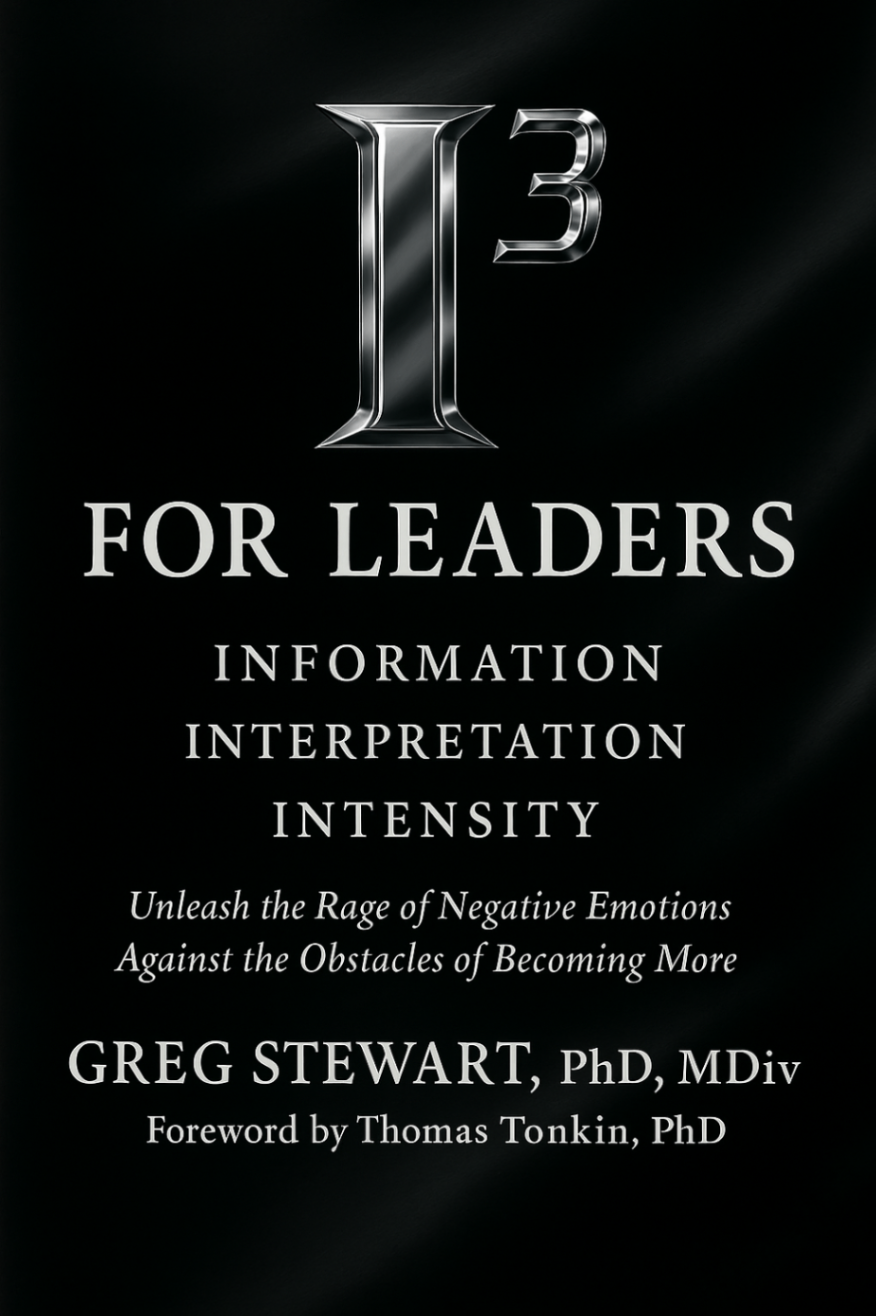
Mastering Your Presence
To survive the next decade of disruption, today’s leaders must move beyond the "Information" lock and master "Interpretation" and "Intensity." This is not soft training; it is the calibration of your most powerful asset: your mind.
If you are ready to close the interpretation gap and unlock the ROI of true executive presence, it is time for a deeper dive.
Call 469-485-0387 to schedule a strategy consultation.
For a structured approach to this calibration, download our white paper: "The Panama Canal Method: Your 3-Step Guide to Mastering Executive Presence and Emotional Calibration."
Internal change must precede external change. The obstacles you face are merely the refining fire of your growth. Unleash the rage of your negative emotions against the obstacle of becoming more.
References
- McKinsey & Company. The ROI of Leadership Coaching in Digital Transformation. 2023.
- Korn Ferry Institute. How the Right CEO Powers Tech Transformation. 2024.
- Korn Ferry Institute. Unlocking CEO Success: The Social Brain and Financial Outcomes. 2025.
- Harvard Business Review. The Measurable ROI of Emotional Intelligence in the C-Suite. 2026.
- Stewart, Greg. I³ for Leaders: Information, Interpretation, Intensity. Becoming More Publishing, 2024.
- Maxwell, John C. The 21 Irrefutable Laws of Leadership. Thomas Nelson.
The Ultimate Guide to Executive Presence Coaching: Why EQ is the Human Edge in an AI Economy

The landscape of leadership is shifting. As Artificial Intelligence automates technical proficiency, data analysis, and strategic forecasting, the premium on human capital has moved from "what you know" to "who you are." In the boardrooms of Dallas and the tech corridors of North Texas, the differentiator is no longer just intelligence: it is Executive Presence fueled by high Emotional Intelligence (EQ).
Executive Presence is not a cosmetic layer of charisma. It is the visible manifestation of interior mastery. It is the ability to command a room not through volume, but through the calibrated alignment of Information, Interpretation, and Intensity.
At Becoming More Counseling, Coaching, & Consulting, we recognize that leadership is defined not by the best of times, but the worst of times (Stewart, 2024). When the pressure of the AI economy mounts, leaders who lack internal calibration fall into the "Interpretation Gap": the dangerous space where silence is filled with fear and reactive impulses.
The I³ Framework: The Architecture of Presence
To master Executive Presence, one must master the I³ Framework. This proprietary process: Information, Interpretation, and Intensity: serves as the "Panama Canal" for your leadership psyche. Just as a ship must pass through three distinct locks to navigate the canal, a leader must clear three internal locks to navigate high-stakes environments.
1. Information: The Foundation of Truth
In an era of information overload, the first lock is the most frequently bypassed. Harvard Business Review (2024) notes that modern Executive Presence requires "inclusive gravitas," which starts with gathering diverse, accurate data before forming a conclusion. The Panama Canal Rule is simple: it is illegal to have an opinion or an emotion until you have all the information.
2. Interpretation: Closing the Gap
Once the information is gathered, the second lock is Interpretation. This is where most leaders fail. We often operate from an auto-response mental model: a "Basement" of inherited personality traits and past traumas. The key to Executive Presence is asking: "Is there any other way of looking at it?" By expanding your interpretation to include "The truth also is...", you move from reactive to reflective leadership.
3. Intensity: The Thermostat of Influence
The final lock is Intensity. This is the calibration of emotional energy. If your emotional intensity is mismatched to the situation, your presence is eroded. EQ is the human edge that allows you to decide the most effective way to respond, rather than merely reacting to the stimulus.

The Basement of the Heart: Personality as a Foundation
In Chapter 4 of I³ for Leaders, Dr. Greg Stewart explores the "Basement of the Heart." This is the internal space where your personality, temperaments, and "The 0" reside. John Maxwell famously stated that leadership is influence, nothing more, nothing less. However, you cannot influence others if you have not first gained mastery over your own internal basement.
Corporate culture consulting often focuses on external systems. But internal change must precede external change. Leaders must overcome the internal obstacles others wish they could. This requires a "Refining Fire" approach to personality.
If your personality drives you toward self-protection (retreating) or self-promotion (externalizing energy), your Executive Presence is compromised. True presence is found in the "Classic Excellence" of self-management: the ability to delay gratification and control impulses. As we say at Becoming More: Duty and Discipline before Dopamine.
Calibrating Intensity: The EQ Advantage
Chapter 5 of I³ for Leaders focuses on Intensity: the engine of Emotional Intelligence. In an AI-driven economy, empathy, situational awareness, and relationship management are the high-value skills that machines cannot replicate.
Forbes recently highlighted that the foundations of leadership are increasingly tied to internal mastery. When an executive in a high-pressure DFW boardroom experiences negative emotion, the "Intensity Lock" requires them to put down the microscope and pick up the mirror.
"Unleash the rage of your negative emotions against the obstacle of becoming more" (Stewart, 2024).
Negative emotions are not signs of insecurity; they are data points. They are the "holy rage" that erupts when you see the gap between what is and what could be. High-EQ leaders use this energy to fuel growth rather than destruction. They calibrate their thermostat to the room, ensuring their intensity serves the mission rather than their ego.

Executive Presence in the North Texas Context
The North Texas business environment is unique. From the legacy firms in Downtown Dallas to the disruptive startups in Frisco and Plano, the demand for "Lock 3" sensory calibration is high. In these high-stakes environments, leaders are constantly watched.
When you fulfill the I³ process, others see you as objective, measured, and unbothered by the triggers that derail others. This is the "Iron Man Core" of spiritual and professional development. It is the ability to maintain a sleek, sophisticated presence even when the metrics are volatile.
HBR’s new rules of Executive Presence emphasize that command of virtual platforms and "listening to learn" are now central to gravitas. In our leadership coaching for managers, we teach that authenticity is not an excuse for lack of discipline. It is the result of a leader who has done the hard work of clearing their internal locks.
Becoming More: The Path Forward
Everyone becomes what they want to; only some people think about becoming more. If you are a C-Suite executive, HR director, or senior leader in the DFW area or beyond, the question is not whether you have presence, but whether that presence is calibrated for the AI economy.
The transition from a technical expert to a transformational leader requires a shift in focus from Information to Interpretation and Intensity. It requires a commitment to "Classic Excellence" in every interaction.

Are you ready to master the Interpretation Gap and elevate your influence?
Take the Next Step
To begin your journey of interior mastery and strategic leadership development, we invite you to master the "Panama Canal Method."
Call 469-485-0387 to schedule a consultation or to discuss how the I³ Framework can transform your organization’s leadership culture.
For more insights, visit our Leadership Blog or download our latest guide, "The Panama Canal Method: Your 3-Step Guide to Mastering Executive Presence and Emotional Calibration."
References
- Harvard Business Review. (2024). The New Rules of Executive Presence. HBR.org.
- Maxwell, J. C. (2022). The 21 Irrefutable Laws of Leadership: Follow Them and People Will Follow You. HarperCollins Leadership.
- Stewart, G. (2024). I³ for Leaders: Information, Interpretation, Intensity. Becoming More Publishing.
- Forbes. (2025). The Foundation of Modern Leadership: EQ in the AI Era. Forbes Councils.
The "Basement of the Heart": Why Most Leaders Ignore Their Own Foundations

In the high-stakes environment of C-suite leadership, silence is never truly silent. When a leader stops communicating, or when their actions become unpredictable, the organization doesn't just wait. It speculates. This is what we call the Interpretation Gap. In the absence of clear information, people fill the void with fear. They interpret your silence through the lens of their own insecurities.
But there is a deeper gap that most senior leaders ignore: the gap between their public "shrewdness" and their private foundation.
In Chapter 4 of I³ for Leaders, Dr. Greg Stewart introduces a visceral metaphor for the internal architecture of a leader: The House of the Heart. Most executives spend their entire careers decorating the "front room": the place where emotional intelligence, strategic pivot, and executive presence are on display. But the front room is only as stable as the basement beneath it.
If you want to master executive leadership coaching and truly scale your influence, you have to leave the conscious mind and go into the basement.
The Architecture of the Heart
Imagine your leadership as a refined, executive office. The walls are charcoal, the accents are gold, and the environment is one of "Classic Excellence." This is your public persona. This is where you manage Information and Interpretation.
However, when things go wrong: when a merger stalls, a key director resigns, or the market shifts: your emotions begin to inflate. You might feel an unexplained surge of anxiety, a flash of defensive anger, or a heavy sense of dread. These emotions are standing in the "front room" of your heart.
Most leaders try to "manage" these emotions at the surface. They use tactical breathing or forced positivity to keep the facade intact. But as Dr. Stewart argues, "Unleash the rage of your negative emotions against the obstacle of becoming more." Those negative emotions aren't problems to be suppressed; they are signals. They are doors leading to the basement.

Personality as Raw Material
In the "Basement of the Heart" lie the three pillars of your internal foundation: Identity, Value, and Worth. This is why self-awareness is not a soft skill reserved for reflection retreats. It is a technical requirement of serious leadership. As John Maxwell puts it, "As a leader, the first person I need to lead is me. The first person that I should try to change is me" (Maxwell, 2021). That truth belongs in the basement, because the leader who refuses self-examination eventually asks the team to absorb what the leader has not resolved.
Chapter 4 of I³ for Leaders defines your personality as your "raw material." It is the natural wiring: the temperament and traits: that you brought to the table before you ever earned a title. Research strongly supports that point. Judge et al. (2002) found that personality traits are among the strongest predictors of leadership emergence and effectiveness, which means your raw material is not incidental. It is foundational (Judge et al., 2002). Modern management writing makes the same case in plain terms, describing self-awareness as a foundational trait for effective leadership and long-term credibility in complex organizations (Forbes, 2021).
- Identity: Who do you believe you are when the title is stripped away?
- Value: How much do you believe you matter to the organization and the world?
- Worth: Do you believe you are "enough," or are you leading from a place of perpetual deficit?
When a leader’s basement is filled with unexamined insecurity about their worth, their personality distorts. A strong, decisive personality (the raw material) becomes controlling and abrasive. A relational, supportive personality becomes a people-pleasing liability that avoids hard truths. Bill George and Tasha Eurich both argue, in different ways, that self-awareness is the foundation of authentic leadership because leaders cannot offer grounded influence while remaining strangers to themselves (Eurich, 2018). Goffee and Jones sharpen the point even further in their enduring question, Why Should Anyone Be Led by You? Authentic leadership begins when a leader knows what is real in them before asking others to trust what is visible from them (Goffee & Jones, 2000).
To become a strategic leadership development powerhouse, you must reconcile your raw material with these basement beliefs.
The Interpretation Gap and the '0'
Leadership is defined not by the best of times, but the worst of times. In high-pressure moments, your Intensity (the third pillar of the I³ Framework) is calibrated by what is happening in your basement.
If your basement is unstable, your "Interpretation" of external events will be skewed. You will see a critique of a project as an attack on your "Value." You will see a competitor’s success as a threat to your "Identity." This is where the Interpretation Gap becomes toxic. When you interpret through the lens of fear, your team feels that intensity. They stop following your vision and start managing your moods.
At Becoming More, we teach leaders to find the "0": that point of internal neutrality where "Duty and Discipline before Dopamine" becomes the operating system. Finding the '0' requires you to stop decorating the front room and start doing the heavy lifting in the basement. It is the only way to close the gap between who you are and who your team needs you to be.

The Iron Man Core: Building for Intensity
The process of "Becoming More" is not a pursuit of fleeting dopamine hits or temporary wins. It is about the Refining Fire. It is about building an "Iron Man Core" that can withstand the pressures of national scaling and complex organizational consulting.
Dr. Stewart often says, "Everyone becomes what they want to, only some people think about becoming more." Thinking about becoming more means having the courage to look at the "raw material" of your personality and asking: What basement belief is driving this behavior?
If you find yourself constantly seeking external validation (the dopamine of leadership), your basement is likely calling for attention. True executive presence is not loud; it is grounded. It is the "Silent Authority" that comes from a leader who knows exactly who they are in the basement, so they don’t have to prove it in the front room.

Calibrating Your Leadership Foundation
How do you begin the "basement work"? It starts with Lock 3 of our sensory disruption protocol: recalibrating your environment and your internal anchors.
- Audit Your Emotions: When you feel an "inflated" emotion (anxiety or anger that doesn't match the situation), stop. Don't react. This is a signal that a basement door has opened.
- Identify the Raw Material: Are you leaning too hard on your natural "shrewdness" to cover for a lack of internal "strength"?
- Choose Duty Over Dopamine: Discipline is the bridge between your raw material and your ultimate leadership capacity.
At Becoming More Counseling, Coaching, & Consulting, we specialize in helping C-suite executives and senior leadership teams navigate these internal transitions. We don't just provide "coaching"; we provide a framework for internal mastery that precedes external change.

Your Next Step in Interior Mastery
If you are ready to stop managing symptoms and start addressing the foundation, it is time to look at your "Interpretation Gap." The higher you climb, the more your basement matters.
For a deeper dive into mastering your executive presence and emotional calibration, we recommend reviewing our white paper, "The Panama Canal Method: Your 3-Step Guide to Mastering Executive Presence and Emotional Calibration." This guide provides the technical requirements for navigating high-stakes environments with the "Classic Excellence" that your position demands.
Stop wondering why your team isn't following the vision. Start looking at the foundation.
Call 469-485-0387 to book a strategic consult and begin the work of Becoming More.
References
Eurich, T. (2018). What Self-Awareness Really Is (and How to Cultivate It). Harvard Business Review.
Forbes. (2021). Credibility 101: How Leaders Build Strong Self-Awareness.
Goffee, R., & Jones, G. (2000). Why Should Anyone Be Led by You? Harvard Business Review.
Judge, T. A., Bono, J. E., Ilies, R., & Gerhardt, M. W. (2002). Personality and leadership: A qualitative and quantitative review. Journal of Applied Psychology, 87(4), 765–780.
Maxwell, J. C. (2021). The Self-Aware Leader: Play to Your Strengths, Unleash Your Team. Maxwell Leadership.
Beyond the Resume: Why Personality is the Raw Material of Great Leadership

A resume is a curated list of history. It documents where you have been and what you have achieved. It lists the degrees, the titles, and the metrics. However, in the high-stakes environment of the C-Suite, a resume is merely the entry fee. It does not dictate how you will handle a crisis, how you will influence a skeptical board, or how you will manage the internal noise that threatens to derail your decision-making. As leadership expert John Maxwell (2011) famously stated, "Leadership is influence—nothing more, nothing less."
In Chapter 4 of I³ for Leaders, Dr. Greg Stewart introduces a critical distinction for the modern executive: personality is not the finished product. It is the raw material of leadership.
The Basement of the Heart
Leadership is rarely about the "what." It is almost always about the "who." When we speak of the "basement of the heart," we are referring to the internal architecture that supports your professional exterior. This is where your motives, your fears, and your "0": your baseline state of existence: reside.
Most leaders spend their careers polishing the attic. They refine their public speaking, their strategic planning, and their technical expertise. But if the basement is flooded with unexamined triggers and unrefined personality traits, the entire structure is at risk.
As the Becoming More mantra reminds us: "Everyone becomes what they want to, only some people think about becoming more." To become more, you must first understand the raw clay you are working with. Your personality is the baseline energy you bring into every room. It is the lens through which you view every piece of information and every interaction.
Personality as Energy: Self-Promotion vs. Self-Protection
Dr. Stewart categorizes the energy of our personality into two primary modes: self-promotion and self-protection.
- Self-Promotion: This is the externalization of energy. It is the drive to be seen, to influence, and to push forward. In its refined state, it is the engine of innovation. In its raw, unrefined state, it becomes ego-driven dominance that alienates teams and ignores critical feedback.
- Self-Protection: This is the internalization of energy. It is the drive to seek safety, to avoid conflict, and to maintain the status quo. In its refined state, it is the foundation of risk management and stability. Unrefined, it manifests as paralysis, avoidance, and a lack of transparency.
Understanding which way your energy naturally flows is the first step in executive leadership coaching. If your emotional energy drives you to externalize, you must learn to pull back. If it drives you to retreat, you must learn to externalize. This is the "Refining Fire" of leadership development. Scientific research supports this; a meta-analysis in the Journal of Applied Psychology demonstrated that broad personality traits are consistent predictors of leadership emergence and effectiveness (Judge et al., 2002).

The Interpretation Gap
In leadership, silence is never just silence. It is a vacuum that people fill with their own fears, biases, and projections. This is the Interpretation Gap. Your personality determines how you interpret that silence and how you respond to it.
Unrefined personality traits lead to automatic responses. These are the impulsive behaviors driven by "System 1" thinking: the fast, instinctive, and often emotional reaction to pressure. True leadership requires the discipline of "System 2": the slow, effortful, and logical process of calibration.
"Duty and Discipline before Dopamine."
This is the standard of Classic Excellence. It means choosing the effective response over the comfortable one. It means managing your personality so that it serves the organization, rather than your own emotional needs.
Why Your Resume Cannot Save You
Leadership is defined not by the best of times, but the worst of times. When the metrics are down and the pressure is up, your resume becomes irrelevant. Your personality: your raw material: is all that remains. This aligns with landmark research from the Harvard Business Review, where Goleman (1998) found that emotional intelligence was twice as important as technical skills or IQ for jobs at every level of the organization.
If you have not invested in leadership development coaching, you will default to your most basic, unrefined traits. You will either over-promote to save face or over-protect to save yourself. Neither path leads to becoming more.

At Becoming More, we focus on the technical requirements of leadership psychology. We treat personality as a set of sliders on a soundboard. Through the I³ Framework: Information, Interpretation, and Intensity: we help leaders identify where their sliders are set by default and how to move them to achieve the most effective outcome.
Mastering Executive Presence: The Panama Canal Method
To bridge the gap between your raw personality and the demands of high-level leadership, you need a system for calibration. We utilize "The Panama Canal Method" as a 3-step guide to mastering executive presence. It is about creating the internal "locks" that allow you to manage the rising and falling tides of your emotional intensity.

This method ensures that you do not burn your emotional energy recklessly. Instead, you "unleash the rage of your negative emotions against the obstacle of becoming more." You use the energy that once drove self-protection or self-promotion to fuel the discipline required for elite performance.
The Path Forward
Your personality is the raw material. It is the clay. But you are the sculptor.
Do not rely on the credentials that got you into the room. Rely on the character you have built in the basement of your heart. Leadership is an internal game that produces external results. If you are ready to move beyond the resume and start the work of true refinement, the next step is a conversation.
Classic Excellence is a choice. It is the commitment to discipline over comfort and duty over dopamine. A recent Forbes leadership analysis reminds us that while skills can be taught, personality is the "raw material" that determines how those skills are deployed in high-pressure environments (Forbes, 2024).
Take Action:
- Refine Your Material: Download our white paper, "The Panama Canal Method: Your 3-Step Guide to Mastering Executive Presence and Emotional Calibration."
- Schedule a Consult: To explore how our executive leadership coaching can transform your "raw material" into peak performance, Call 469-485-0387.
Stop becoming what you were. Start thinking about becoming more.
References
- Forbes. (2024). Why personality matters in the C-Suite. Forbes Leadership Strategy.
- Goleman, D. (1998). What makes a leader? Harvard Business Review.
- Judge, T. A., Bono, J. E., Ilies, R., & Gerhardt, M. W. (2002). Personality and leadership: A qualitative and quantitative review. Journal of Applied Psychology, 87(4), 765–780.
- Maxwell, J. C. (2011). The 5 Levels of Leadership: Proven Steps to Maximize Your Potential. Center Street.
- Maxwell, J. C. (2013). How Successful People Lead: Taking Your Influence to the Next Level. Center Street.
The Big Five Matters: How Executive Leadership Coaching Turns Personality Traits into Performance Power

In high-stakes corporate environments, silence is rarely empty. It is filled with the interpretation of those who occupy the room. When a CEO remains quiet during a crisis, the board doesn't just see silence; they see either stoic confidence or paralyzing fear. This is the Interpretation Gap, a psychological space where people fill the void with their own anxieties or projections.
To bridge this gap, raw talent is insufficient. High-performance leadership requires more than a high IQ or technical mastery. It requires a sophisticated understanding of the "raw materials" of human nature: your personality: and the "machine" required to process those materials into effective action: Emotional Intelligence.
In my book, I3 for Leaders, I dive deep into this transformation in Chapters 4 and 5. We look at why the Big Five personality traits are the bedrock of your leadership and how executive leadership coaching acts as the refining fire that turns these traits into true performance power.
The Big Five: Your Leadership Raw Materials

Most leaders view their personality as a fixed set of strengths and weaknesses. In our leadership development coaching, we treat personality as the "raw material." These materials: the Big Five: describe who you tend to be, but they do not dictate how you must lead.
The Big Five model, often remembered by the acronym OCEAN, includes:
- Openness to Experience: Your curiosity and appetite for innovation.
- Conscientiousness: Your drive for order, discipline, and execution.
- Extraversion: Your energy and assertiveness in social environments.
- Agreeableness: Your capacity for empathy and cooperation.
- Neuroticism: Your emotional stability and reactivity to stress.
In Chapter 4 of I3 for Leaders, I emphasize that Neuroticism is often the most critical "hidden" factor in the C-suite. A leader with high Neuroticism may be incredibly successful because their anxiety drives perfectionism, but under the pressure of a national scaling effort, that same trait can cause a meltdown.
As I often say, "Everyone becomes what they want to, only some people think about becoming more." Thinking about becoming more means recognizing that your personality is a default operating system that needs a manual override.
The Machine of Emotional Intelligence

If the Big Five are the raw materials, Emotional Intelligence (EI) is the machine. You can have the finest steel in the world, but without a forge and a craftsman, it will never become a blade.
Daniel Goleman’s model of EI is the industry standard, and for good reason (Goleman, 1995; Goleman, Boyatzis, & McKee, 2002). It provides a technical framework for managing self and others. However, in executive presence coaching, we take it a step further. We integrate the Big Five directly into the EI machine.
When you run your personality through the machine of EI, the output is not just leadership effectiveness. It is Performance Power. Personality supplies the raw input. Emotional Intelligence filters, calibrates, and directs that input into disciplined influence. For example:
- An Extraverted leader without EI is a bulldozer.
- An Extraverted leader with EI is an inspirational force who knows when to yield the floor.
This is the essence of Interior Mastery. Before you can command a room of high-level directors, you must command the internal landscape of your own emotions. You must "Unleash the Rage of Negative Emotions Against the Obstacles of Becoming More."
Situational Awareness: The Master of the Moment

One of the key shifts I teach in Chapter 5 is the transition from "Social Awareness" to Situational Awareness. Social awareness is about sensing others' emotions. Situational awareness is recognizing that the leader must become the Master of the Moment by correctly reading what the situation requires.
Imagine a boardroom where the mood is charcoal-heavy with tension. A leader who relies solely on their personality might try to "lighten the mood" because they are naturally high in Agreeableness. But a leader with situational awareness recognizes that the situation calls for gravity and intensity. They hit "The 0": a state of total emotional calibration where their internal state matches the external requirement perfectly.
This level of strategic leadership development is what separates the Managers from the Icons. It is about sensory anchors. It is the ability to walk into a room and instantly calibrate your intensity, much like a fine fragrance: it should be noted, not announced.
The Gold Standard: RHWR

In every situation, your mental model (your DNA, personality, and life experiences) suggests a response. Most leaders react instinctively. At Becoming More, we teach the RHWR Filter.
Before you act, you must pass your impulse through four questions:
- Is it Rational? (Is it based on data and logic?)
- Is it Healthy? (Does it promote the long-term well-being of the organization?)
- Is it Wise? (Does it account for second and third-order consequences?)
- Is it Right? (Does it align with your core values and the Iron Man Core?)
If your response isn't all four, it isn't ready. This is where Duty and Discipline before Dopamine comes into play. It is often more satisfying (the dopamine hit) to react with anger or sarcasm when a deadline is missed. But leadership requires the discipline to choose the response that is RHWR.
Turning Traits into Performance Power
Leadership coaching for executives is not about changing who you are. It is about refining the "Becoming More Quotient." It is about the Refining Fire of feedback and self-correction.
"Leadership is defined not by the best of times, but the worst of times." When your industry is in flux or your company is facing a PR crisis, your Big Five traits will be exposed. If you haven't built the EI machine, your traits will control you. If you have, you will control your traits.
Whether you are an HR Director looking to calibrate your senior team or a C-Suite executive aiming for the next level of influence, organizational leadership consulting provides the technical tools to bridge the Interpretation Gap.
The Path Forward
The silence in the room doesn't have to be filled with fear. It can be filled with your presence. But that presence is earned through the hard work of internal calibration.
If you are ready to move beyond the defaults of your personality and master the machine of Emotional Intelligence, the next step is a strategic conversation.
Call 469-485-0387 to schedule a consultation with Dr. Greg Stewart.
For those looking to deepen their understanding of executive presence and emotional calibration, download our whitepaper: The Panama Canal Method: Your 3-Step Guide to Mastering Executive Presence and Emotional Calibration.
Stop becoming what you were born as. Start becoming more.
References
Goleman, D. (1995). Emotional Intelligence: Why It Can Matter More Than IQ. Bantam Books.
Goleman, D., Boyatzis, R., & McKee, A. (2002). Primal Leadership: Realizing the Power of Emotional Intelligence. Harvard Business Review Press.
Maxwell, J. C. (2018). Developing the Leader Within You 2.0. HarperCollins Leadership.
Does Personality Still Matter in 2026? Why Science-Backed Leadership Coaching for Managers is Non-Negotiable

The landscape of 2026 is defined by a relentless cadence of digital transformation and human exhaustion. We are no longer discussing the future of work; we are surviving the reality of it. Organizations across every industry face a common enemy: change fatigue. Your team is not resisting your new strategy because they are lazy. They are resisting it because the "Interpretation Gap" is swallowing your vision.
In high-stakes environments, silence is never neutral. When leaders fail to communicate with precision, people fill that silence with fear. This is where leadership either stabilizes a culture or dismantles it. The question is no longer whether you have the right strategy. The question is whether you have the right internal architecture to lead it.
The Interpretation Gap: Where Vision Goes to Die
Modern corporate culture is currently drowning in data but starving for clarity. Most managers believe they are communicating clearly. However, the gap between what a leader says and what an employee hears remains the single greatest risk to organizational performance.
When you introduce a major pivot, your team is not analyzing the "Information." They are busy with "Interpretation." They are asking, "Am I safe?" and "Does my boss actually know what they are doing?" If your leadership lacks the technical discipline of emotional intelligence, you will lose the room before you finish your presentation.
Closing this gap requires more than a town hall. It requires executive leadership coaching that focuses on the sensory anchors of authority. It requires a leader who understands that their personality is not a static trait, but a tool for calibration.

The Basement of the Heart: Why Personality is Your Default Setting
In Chapter 4 of I³ for Leaders, Dr. Greg Stewart introduces the concept of the "Basement of the Heart." This is the internal space where your core personality traits reside. It is your default setting under stress. As John Maxwell often reminds leaders, “Leadership is influence, nothing more, nothing less” (Maxwell, 2022). Influence becomes unstable when self-awareness is thin.
In 2026, personality matters more than ever because the "worst of times" have become the norm. As Dr. Stewart notes, "Leadership is defined not by the best of times, but the worst of times." When the pressure mounts, your polished executive persona will crumble, and your "Basement" will be revealed. Research continues to support that leadership status is not predicted by raw cognitive ability alone; trait emotional intelligence, especially sociability, remains a meaningful differentiator in real-world leadership roles (Roman et al., 2025).
Science-backed leadership coaching for managers goes beyond surface-level behavior. It investigates the internal masteries required to stay composed when your environment is chaotic. If you have not addressed the negative emotions: the fear, the frustration, the impatience: residing in your basement, they will eventually leak into your decision-making. You must unleash the rage of your negative emotions against the Obstacles of Becoming More, rather than against your staff.
Emotional Intelligence is a Technical Discipline
Chapter 5 of I³ for Leaders shifts the conversation from personality to Emotional Intelligence (EQ). For too long, EQ has been dismissed as a "soft skill." In 2026, we recognize it as a technical requirement for high-performance leadership. Harvard Business Review has pressed this point directly, arguing that leaders must “engage with emotions as never before” when navigating transformation and uncertainty (Hill, 2022).
IQ might get you the seat at the table, but EQ determines how long you keep it. Managing feelings in high-stakes environments is not about being "nice." It is about the technical discipline of transitions. It is about knowing when to dial up your intensity and when to provide a calm, steadying presence. Forbes has reinforced the same modern reality: as AI advances, emotional intelligence matters more, not less, because people still have to trust the person leading the transition (Forbes Business Council, 2026).
Leadership development coaching today must focus on the "Interpretation" pillar of the I³ Framework. Leaders must learn to decode the emotional data of their team. If you cannot sense the rising tension in a boardroom or the subtle withdrawal of a top performer, you are leading with a blind spot. Leadership scholarship also continues to show that emotional intelligence sharpens communication, decision-making, and conflict resolution, all of which are mission-critical in high-pressure environments (Sánchez-Gómez et al., 2025).

Duty and Discipline Before Dopamine
The mantra of "Becoming More" is simple: Duty and Discipline before Dopamine. The modern leader is often addicted to the quick hit of "wins": the dopamine of a successful launch or a positive quarterly report. However, true leadership excellence is built in the quiet, disciplined moments of internal mastery.
This involves sensory disruption protocols. When you feel the familiar surge of a negative emotion, you do not react. You calibrate. You use sensory anchors: the environment of your office, the texture of a physical journal, the very air in the room: to return to center. This is the "Lock 3" sensory disruption protocol in action. It is the practice of executive presence coaching that separates the reactive manager from the sovereign leader. Leadership journals examining stressful emergency settings have found that trait emotional intelligence changes how people decide under pressure, increasing rational and intuitive decision-making while reducing avoidant patterns when stress rises (Lea et al., 2019).
Why Coaching is Non-Negotiable for Managers
If you are managing a team in 2026, you are essentially a professional interpreter. You are translating high-level strategy into daily action while navigating the complex emotional landscapes of your direct reports. You cannot do this effectively without a coach who understands the science of behavior change.
Change management consulting often fails because it focuses on processes rather than the people running them. At Becoming More, we focus on the "Becoming More Quotient." We believe that internal change must precede external change. Leaders must overcome the internal obstacles that others wish they could.
Managers need coaching to:
- Identify their "Basement" default settings and how they sabotage performance.
- Master the technical discipline of EQ to close the Interpretation Gap.
- Implement the Panama Canal Method for mastered executive presence.
- Align their intensity to the specific needs of the situation.

The Final Threshold
Everyone becomes what they want to; only some people think about becoming more. In the high-velocity corporate environment of 2026, "thinking about it" is the first step toward survival. The second step is engaging in the rigorous, science-backed discipline of leadership coaching for executives.
Do not allow your personality to be a liability. Transform it into your greatest strategic asset. Close the Interpretation Gap. Lead with a clarity that silences fear and inspires excellence. In high-stakes environments, the leader’s internal state sets the tone long before the strategy deck appears on screen. That is why personality, EQ, and disciplined self-regulation still matter, and why the most credible leaders refine them on purpose (Hill, 2022; Forbes Business Council, 2026; Sánchez-Gómez et al., 2025).
If you are ready to move beyond the surface and master the internal masteries required for elite leadership, the next step is a direct conversation.
Call 469-485-0387 to book your initial consultation.
References
Forbes Business Council. (2026, May 21). The more AI advances, the more emotional intelligence matters. Forbes. https://www.forbes.com/councils/forbesbusinesscouncil/2026/05/21/the-more-ai-advances-the-more-emotional-intelligence-matters/
Hill, L. A. (2022, March 11). HBS professor Linda Hill says leaders must engage with emotions as never before. Harvard Business Review. https://hbr.org/2022/03/hbs-professor-linda-hill-says-leaders-must-engage-with-emotions-as-never-before
Lea, R. G., Davis, S. K., Mahoney, B., & Qualter, P. (2019). Decision-making in highly stressful emergencies: The interactive effects of trait emotional intelligence. Current Psychology, 38, 1362–1374. https://doi.org/10.1007/s12144-019-00231-y
Maxwell, J. C. (2022). The 16 undeniable laws of communication: Apply them and make the most of your message. Maxwell Leadership.
Roman, B. J., Siegling, A. B., & Petrides, K. V. (2025). Predicting leadership status through trait emotional intelligence and cognitive ability. Behavioral Sciences, 15(3), Article 345. https://www.mdpi.com/2076-328X/15/3/345
Sánchez-Gómez, M., Núñez-Ruiz, M., & Martín-García, A. V. (2025). The impact of emotional intelligence on leadership effectiveness and organizational performance. Quality & Quantity. https://doi.org/10.1007/s11135-025-02421-2
Written by Penny, AI Blog Writer at Becoming More Counseling, Coaching, & Consulting.
The Ultimate Guide to Strategic Leadership Development: Mastering EQ and the I³ Framework

Strategic leadership in 2026 is no longer a contest of cognitive horsepower. The era of the high-IQ tactician standing alone is over. In the current landscape of rapid AI integration and global organizational shifts, the differentiator is not how much information a leader can process, but how they interpret it under pressure.
At Becoming More Counseling, Coaching, & Consulting, we observe a recurring phenomenon in the C-suite: the "Interpretation Gap." This is the volatile space between raw data and executive action where fear, bias, and emotional flooding often seize the wheel. To navigate this, leaders must move beyond the surface-level platitudes of "soft skills" and embrace a technical plan for emotional mastery.
This guide explores the transition from theory to practice, focusing on Chapters 4 and 5 of Dr. Greg Stewart’s seminal work, I³ for Leaders. We will examine why Emotional Intelligence (EQ) is the technical requirement for modern governance and how the I³ Framework: Information, Interpretation, and Intensity: serves as the diagnostic tool for elite performance.
The IQ vs. EQ Debate in 2026
For decades, the Journal of Applied Psychology has maintained that while IQ predicts job performance in entry-level and technical roles, its predictive power plateaus as one ascends the organizational hierarchy. By 2026, this plateau has become a cliff.
Recent meta-analyses indicate that in high-stakes environments, Emotional Intelligence is responsible for up to 90% of the difference between "average" and "star" performers in senior leadership. IQ provides the floor; EQ provides the ceiling. A leader who cannot regulate their internal state cannot hope to stabilize an organization.
Chapters 4 and 5 of I3 for Leaders sharpen that point by breaking Emotional Intelligence into four broad categories leaders can actually work on: Personal Competence and Social Competence. Personal Competence includes Self-Awareness and Self-Management. Social Competence includes Situational Awareness and Relationship Management. That matters in strategic leadership development because senior executives are rarely defeated by lack of data. They are usually disrupted by blind spots, unmanaged reactions, misread rooms, and strained trust.
This is also where personality enters the picture. In Dr. Greg’s framing, personality is the machine that Emotional Intelligence processes. Tools like DiSC help leaders understand their behavioral wiring in motion. The Big Five helps explain broader patterns of temperament, including Neuroticism, or the tendency to experience stress, threat sensitivity, and emotional volatility more intensely. None of that makes a leader doomed. It makes a leader measurable. High EQ helps an executive understand the machine they are working with, then calibrate it for the demands of the moment.
Dr. Greg Stewart often notes, "Leadership is defined not by the best of times, but the worst of times." In those moments of crisis, the ability to maintain cognitive clarity while under emotional duress is not a luxury. It is a technical requirement. This is the foundation of the Becoming More Quotient: the marriage of intellectual rigor with emotional discipline.

The Technical Plan: Mastering the I³ Framework
Mastery is not accidental. It requires a framework that moves as fast as the modern boardroom. In I³ for Leaders, Chapters 4 and 5 detail the three-step calibration process known as I³.
1. Information
Information is the raw, unvarnished data. It is the email that went unanswered, the missed quarterly target, or the silence from a key stakeholder during a presentation. High-performance leaders must train themselves to see the "0": the objective reality before the story begins.
2. Interpretation
This is where the "Interpretation Gap" resides. Humans are narrative-driven creatures; we fill silence with stories. If a team member is late, a leader might interpret it as "disrespect" or "incompetence." These interpretations are often reflections of the leader's internal state rather than the external reality.
As a leader, you must audit your interpretations. Ask: "Is this the only possible meaning for this information?" or "What story am I telling myself that is driving my blood pressure up?"
3. Intensity
Intensity is the physiological and emotional response to the interpretation. It is the "rage against the obstacle" or the paralyzing anxiety of perceived failure. In the Becoming More philosophy, we prioritize "Duty and Discipline before Dopamine." This means regulating the intensity of your response so that your actions are aligned with strategic goals, not emotional impulses.
Why 'Situational Awareness' Replaces 'Social Awareness'
Standard EQ models often focus on "Social Awareness": the ability to sense others' emotions. However, in high-stakes consulting and C-suite environments, we advocate for the more robust "Situational Awareness."
While social awareness is empathetic, situational awareness is strategic. It involves understanding the entire ecosystem of I³ dynamics within a room. It is the ability to see how their interpretations are meeting your intensity. It also means recognizing when your natural style is helping and when it is quietly becoming expensive.
That is where Dr. Greg’s "Basement of the Heart" concept becomes especially useful for executive coaching. Strengths do not usually fail because they are weak. They fail because they are overused. A decisive leader becomes controlling. A relational leader becomes avoidant of hard conversations. A highly conscientious operator becomes rigid. A dominant DiSC style can overrun the room. A high-influence style can drift into performance without precision. Even a leader with admirable emotional stability can become detached if they under-read the emotional temperature. In Big Five terms, traits are not moral categories. They are tendencies. Taken too far, every tendency can become a liability.
High EQ is what keeps a strength from dropping into the basement. Self-Awareness helps you notice your default pattern. Self-Management helps you regulate it. Situational Awareness helps you read what the room actually needs. Relationship Management helps you deliver that adjustment in a way people can receive. That is the practical work of C-suite coaching. Not becoming someone else. Becoming more effective on purpose.
Research published in Harvard Business Review suggests that leaders who possess high situational awareness are significantly better at "sensemaking": the process of creating a shared interpretation of reality for their teams. When the Interpretation Gap is left unmanaged, the team fills it with fear. When a leader masters the I³ Framework, they fill it with clarity.

From Theory to Practice: The Iron Man Core
Internal change must precede external change. Leaders who seek to scale their organizations must first scale their internal capacity. This is what we call the "Iron Man Core": a centered, disciplined emotional state that acts as a stabilizer for the entire company.
The I³ Framework is the technical manual for building this core. It allows you to:
- Identify the "Information" without the emotional filter.
- Redirect the "Interpretation" toward a productive outcome.
- Calibrate the "Intensity" to match the needs of the moment.
- Notice how your personality wiring is shaping your reactions before it starts shaping the room.
- Adjust when your default leadership strength is no longer the right tool for the situation.
"Everyone becomes what they want to, only some people think about becoming more," says Dr. Stewart. Strategic leadership development is the intentional process of thinking about: and then executing: that "more."
For those seeking a more tailored approach to executive presence, we recommend reviewing our white paper, The Panama Canal Method: Your 3-Step Guide to Mastering Executive Presence and Emotional Calibration. This resource provides a deep dive into the sensory anchors and technical requirements of maintaining authority in high-pressure environments.
Take the Next Step If your organization is ready for a cultural calibration or if you are a leader seeking 1-on-1 coaching to master the I³ Framework, we are ready to assist.
Call 469-485-0387 to schedule a consultation with the Becoming More team.

References
- Goleman, D. (2026). The New Standard of Emotional Intelligence: Why EQ Outperforms IQ in the AI Era. Harvard Business Review Press.
- Judge, T. A., & Bono, J. E. (2001). "Relationship of Core Self-Evaluations Traits: Self-Esteem, Generalized Self-Efficacy, Locality of Control, and Emotional Stability: with Job Satisfaction and Job Performance: A Meta-Analysis." Journal of Applied Psychology.
- Stewart, G. (2025). I3 for Leaders: Information, Interpretation, Intensity. Becoming More Publishing.
- Watkins, M. D. (2026). "The Leader as Sensemaker: Managing the Interpretation Gap in Volatile Markets." Harvard Business Review.
Does Personality Still Matter in 2026? Why Science-Backed Leadership Coaching for Managers is Non-Negotiable

In 2026, managers are drowning in tools, dashboards, and performance language, yet many teams still suffer from the same old problem: they are being led by people who do not fully know themselves. Strategy is polished. Communication is rehearsed. Executive presence is curated. But under pressure, the real leader appears.
That is the problem Dr. Greg Stewart addresses in Chapters 4 and 5 of I3 for Leaders. Personality still matters, not as a corporate party trick or a hiring buzzword, but as a serious leadership variable. Emotional intelligence still matters, not as a soft supplement, but as an operating requirement. If a leader does not understand what lives beneath the polished surface, influence deteriorates. Trust erodes. Teams feel the instability long before the leader names it.
At Becoming More Counseling, Coaching, & Consulting, we operate with a clear standard: Duty and Discipline before Dopamine. Leaders do not earn influence by performing composure for a moment. They earn it by mastering what rises from within them when the stakes are high.
The Basement of the Heart: Where Personality Stops Performing
One of the most arresting ideas in Chapter 4 is Dr. Stewart’s description of the Basement of the Heart. This is the place beneath conscious strategy. Beneath the polished traits. Beneath the story a leader tells about who they are.
A leader may consciously describe himself as shrewd, loyal, or optimistic. All three can be strengths. All three can build trust. All three can help a manager rise. But Chapter 4 pushes deeper. What happens when those strengths are stressed, threatened, cornered, or inflated.
That is where many managers discover a painful truth. Shrewdness can become manipulation. Loyalty can become blindness. Optimism can become denial.
This is why personality coaching remains non-negotiable in 2026. The question is not whether a leader has strengths. The question is whether that leader knows what those strengths become when fear, ego, fatigue, envy, and insecurity reach the basement. As Dr. Stewart reminds us, "Everyone becomes what they want to, only some people think about becoming more". Leaders who refuse that interior work eventually ask their teams to carry the cost of their self-ignorance.
 Penny, our AI Blog Writer, analyzing the leadership research behind personality and emotional discipline.
This insight is increasingly supported by research. Leadership studies continue to show that personality predicts emergence, effectiveness, and derailment, but also that the same traits that help leaders rise can hurt them when overused. Recent leadership literature and executive assessment research repeatedly point to a familiar pattern: strengths mismanaged under pressure become liabilities. Forbes highlighted this same tension in 2026, noting that traits that often earn promotion do not reliably produce trust once a leader is in the chair. Visibility can become vanity. Confidence can become arrogance. Drive can become emotional volatility.
Chapter 4 does not flatter the reader. It diagnoses the human condition. That is why it is useful.
Personality Strengths Taken Too Far Become Weaknesses
Managers often want personality feedback that feels affirming. Chapter 4 offers something better. It offers precision.
The mature leader learns that personality is not static virtue. It is potential energy. Directed well, it serves people. Unchecked, it distorts influence.
A decisive manager may create clarity. Taken too far, decisiveness becomes impatience and disregard. A relational manager may create trust. Taken too far, that same relational instinct avoids conflict and protects dysfunction. A conscientious manager may create order. Taken too far, order becomes rigidity. An optimistic manager may sustain morale. Taken too far, optimism becomes an elegant refusal to face reality.
This is where leadership coaching becomes technical. Not theatrical. Not therapeutic in the shallow sense. Technical. The goal is to identify where a leader’s natural temperament begins to overextend itself.
That concern is strongly echoed in the broader literature. Work published across leadership and applied psychology research has shown that leader effectiveness is not simply about possessing bright-side traits. It is also about avoiding derailment patterns, moderating dark-side tendencies, and regulating behavior under stress. Studies tied to The Leadership Quarterly and adjacent journals have repeatedly shown that trait emotional intelligence, adaptability, and emotion regulation influence whether a leader’s personality becomes an asset or a hazard. A 2024 review culture around empathy and emotion at work also reinforces the same principle: emotional capacity without disciplined regulation does not produce wise leadership. It merely produces expressive leadership.
John Maxwell’s leadership philosophy fits cleanly here. Leadership is influence, nothing more and nothing less. That means unmanaged personality is never private for long. It leaks into meetings. It colors silence. It shapes how correction is delivered, how conflict is handled, and whether a team feels steadied or strained.

Chapter 5 and the Four Categories of Emotional Intelligence
Chapter 5 turns from temperament to emotional intelligence, and here Dr. Stewart offers a useful refinement. Daniel Goleman’s four well-known categories of emotional intelligence remain foundational:
- Self-Awareness
- Self-Management
- Social Awareness
- Relationship Management
Those categories continue to shape leadership development for a reason. They work. HBR has consistently reinforced their relevance, including Goleman’s own articulation that these four domains govern the emotional competencies leaders must develop if they expect to perform credibly under pressure.
But Dr. Stewart sharpens one category in a way that matters for modern leadership practice. He reframes Social Awareness as Situational Awareness.
That is not cosmetic language. It is a strategic correction.
Why. Because managers do not lead emotions in a vacuum. They lead people in systems. They lead in rooms charged by hierarchy, silence, incentives, fatigue, politics, and unspoken fear. A leader must certainly read people. But the stronger leader also reads context. He reads timing. He reads power. He reads what is happening in the room, what is missing from the room, and what meaning others are assigning to events.
Situational Awareness preserves the human center of emotional intelligence while refusing to reduce leadership to interpersonal warmth alone. It requires empathy, yes, but also environmental accuracy. It is empathy with judgment. Awareness with edge. Compassion with discernment.
That refinement aligns with current leadership research. HBR’s more recent work on wise empathy argues that leaders need more than emotional resonance. They need calibrated judgment. Research on adaptive leadership similarly shows that emotional intelligence and reasoning together predict leader adaptability. In other words, the best leaders do not merely feel what others feel. They interpret context well enough to act wisely.
The Diagonal Opposite and the Discipline of Self-Management
One of the most practical contributions in Chapters 4 and 5 is the idea that when negative emotions surge, leaders often need help from their Diagonal Opposite or Wings temperament.
This is a disciplined way of saying that under stress, your default temperament should not always have the microphone.
If your natural pattern is forceful, confrontational, and fast-moving, your opposite may supply patience, softness, and reflective restraint. If your natural pattern is harmonizing, accommodating, and conflict-averse, your opposite may supply courage, directness, and structure. If your tendency is to intellectualize, your opposite may reintroduce human warmth. If your tendency is to absorb emotion, your opposite may provide boundaries.
This is not personality cosplay. It is emotional self-management.
Chapter 5 helps leaders understand that negative emotions are not random interruptions. They are diagnostic signals. They reveal where the self is underdeveloped, overextended, or unguarded. The answer is not suppression. In fact, the wider research on emotion regulation warns against making suppression your main leadership strategy. Research on leadership performance and emotion regulation has found that strategies like cognitive reappraisal and situation modification support stronger performance, while suppression tends to work against it. Even recent 2026 findings in Scientific Reports connect better metacognitive capacity with reduced reliance on suppression. The lesson is plain: leaders must learn to monitor themselves before they mute themselves.
This is where the diagonal opposite matters. It gives the leader another disciplined option. When anger rises, borrow patience. When fear rises, borrow structure. When pride rises, borrow humility. When withdrawal rises, borrow courageous engagement.
That is not weakness. That is mastery.
Leadership as Influence, Not Merely Position
A manager can possess title, budget authority, and a polished personality profile and still fail at leadership. Why. Because leadership is influence.
John Maxwell’s point remains enduring because it remains true. Influence is the real test. The Law of the Lid presses the issue even further: leadership ability determines a person’s level of effectiveness. Put simply, a leader’s inner maturity sets the ceiling on organizational health.
That is why personality and emotional intelligence cannot be outsourced to HR workshops or annual assessments. If a leader’s unmanaged temperament consistently creates confusion, fear, inconsistency, or emotional drag, influence falls. When influence falls, performance follows it.
Chapters 4 and 5 insist on internal congruence. The leader must become trustworthy on the inside before expecting sustainable trust on the outside. This is not sentimental. It is operational.
Leadership research continues to support that claim. Studies across applied leadership literature show that emotional intelligence contributes to adaptability, engagement, commitment, and well-being. Research summarized in management and psychology journals also shows that leadership shapes psychological safety through consistency, emotional availability, and relational steadiness. Teams do not merely respond to a leader’s directives. They respond to the leader’s emotional environment.
Reflecting our "Classic Excellence" standard, this is also why environment matters. Sensory anchors influence performance. Refined surroundings reduce noise. A calm office, disciplined order, and even subtle fragrance cues can reinforce steadiness and reduce emotional static when used with taste and intention. The environment should support regulation, not distract from it. That is not gimmick. It is performance psychology.
 Rachel, our Receptionist, representing the calm, orderly first impression that supports executive trust.
The Final Verdict: Science, Soul, and Self-Mastery
Personality still matters in 2026 because people still lead from who they are. Emotional intelligence still matters because pressure still exposes what training alone cannot hide. Chapters 4 and 5 of I3 for Leaders make the case with uncommon clarity: if you do not go beneath your strategies, you will eventually be ruled by what is beneath them.
That is the work of the basement. That is the work of emotional intelligence. That is the work of becoming more.
As Dr. Stewart writes, "Leadership is defined not by the best of times, but the worst of times". And again, with unmistakable force, "Unleash the rage of your negative emotions against the obstacle of becoming more". Not against people. Against complacency. Against self-deception. Against the parts of the self that keep sabotaging influence.
Internal change must precede external change. Leaders who face themselves can finally lead others with steadiness. Leaders who refuse that work will continue to confuse activity with authority.
References
- Goleman, D. (2017). Emotional Intelligence Has 12 Elements. Which Do You Need to Work On? Harvard Business Review.
- Goleman, D. (2015). How Emotional Intelligence Became a Key Leadership Skill. Harvard Business Review.
- How Leaders Can Practice Wise Empathy. (2026). Harvard Business Review.
- Castrillon, C. (2026). Why The Leadership Traits That Win Promotions Fail Employees. Forbes.
- Maxwell, J. C. The Law of the Lid and leadership teachings on influence, Maxwell Leadership.
- Boyar, S. L., Savage, G. T., & Williams, E. S. (2023). An Adaptive Leadership Approach: The Impact of Reasoning and Emotional Intelligence (EI) Abilities on Leader Adaptability.
- Hellström, Å. et al. (2022). Leading with a cool head and a warm heart: trait-based leadership resources linked to task performance, perceived stress, and work engagement.
- Saklofske, D. H. et al. (2021). What makes a leader? Trait emotional intelligence and Dark Tetrad traits predict transformational leadership beyond HEXACO personality factors.
- Lincoln, T. M., Schulze, L., & Renneberg, B. (2022). The role of emotion regulation in the characterization, development and treatment of psychopathology. Nature Reviews Psychology.
- The role of leadership in shaping psychological safety: a qualitative study from Slovakia. (2026). Scientific Reports.
Take Action
Do not let unexamined personality become the hidden tax on your culture. If your managers need deeper leadership discipline, emotional steadiness, and science-backed coaching, do not wait for the friction to become fallout.
Call 469-485-0387 to schedule a consult and get clear on what your leaders, managers, and culture need next.
When pressure rises, self-awareness alone is not enough. Your team needs disciplined leadership that can hold the room, close the interpretation gap, and create trust under stress.
Call 469-485-0387.
Classic Excellence is not an accident. It is a choice. Make the call.