
The Intensity Thermostat: Calibrating Corporate Culture During High-Stakes M&A
![[HERO] The Intensity Thermostat: Calibrating Corporate Culture During High-Stakes M&A](https://cdn.marblism.com/YTwqPddeS2D.webp)
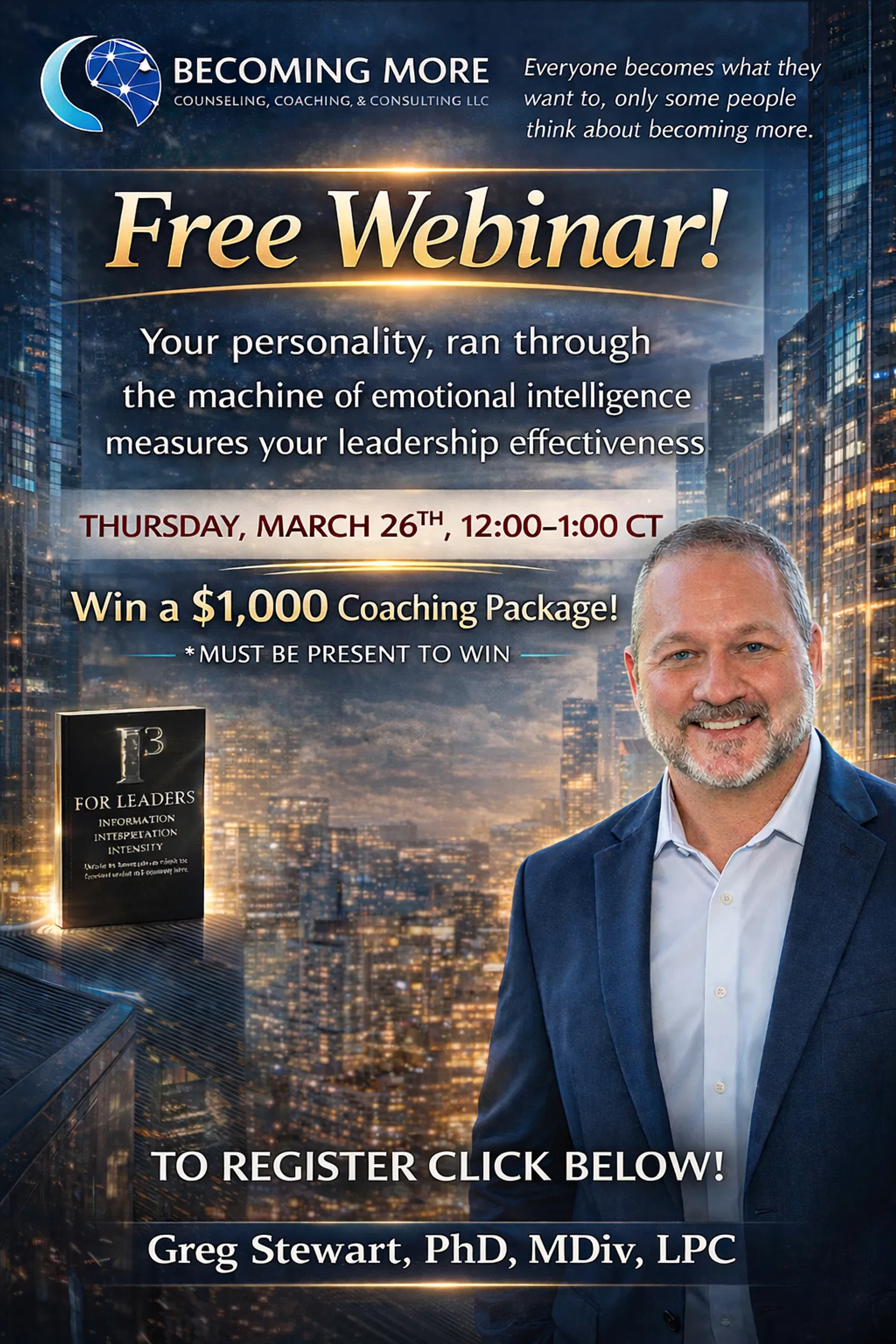
Free Webinar! March 26th, 12:00-1:00 CT with a chance to win a $1,000 coaching package!
Mergers and acquisitions are often described as corporate marriages, but in the high-stakes world of C-suite leadership, they feel more like a high-speed engine swap while the car is doing 80 on the Dallas North Tollway. You have two different cultures, two different speeds, and two different sets of "how we do things here."
Most leaders approach M&A by looking at the data: the Information. They might even spend time on the Interpretation of that data. But the place where most mergers fail isn't on the balance sheet; it’s in the room. It’s the Intensity.
At Becoming More Counseling, Coaching, & Consulting, we use the I³ Framework: Information, Interpretation, and Intensity: to help leaders navigate these shifts. Today, we’re diving deep into that third pillar: Intensity.
If you want your organization to survive the "refiner’s fire" of a merger, you have to stop acting like a thermometer and start acting like a thermostat.
Thermometers vs. Thermostats: Which One Are You?
A thermometer is reactive. it simply tells you the temperature of the room. If the boardroom is heated, the thermometer gets hot. If the staff is cold and withdrawn, the thermometer registers the chill.
A thermostat, however, sets the temperature. It doesn't matter if it’s a freezing January morning or a blistering Texas July; the thermostat regulates the environment to reach a specific, intentional state.
In the middle of a high-stakes acquisition, the "emotional temperature" of your team will fluctuate wildly. Fear, uncertainty, and "dopamine-chasing" for quick wins can create a volatile atmosphere. As a leader, your job is to calibrate that intensity. You aren't there to reflect the panic of your directors; you are there to set the tone of focused, disciplined execution.
As I often say in my book, I³ For Leaders, "Leadership is defined not by the best of times, but the worst of times." M&A activity is rarely the "best of times" for the people on the ground. It is the ultimate test of your internal calibration.

The Neuroscience of the Boardroom: Emotional Contagion
Why does Intensity matter so much? Because of a little thing called "emotional contagion."
Neuroscience shows us that humans are hard-wired to pick up on the physiological states of those around them. Mirror neurons in the brain ensure that if a CEO walks into a room with high-intensity anxiety, the rest of the board will likely follow suit within minutes. This isn't just "vibes": it is a biological transfer of stress.
When intensity is unregulated, it leads to "shadow boardrooms": those side conversations, whispered concerns, and the internal friction that kills synergy before it even starts. Research from McKinsey suggests that companies that actively manage culture during integration are 50 percent more likely to hit their synergy targets. Why? Because they’ve managed the intensity of the transition.
In high-stress environments, such as the rapid healthcare system expansions we’ve seen in Frisco and Plano, the intensity is palpable. When one major hospital system acquires a smaller private practice group, the "clash of intensities" can lead to a mass exodus of talent if the leadership doesn't intervene. The legacy leaders might be high-intensity, "command-and-control," while the new acquisition thrives on a calmer, consultative intensity.
Without a "thermostat" leader to calibrate these two, you don't get a merger; you get a collision.
The I³ Framework: Calibrating the Three Pillars
To lead through this, you must master the I³ Framework.
- Information: The raw data. The balance sheets, the KPIs, and the legalities of the M&A.
- Interpretation: How we see that data. Is this acquisition a threat to our legacy, or is it the vehicle for "Becoming More"?
- Intensity: The emotional energy behind the execution.
Most leaders stay stuck in Information. They think that if they just provide more PowerPoints, the anxiety will go away. It won't. You have to address the Intensity.
"Everyone becomes what they want to, only some people think about becoming more."
To "become more" in the context of leadership means having the "Iron Man Core" to stay congruent. Congruence is when your internal state matches your external presence. If you are screaming "Stay calm!" at your team, you are incongruent. Your intensity is betraying your information.
Practical Calibration: The DFW Example
Look at the "Silicon Prairie" tech boom or the healthcare land-grab in North Texas. These are high-intensity zones. I’ve coached leaders in these sectors who are brilliant at the "Information" side but are accidentally setting the "Intensity" to 110 degrees.
When you operate at a constant 110, people burn out. In a merger, you often need to lower the intensity of fear by increasing the intensity of purpose.
One way to do this is through sensory calibration. In our consulting, we look at the entire environment. Even small details: the physical layout of the room, the "Executive Presence" you project, and even sensory details like the subtle fragrance of a professional office: can help lower the physiological stress response of a team. It’s about creating an atmosphere where "Duty and Discipline" come before the "Dopamine" of reactionary decision-making.

Internal Change Precedes External Change
You cannot regulate the intensity of a thousand-person organization if you cannot regulate the intensity of your own heart. This is why our philosophy at Becoming More is that internal change must precede external change.
If you are feeling the "rage" of a difficult merger: the frustration of slow integration or the friction of conflicting personalities: don't suppress it. "Unleash the rage of your negative emotions against the obstacle of becoming more."
Use that intensity. Channel it. Instead of letting it leak out as irritability in a board meeting, use it as fuel to maintain your discipline. Be the leader who stays calm when the "Information" is screaming "Crisis."
How to Start Calibrating Today
If you’re in the middle of a high-stakes transition, here are three steps to check your thermostat:
- Audit Your Presence: Before you walk into your next meeting, ask yourself: "What is the temperature I am about to set?"
- Identify the Shadow Boardroom: Where is the unregulated intensity in your organization? Is it in the breakroom in Plano? Is it in the Slack channels of your remote team?
- Focus on Congruence: Does your body language match your strategic goals? If you’re talking about "growth" but looking like you’re in "survival mode," your team will believe your face, not your words.
For a deeper dive into these techniques, I highly recommend downloading our white paper, The Panama Canal Method: Your 3-Step Guide to Mastering Executive Presence and Emotional Calibration. It’s designed specifically for leaders who need to move large "vessels" (their organizations) through tight, high-pressure transitions.
Join Us for the Masterclass
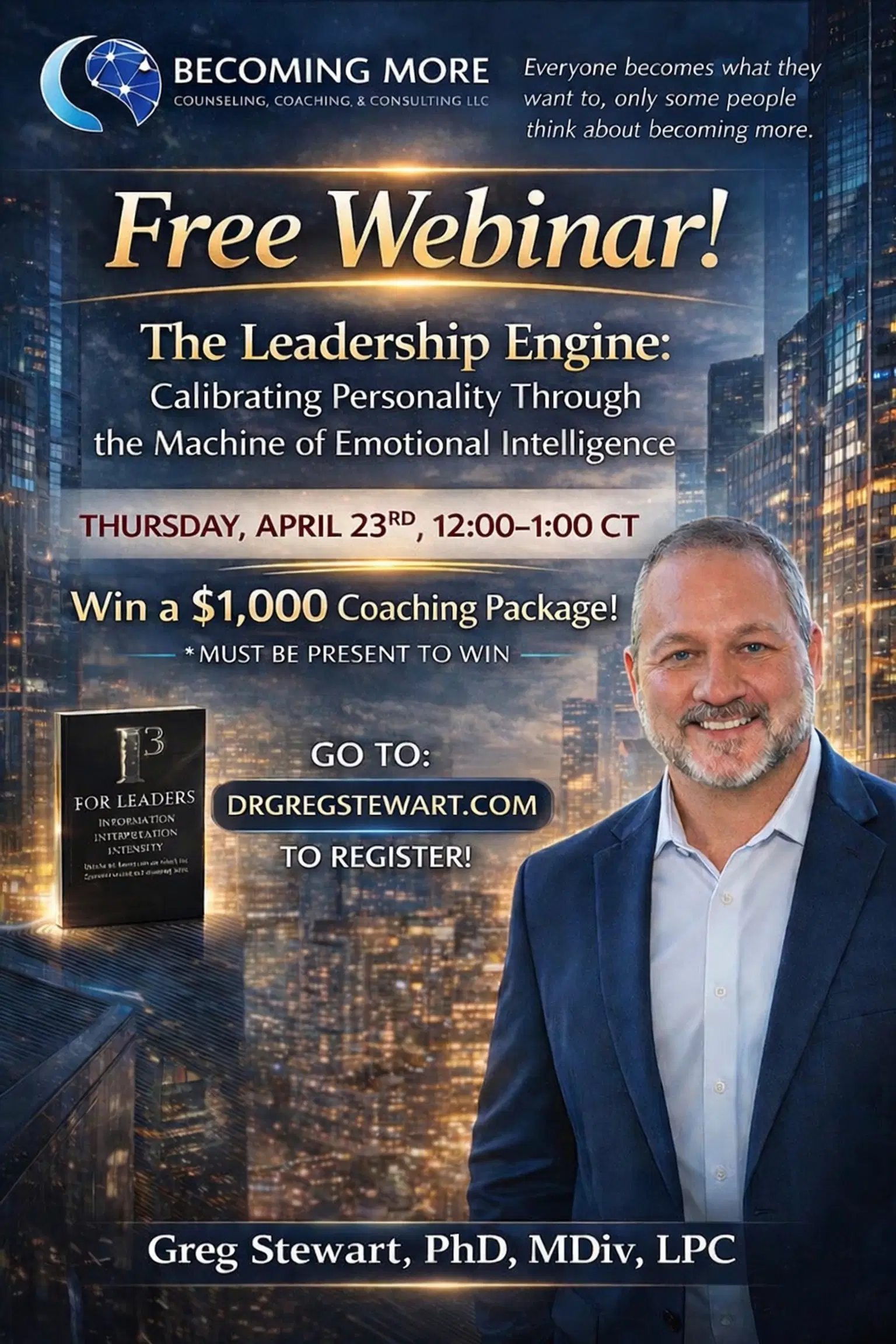
Leadership isn't a solo sport, and you don't have to calibrate the room alone. We are hosting a specialized webinar to help you master these exact dynamics.
Free Webinar! Thursday, March 26th, 12:00-1:00 CT Topic: The Leadership Engine: Calibrating Personality Through the Machine of Emotional Intelligence
We’ll be giving away a $1,000 coaching package to one lucky attendee. This is your chance to see how the I³ Framework can be applied directly to your specific leadership challenges.
If you’re ready to stop reacting to the temperature and start setting it, let's talk. We work with C-Suite executives and senior leadership across the country to turn their emotional intensity into their greatest strategic advantage.
Call 469-485-0387 to book a consult and start your journey of becoming more.
Related Reading:
Mastering Executive Presence: The I³ Framework & The $1,000 Opportunity
![[HERO] Mastering Executive Presence: The I³ Framework & The $1,000 Opportunity](https://cdn.marblism.com/5S1Ql_STn-Z.webp)
Free Webinar! April 23rd, 12:00-1:00 CT with a chance to win a $1,000 coaching package!
Executive presence is often treated like a ghost: something everyone talks about but few can actually define. In the high-stakes boardrooms of Dallas and the corporate headquarters across the country, leadership is frequently reduced to a set of external behaviors: how you dress, how you speak, and how you command a room. While those elements matter, they are merely the symptoms of a deeper, more rigorous internal process.
True executive presence is not an act. It is a result of internal calibration. It is the ability to maintain clarity, authority, and influence when the pressure is at its peak. As we often say at Becoming More Counseling, Coaching, & Consulting, "Leadership is defined not by the best of times, but the worst of times."
To lead others effectively, you must first master the machinery of your own internal world. This is where the I³ Framework and the Panama Canal Method become the most valuable tools in a C-Suite executive’s arsenal.
The I³ Framework: The Engine of Leadership
Leadership is a mechanical process before it is a social one. If the internal engine is misfiring, the external output will be inconsistent. The I³ Framework: Information, Interpretation, and Intensity: provides the blueprint for this internal calibration.
1. Information: Beyond the Data Points
In the modern corporate landscape, we are drowning in information. Leaders are bombarded with KPIs, market trends, and internal feedback loops. However, the most critical "Information" for an executive isn't found on a spreadsheet. It is the raw data of your own internal state.
What are you feeling? What is your temperament telling you about the current obstacle? Most leaders attempt to suppress these data points, viewing them as distractions. In the I³ Framework, we treat internal "Information" as a strategic asset. You cannot manage what you do not acknowledge. Every negative emotion is a signal: a piece of data that, if handled correctly, can be converted into momentum.
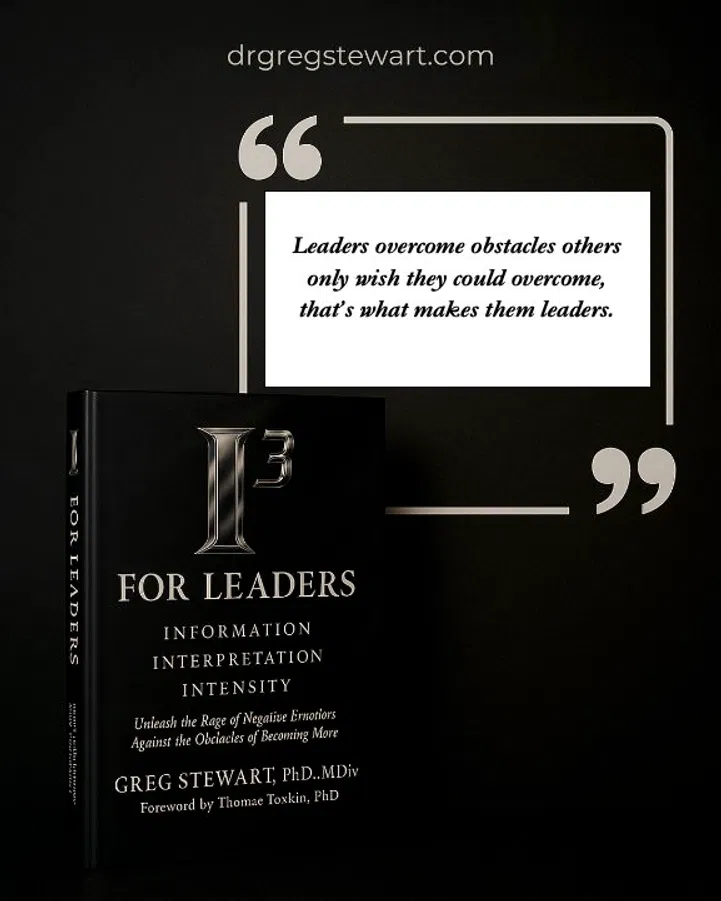
2. Interpretation: The Bridge of Meaning
Data without context is noise. "Interpretation" is the process of assigning meaning to the information we receive. This is where the "Interpretation Gap" occurs. Two leaders can look at the same failed quarterly report. One interprets it as a sign of imminent failure; the other interprets it as the necessary friction required for a pivot.
The most effective leaders master their interpretation. They realize that their narrative dictates their influence. If your interpretation of a challenge is rooted in fear or frustration, your team will mirror that instability. To bridge the gap, you must develop the discipline to interpret obstacles not as dead ends, but as requirements for growth. Remember: "Unleash the rage of your negative emotions against the obstacle of becoming more."
3. Intensity: The Fuel for Execution
Intensity is often misunderstood as volume or aggression. In the context of executive presence, Intensity is about the volume of emotional energy you bring to your objectives. It is the drive to see a vision through to completion despite the internal and external resistance.
For the C-Suite, intensity must be regulated. Too much intensity without a clear interpretation leads to burnout and fractured team culture. Too little intensity leads to stagnation and a loss of authority. We teach the principle of "Duty and Discipline before Dopamine." You don't lead because it feels good; you lead because it is the duty you have accepted. This "Iron Man Core" of spiritual and emotional development ensures that your intensity is focused on the right outcomes.
The Panama Canal Method: Strategic Calibration
If the I³ Framework is the engine, the Panama Canal Method is the navigation system.
In the shipping world, the Panama Canal uses a series of locks to raise and lower ships to different water levels, allowing them to cross the continental divide. In leadership, we use the Panama Canal Method to calibrate our emotional levels to match the demands of the situation.
Think of a high-pressure boardroom negotiation in the DFW Metroplex. If you enter that room at an "Intensity 10" while the situation requires a "Presence 4" of calm authority, you will over-steer. Conversely, if you enter a crisis meeting with a low level of urgency, you lose the confidence of your stakeholders.
The Panama Canal Method allows a leader to step into a "lock," assess the Information and Interpretation currently active, and purposefully raise or lower their emotional level before moving forward. This is the hallmark of high-level emotional intelligence. It prevents the reactive, "knee-jerk" responses that often plague managers who haven't yet learned to become more.

Internal Change Precedes External Change
A recurring theme in our work with senior leadership is the reality that you cannot lead a team further than you have led yourself. Many executives seek coaching to "fix" their teams or "improve" company culture. While these are worthy goals, they are secondary.
The external culture of an organization is simply a reflection of the internal culture of its leaders. If a leader lacks a personal mission, they are simply a machine managing other machines. To achieve a high-level executive presence, you must do the hard work of internal audit.
"Everyone becomes what they want to, only some people think about becoming more."
This philosophy is the foundation of our upcoming webinar, "The Leadership Engine." We aren't interested in superficial tips on how to stand or what to wear. We are interested in the radical transformation of how you process reality so that you can command any room with authentic authority.
Bridging the Gap: A DFW Case Study
Consider a recent example from a large financial services firm based in West Plano. The leadership team was facing a massive culture shift following an acquisition. The "Information" was clear: turnover was high, and morale was low.
The initial "Interpretation" from the C-Suite was that the employees were "not resilient enough." This led to an "Intensity" of frustration and a push for more "Dopamine-driven" perks: pizza parties and casual Fridays. It didn't work.
Through executive coaching, the CEO applied the I³ Framework. He realized his Interpretation was the problem. The employees weren't lacking resilience; they were lacking alignment. By shifting his own internal state and using the Panama Canal Method to calibrate his response, he moved from frustration to strategic empathy. He stopped trying to "fix" the employees and started modeling the "Duty and Discipline" he wanted to see. The external shift followed his internal change within six months.
The $1,000 Opportunity: The Leadership Engine Webinar
Are you ready to calibrate your internal engine?
On Thursday, April 23rd, from 12:00–1:00 CT, Dr. Greg Stewart will be hosting a free webinar: "The Leadership Engine: Calibrating Personality Through the Machine of Emotional Intelligence."
In this high-impact session, we will dive deeper into:
- How to apply the I³ Framework to your specific leadership challenges.
- The three steps of the Panama Canal Method for immediate emotional calibration.
- Why your current "Executive Presence" might be failing you in high-pressure scenarios.
The $1,000 Opportunity: Every attendee will be entered into a drawing for a $1,000 executive coaching package. This is a chance to work directly with Dr. Greg Stewart and the Becoming More team to refine your leadership presence and accelerate your career trajectory.

Conclusion: Will You Become More?
The demands on modern leaders are greater than ever. You are expected to be the anchor in a storm of constant change. That anchor doesn't hold because of how it looks on the surface; it holds because of its weight and its connection to the seabed.
Mastering the I³ Framework and the Panama Canal Method gives you that weight. It gives you an "Iron Man Core" that remains unshaken when the "Intensity" of the corporate world rises.
Don't settle for being just another manager. Don't be a machine managing other machines. Step into the discipline required to lead from the inside out.
Call 469-485-0387 to book a consult call or visit our website to secure your spot for the April 23rd webinar.
For a deeper dive into these concepts before the event, download our white paper: The Panama Canal Method: Your 3-Step Guide to Mastering Executive Presence and Emotional Calibration.
We look forward to seeing you there.
About Dr. Greg Stewart Dr. Greg Stewart is the owner of Becoming More Counseling, Coaching, & Consulting. He is the author of "I³ for Leaders" and a recognized expert in executive presence and performance psychology. He helps leaders navigate the intersection of temperament, emotional intelligence, and high-level execution.
Master Emotional Intelligence: Use Your Personality Strengths to Increase Your Leadership Influence!
Free Webinar! April 23rd, 12:00-1:00 CT with a chance to win a $1,000 coaching package!
Most people think leadership is a set of external skills. They focus on public speaking, strategic planning, or the ability to command a room. While those things matter, they are secondary. Real leadership: the kind that moves the needle and influences culture: starts within.
The greatest obstacle you will ever face as a leader isn't a market downturn, a competitor, or a difficult board member. It is the person you see in the mirror every morning. As we often say here at Becoming More, internal change must precede external change. Leaders overcome internal obstacles others wish they could.
If you want to increase your leadership influence, you have to master your emotional intelligence. But we aren't talking about the "soft" version of EQ you might have heard about in a corporate seminar. We are talking about the I³ Framework: Information, Interpretation, and Intensity.
The Panama Canal Method: Your New Internal Governance
In chapters 4 and 5 of my book, I³ for Leaders, I dive deep into what I call the Panama Canal Method. Think about how the Panama Canal works. It uses a series of locks to raise and lower ships, moving them safely between two oceans. Without those locks, the water would rush through uncontrollably, creating chaos and destruction.
Your mind needs a similar system. Most leaders operate on auto-response. Something happens, and they react. That is impulsive, not purposeful. To move from impulsive auto-responses to purposeful, disciplined thinking, you need the Panama Canal Rule.
The Panama Canal Rule: It is illegal to have an opinion (Interpretation) or an emotion (Intensity) until all the facts (Information) are in.
This rule sounds simple, but it is one of the hardest things for a leader to master. It requires moving from "Dopamine-driven" reactions to "Duty and Discipline-driven" responses.
Phase 1: Information (The Facts)
The first "lock" in the canal is Information. In leadership, we are constantly bombarded with data. However, data is not the same as information. Information is the objective, verifiable fact of the matter.
When a leader lacks the discipline to gather full information, they fill in the gaps with assumptions. This is where influence starts to erode. Research published in the Harvard Business Review suggests that high-EQ leaders are 22 times more likely to outperform their peers because they make decisions based on reality rather than reaction.
Before you allow yourself to feel "stressed" or "angry" about a situation, ask yourself: Do I have all the facts? If you are managing a team in a fast-paced environment like the Frisco Silicon Prairie, it’s easy to jump to conclusions when a project hits a snag. But the Panama Canal Rule says that until the Information lock is full, you cannot move to Interpretation.
Phase 2: Interpretation (The Story)
Once you have the facts, you move to the second lock: Interpretation. This is where your personality strengths come into play. Your personality is the lens through which you view the world.
Some leaders interpret a setback as a personal failure. Others interpret it as a learning opportunity. The interpretation is the "story" you tell yourself about the information you’ve gathered.
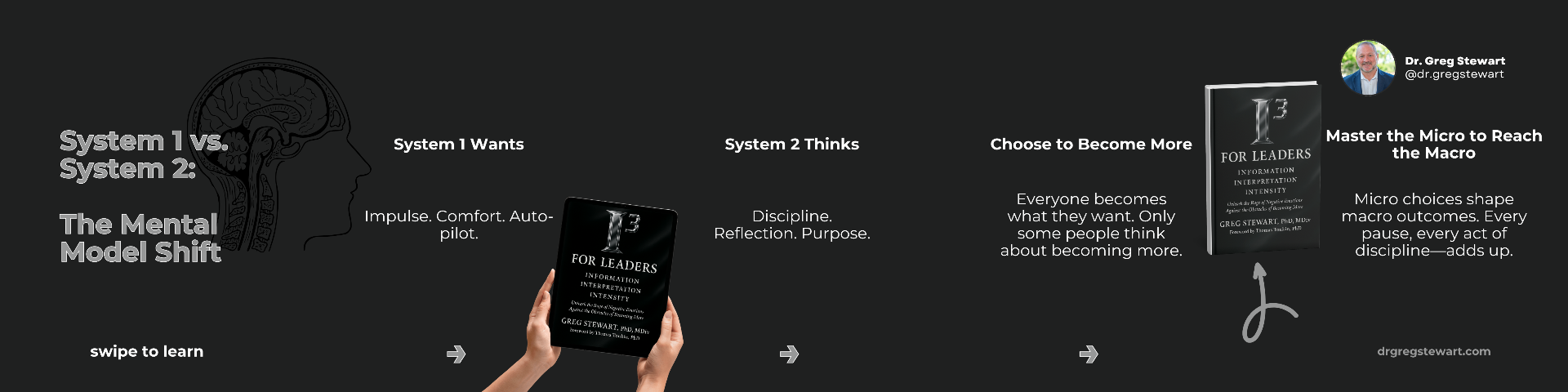
This is the point where many leaders lose their influence. They allow their "Interpretation Gap" to be filled with fear or ego. But as I wrote in I³ for Leaders, "Everyone becomes what they want to, only some people think about becoming more."
Becoming more means choosing an interpretation that aligns with your mission rather than your mood. It means using your personality strengths: whether you are naturally analytical, relational, or driven: to frame the situation in a way that leads to a solution.
Phase 3: Intensity (The Emotion)
The final lock is Intensity. This is the emotional energy you bring to the situation. Many people think emotional intelligence is about suppressing emotions. It isn't. It is about calibrating them.
There is a concept I teach called the "Iron Man Core." It is the spiritual and emotional center that allows you to remain steady when the storm hits. "Leadership is defined not by the best of times, but the worst of times."
When you have the correct Information and a disciplined Interpretation, your Intensity becomes a tool rather than a weapon. You can actually "unleash the rage of your negative emotions against the obstacle of becoming more."
Instead of taking your frustration out on your team, you direct that emotional intensity toward solving the problem. You use the energy of your anger or fear to drive the discipline required to overcome the external obstacle. This is how you transform negative emotions into growth opportunities.
Why Personality Strengths Matter
You don't have to change your personality to be a great leader; you have to calibrate it.
- If you are a high-D (Dominant) personality, your intensity might naturally be high. Your challenge is to ensure your Information lock is full before you act.
- If you are a high-S (Steadfast) personality, your intensity might be too low. Your challenge is to use your interpretation to find the courage to speak up.
Mastering EQ is about understanding how your specific "wiring" affects the Panama Canal flow. When you align your personality with the I³ framework, you stop being a machine managing other machines and start being a leader who inspires.
Moving Toward "Becoming More"
Most leaders are stuck in a cycle of "Dopamine-seeking." They want the quick win, the immediate validation, or the relief that comes from venting their emotions. But true leadership influence is built on "Duty and Discipline before Dopamine."
It takes discipline to wait for the facts. It takes duty to choose a productive interpretation. It takes a "Becoming More" mindset to calibrate your intensity so that it serves your team rather than scaring them.
If you’re ready to stop reacting and start leading with intentional influence, I want to help you master these concepts.
Take the Next Step
We are hosting a Free Webinar on April 23rd from 12:00-1:00 CT titled "The Leadership Engine: Calibrating Personality Through the Machine of Emotional Intelligence."
During this hour, we will break down the I³ framework even further and show you exactly how to apply the Panama Canal Rule to your specific leadership challenges. Plus, everyone who attends will have a chance to win a $1,000 coaching package to work directly with our team.
Register for the Free Webinar Here!
If you don't want to wait until the webinar to start your growth journey, or if you need immediate consulting for your team, let's talk.
Call 469-485-0387 to schedule a discovery call.
Remember: Internal change must precede external change. The world is waiting for you to become the leader you were meant to be.
How to Integrate the Panama Canal Method with Executive Leadership Coaching for Faster Decisions
![[HERO] How to Integrate the Panama Canal Method with Executive Leadership Coaching for Faster Decisions](https://cdn.marblism.com/_mH7qmIH7UG.webp)
Free Webinar! April 23rd, 12:00-1:00 CT with a chance to win a $1,000 coaching package!
Decision-making at the C-suite level is often less about having the right answers and more about having the right process. You are paid for your judgment, but judgment is frequently clouded by the very thing that makes you a high achiever: your drive for results. This drive can lead to "cognitive shortcuts" that result in expensive mistakes.
In the fast-paced corridors of the Frisco "Silicon Prairie," where business moves at the speed of a fiber-optic connection, leaders often find themselves drowning in data but starved for clarity. They rush to solutions before they even understand the problem. This is where the Panama Canal Method, integrated with our proprietary I³ Framework (Information, Interpretation, and Intensity), changes the game.
As we say at Becoming More Counseling, Coaching, & Consulting: "Everyone becomes what they want to, only some people think about becoming more."
The History of a Massive Decision
Think back to the construction of the Panama Canal. Ferdinand de Lesseps, the man who built the Suez Canal, tried to apply the same "sea-level" strategy to Panama. He failed spectacularly because he was anchored to past success and ignored the unique terrain. He had the drive, but his interpretation of the facts was flawed.
It wasn't until Theodore Roosevelt and his team stepped in that the strategy shifted to a lock system. They gathered the facts, reinterpreted the geography, and channeled their intensity into a structure that actually worked. In executive leadership, we see "Lesseps leaders" every day: brilliant people trying to dig sea-level canals through mountains of modern complexity.
To avoid this, we use the Panama Canal Rule within the I³ process.

Step 1: The Information Lock (The "Zero Opinion" Zone)
The first lock in the Panama Canal Method is the Information Lock.
In high-pressure leadership roles, there is an incredible temptation to form an opinion the moment a problem hits your desk. We call this "opinion leakage." When you lead with your gut before you have the data, you bias the rest of your team. They stop looking for truth and start looking for ways to support your hunch.
The Information Lock requires a "no opinion/no emotion" rule until all relevant data is gathered. You are simply the architect collecting the survey results of the terrain.
- The Rule: You cannot offer a solution or a feeling until the "Information Lock" is full.
- Executive Coaching Tie-in: We coach leaders to identify their "Information Overload" triggers. When you feel the urge to snap-decide, that is actually a signal to pause and verify.
As Dr. Greg Stewart writes in his book, I³ for Leaders: Unleash the Rage of Negative Emotions Against the Obstacles of Becoming More, "Leadership is defined not by the best of times, but the worst of times." The worst of times require the cleanest data.
Step 2: The Interpretation Lock (The "Multi-Lens" Check)
Once the data is in the lock, the water levels have to rise. This is the Interpretation Lock.
Most leaders fail here because they suffer from "Anchoring Bias." They see the data through the lens of how they’ve always done things. To pass the Interpretation Lock, you must check multiple viewpoints.
If you are an HR Director in Plano dealing with a culture shift, you can’t just look at the turnover stats. You have to interpret those stats through the lens of the frontline manager, the remote developer, and the long-term executive.
- The Rule: You must generate at least three distinct interpretations of the same data set before moving forward.
- Why it Works: This breaks the "Confirmation Bias" that plagues most boardrooms.
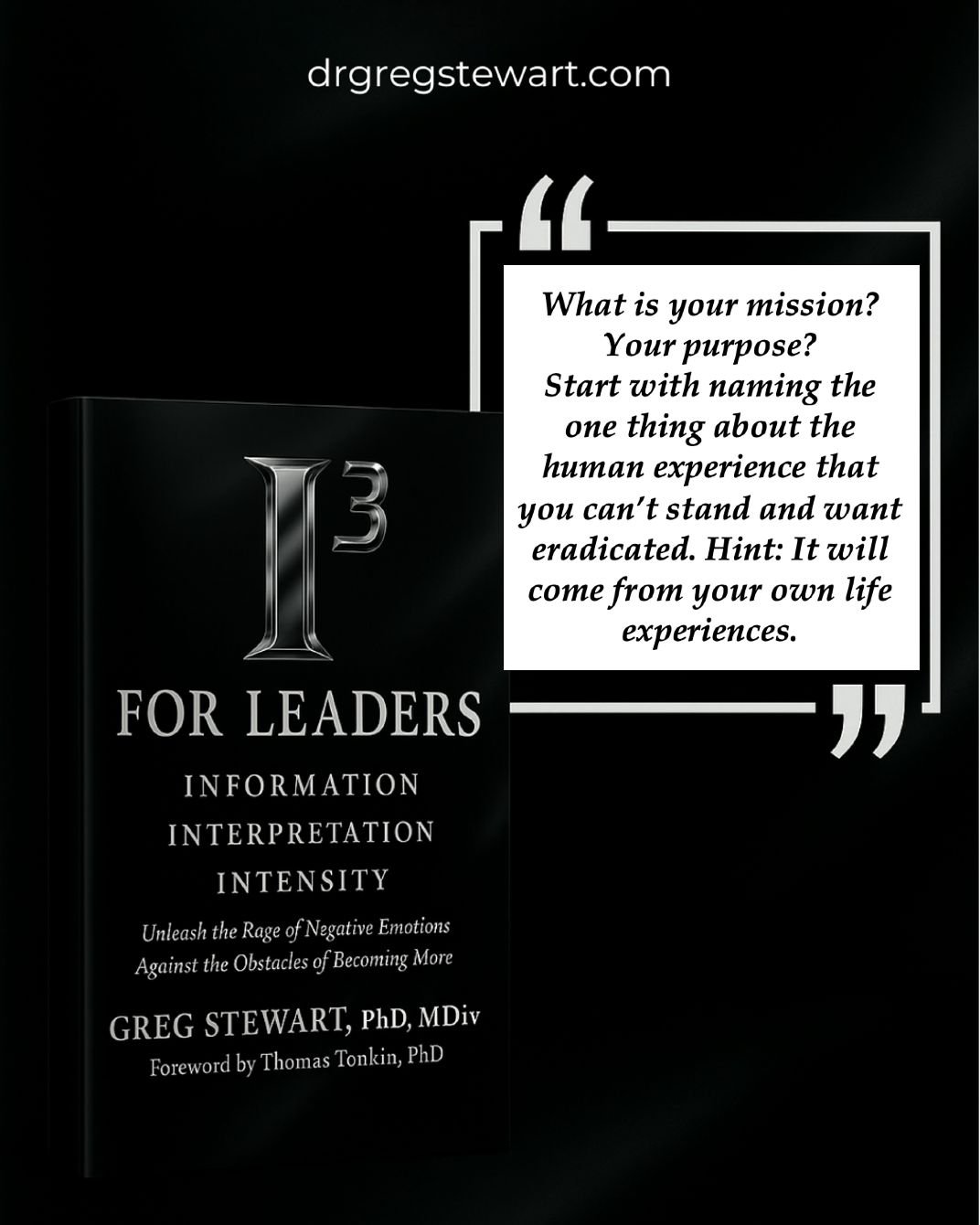
We often tell our coaching clients: "Unleash the rage of your negative emotions against the obstacle of becoming more." Use that frustration about a slow project to fuel a deeper, more rigorous interpretation of why it is actually slow, rather than just blaming the team.
Step 3: The Intensity Lock (The "Emotional Energy" Assessment)
The final stage is the Intensity Lock. This is where we look at the emotional energy required for the decision and the potential "bad outcomes."
Intensity isn't just about working harder; it’s about strategic focus. It’s the "Iron Man Core" of your leadership. In this lock, we ask:
- What is the emotional cost of this decision?
- Are we moving because of "Dopamine" (the quick thrill of a new project) or "Duty and Discipline"?
- What is the worst-case scenario, and do we have the internal strength to handle it?
If the intensity is misaligned: if you are bringing 10/10 anger to a 2/10 administrative problem: the "lock" will burst. Successful executive leadership coaching helps you calibrate your internal "thermostat" so your intensity matches the stakes.
Why This Leads to Faster Decisions
It sounds counterintuitive. "Penny, you're telling me to slow down with three locks to go faster?"
Yes.
The reason most C-suite decisions take forever is not the initial choice: it's the second-guessing, the re-work, and the cleaning up of messes caused by impulsive actions. By using the Panama Canal Method:
- You eliminate the "looping" of indecision.
- You gain "Decision Authority" because your process is transparent and rigorous.
- You build "Executive Presence" by remaining calm (Duty and Discipline) while others are reacting (Dopamine).
Internal change must precede external change. If you haven't mastered your internal I³ framework, you will always be at the mercy of external market volatility.
Integrating I³ Into Your Leadership Culture
At Becoming More, we don't just provide coaching; we provide a system for human optimization. Whether you are a CEO in Dallas or a Senior Manager in a remote-first tech firm, the principles remain the same.
You need a coach who can act as your "Executive Mirror," reflecting back where your Information is thin, where your Interpretation is biased, and where your Intensity is wasted.
If you’re ready to stop digging sea-level canals and start building the locks that will carry your organization to the next level, let’s talk.
Call 469-485-0387 to schedule a consultation or visit our Leadership Blog for more insights on executive presence.
Take the Next Step
Want the full breakdown of how to implement these locks in your next board meeting?
Download the Lead Magnet Now
Get "The Panama Canal Method" here: https://www.becomingmore.com/lead-magnet
Download "The Panama Canal Method" Lead Magnet Here
The Science of Alignment: Why Your Team’s Perception of Your EQ is Your Biggest Strategic Data Point
![[HERO] The Science of Alignment: Why Your Team’s Perception of Your EQ is Your Biggest Strategic Data Point](https://cdn.marblism.com/5C6mKW3VHjd.webp)
Free Webinar! April 23rd, 12:00-1:00 CT with a chance to win a $1,000 coaching package!
In the high-stakes world of C-suite leadership, we are obsessed with data. We track EBITDA, customer acquisition costs, and churn rates with microscopic precision. But there is one data point that most leaders in the "Silicon Prairie" and across the nation are completely ignoring. It isn’t sitting in your CRM or your latest quarterly report.
It’s the way your team perceives your Emotional Intelligence (EQ).
If you think your EQ is high, that’s an opinion. If your team thinks your EQ is high, that’s a strategic asset. If they think it’s low, it’s a liability that is likely costing you more than your overhead.
At Becoming More Counseling, Coaching, & Consulting, we see this "Perception Gap" every day. Leaders often believe they are being clear, empathetic, and decisive. Meanwhile, their subordinates feel managed by a machine rather than led by a human. As I often say, "Everyone becomes what they want to, only some people think about becoming more."
To bridge this gap, we utilize the I³ Framework: Information, Interpretation, and Intensity.
The Information Pillar: The Executive Mirror
The first step in our framework is Information. In 2026, information is everywhere, but the most critical data is often the hardest to stomach. This is what I call the "Executive Mirror."
Your team’s perception of you acts as a mirror. If you don't like what you see in the mirror: high turnover, low engagement, or a "quiet quitting" culture: you don't break the mirror. You change the person standing in front of it.
Recent research from Frontiers in Psychology (2026) highlights a staggering link between supervisor-subordinate EQ alignment and organizational profitability. The study found that when a leader's self-assessment of their emotional intelligence aligns with their team's perception, the department's productivity increases by nearly 22%. Why? Because alignment creates psychological safety.
When the Information you project matches the Information they receive, trust is the natural byproduct.

The Interpretation Gap: Moving Beyond the Data
Once you have the data, you have to decide what it means. This is Interpretation.
Many leaders in North Texas, from the corporate hubs in Plano to the tech corridors of Frisco, are currently navigating massive shifts. Take the recent executive restructuring at Toyota North America in Plano, for example. When organizations undergo that level of change, the "Interpretation Gap" widens.
A leader might interpret their own stoicism as "strength under pressure." However, their team might interpret that same behavior as "emotional unavailability" or "lack of transparency."
A landmark 2025 study in Harvard Business Review (HBR) explored this exact phenomenon. They found that "misaligned EQ perception" is the leading cause of executive failure during organizational transitions. If your team interprets your silence as fear, they will mirror that fear.
Remember: "Leadership is defined not by the best of times, but the worst of times." If your team cannot find a reflection of calm, strategic confidence in you, they will fill that "Narrative Vacuum" with their own anxieties.
Internal change must precede external change. If you haven't mastered your own internal interpretation of stress, you cannot expect to lead a team through a merger, a pivot, or an AI integration.
Intensity: Unleashing the Right Energy
The final pillar of the I³ Framework is Intensity. This isn’t about being loud; it’s about the emotional weight and discipline you bring to your mission.
Many leaders view negative emotions: anger, frustration, or fear: as things to be suppressed. I argue the opposite. "Unleash the rage of your negative emotions against the obstacle of becoming more."
When your team perceives you as having high EQ, they aren't looking for a "nice" boss. They are looking for a leader who can harness Intensity with Discipline. We call this "Duty and Discipline before Dopamine." It is the ability to choose the hard right over the easy, dopamine-fueled wrong.
When you show up with consistent, disciplined intensity, you close the perception gap. Your team no longer has to guess your motives. They see a leader who is driven by a personal mission, not just a corporate mandate.
The Science of Alignment in Action
Consider the North Texas executive landscape. We have seen a surge in "Change Fitness" demands. Leaders who are winning in 2026 are those who treat their team’s feedback as a strategic KPI. They don't just ask, "Did we hit the numbers?" They ask, "How did my leadership impact the team's ability to hit those numbers?"
If you are a C-suite executive or an HR leader, you need to understand that your team's perception is your reality. You can have the best strategy in the world, but if your team perceives a lack of EQ, they will subconsciously (or consciously) sabotage the execution.
This is about developing an "Iron Man Core." It’s about the spiritual and emotional development required to stand in the fire of team feedback without melting. It is the core philosophy of our work at Becoming More: you must overcome the internal obstacles that others wish they could.
Why Your Strategy is Failing (and How to Fix It)
If you’re noticing a lack of alignment, it’s time to audit your I³ engine:
- Information: Are you seeking honest feedback, or are you living in an echo chamber? (Check out our Executive Mirror blog for more on this).
- Interpretation: Are you misreading the "Emotional Recession" of your workforce?
- Intensity: Are you leading with a mission, or are you just a machine managing other machines?
Alignment isn't a "soft skill." It is a hard science with measurable ROI. When you align your internal growth with your external leadership style, you don't just become a better boss: you build an anti-fragile organization.
Take the Next Step
Leadership is a journey of becoming. If you’re ready to stop guessing and start leading with scientific precision, I invite you to join our upcoming deep dive.
Join our Free Webinar! Topic: The Leadership Engine: Calibrating Personality Through the Machine of Emotional Intelligence Date: April 23rd, 12:00 PM – 1:00 PM CT The Prize: One attendee will win a $1,000 coaching package to help jumpstart their I³ journey.
Register now at drgregstewart.com.
If you’re ready to dive deeper into executive coaching or corporate consulting right now, don't wait for the webinar. Let's get to work on your I³ Blueprint today.
Call 469-485-0387 to schedule a consultation.
"Everyone becomes what they want to, only some people think about becoming more." It’s time to think about it. It's time to become more.
The Leadership Engine: Is Your Emotional Intelligence Running on Empty?
![[HERO] The Leadership Engine: Is Your Emotional Intelligence Running on Empty? (Updated)](https://cdn.marblism.com/SvQgFKlPfqT.webp)
Free Webinar! April 23rd, 12:00-1:00 CT with a chance to win a $1,000 coaching package!
Most executives in the North Texas corridor are running high-performance machines. They have the latest tech, the best talent recruited from the coasts, and data dashboards that would make a NASA engineer jealous. But there is a silent friction slowing down the gears. It is the engine of the leader themselves.
When we talk about leadership failure, we rarely talk about a lack of technical skill. We talk about burnout, turnover, and cultural decay. In short, the emotional intelligence (EQ) tank is running on empty. If you are leading a team in the "Silicon Prairie" or navigating the high-stakes world of the new Texas Stock Exchange, you cannot afford to let your internal engine stall.
Internal change must precede external change. As I often say, everyone becomes what they want to, only some people think about becoming more. To lead others, you must first master the mechanics of yourself.
The I³ Framework: The New Mechanics of Leadership
In my book, I³ For Leaders, I break down the three components required to calibrate your leadership engine: Information, Interpretation, and Intensity.
High-level leadership is not just about having the right data. It is about how you process that data and the energy you bring to the execution.
1. Information: Moving Beyond Data Overload
In the DFW executive suite, we are drowning in information. Whether you are at AT&T in Dallas or a fast-growing startup in Frisco, you have metrics for everything. However, information without a filter is just noise.
Harvard Business Review research suggests that the most effective leaders do not seek more information; they seek better clarity. They understand that Information is the raw fuel. If the fuel is contaminated with bias or unnecessary clutter, the engine knocks.
2. Interpretation: Filling the Narrative Vacuum
This is where most leaders fail. When a company undergoes a major shift: like the recent headquarters relocations we’ve seen across North Texas: a "Narrative Vacuum" is created.
A Narrative Vacuum occurs when there is a gap between a change and the explanation for that change. In the absence of a clear story from the top, employees fill that vacuum with their own interpretations. Usually, those interpretations are rooted in fear, uncertainty, and doubt.
Your job as a leader is to provide the Interpretation. You must frame the struggle. If you don’t tell the story, the grapevine will do it for you, and the version they tell will rarely be the one that drives growth.
3. Intensity: The Energy of Execution
Intensity is often misunderstood as "being loud" or "working long hours." In the I³ Framework, Intensity is about the emotional weight you carry into your decisions. It is about your presence.
Leadership is defined not by the best of times, but the worst of times. When the engine is under pressure, do you lean into the challenge or do you leak energy?

Unleashing the Rage of Negative Emotions
We have been conditioned to think that negative emotions like anger or frustration are signs of a "broken" engine. I disagree. In I³ – Unlock the Inner Strength Behind Your Negative Emotions, I argue that these emotions are actually high-octane fuel if used correctly.
You should unleash the rage of your negative emotions against the obstacle of becoming more.
If you are frustrated with your team’s performance, don't suppress it. Don't let it leak out as passive-aggressiveness. Instead, turn that intensity toward the problem. Use the energy of your frustration to power the discipline needed to fix the system.
This requires a shift from seeking a "dopamine hit" (the quick fix of a temporary win) to embracing Duty and Discipline before Dopamine. The best DFW leaders are the ones who stay steady when the market gets choppy, relying on their "Iron Man Core" to navigate through the fire.
The Science of the Emotional Engine
Recent studies in Frontiers in Psychology highlight that executive decision-making is inextricably linked to emotional regulation. Leaders who score high in emotional intelligence are better at managing the physiological symptoms of stress, allowing them to maintain cognitive function during a crisis.
When your EQ tank is empty, your brain shifts into survival mode. You stop thinking strategically and start reacting defensively. This is when you make the 7 mistakes that C-suite leaders often make with change management: mistakes that cost millions in lost productivity and talent flight.
Calibrating Your Engine for the Future
If you feel like your leadership engine is sputtering, it is time for a calibration. This isn't just about "soft skills." This is about hard-edged performance.
North Texas is becoming the global hub for finance and technology. The leaders who will win in 2026 and beyond are those who can master the I³ Framework. They are the ones who can take raw Information, provide a powerful Interpretation that closes the Narrative Vacuum, and apply the right level of Intensity to move the needle.
Join Us for the April Webinar
Are you ready to stop managing machines and start leading people? I am hosting a free webinar specifically for leaders who want to master the I³ Framework and fill their emotional intelligence tanks.
Webinar Details:
- Topic: The Leadership Engine: Calibrating Personality Through the Machine of Emotional Intelligence
- Date: April 23rd, 2026
- Time: 12:00 PM – 1:00 PM CT
- Registration: Visit drgregstewart.com to secure your spot.
Bonus: Everyone who registers will be entered for a chance to win a $1,000 coaching package. This is your opportunity to get one-on-one guidance to help you overcome the internal obstacles holding you back.

Becoming More Starts Now
Your growth as a leader is not a luxury; it is a necessity for your organization's survival. Don't wait until the engine seizes up. Start thinking about becoming more today.
If you are ready to explore executive presence coaching or want to bring the I³ Framework to your management team, let’s talk. We help DFW executives turn their leadership into a competitive advantage.
Call 469-485-0387
Becoming More Counseling, Coaching, & Consulting Helping leaders master the internal game to win the external one. www.becomingmore.com
Information Overload vs. Strategic Intensity: Lessons from the Silicon Prairie’s Top Boards
![[HERO] Information Overload vs. Strategic Intensity: Lessons from the Silicon Prairie’s Top Boards](https://cdn.marblism.com/a8wlmi5JvcI.webp)
In the high-velocity tech corridors of North Texas: often called the "Silicon Prairie": the boardroom atmosphere is changing. If you walk into a C-Suite meeting in Richardson’s Telecom Corridor or a strategy session in a shiny new Plano headquarters, you’ll notice a common enemy. It isn't the competition. It isn’t even the economy.
It is the noise.
Leaders today are drowning in a sea of data, yet they are starving for wisdom. We call this the "Information Overload" crisis. For national executives watching the rapid expansion of hubs like the Dallas-Fort Worth metroplex: where giants like AT&T, Goldman Sachs, and Toyota have anchored massive operations: there is a vital lesson to be learned. Technical mastery of data is no longer the differentiator. The real edge lies in what we call Strategic Intensity.
At Becoming More Counseling, Coaching, & Consulting, we believe that "Everyone becomes what they want to, only some people think about becoming more." To become more as a leader, you have to move beyond the data dump and master the internal mechanics of decision-making.
The Information Trap: When More is Actually Less
We live in an era where the "Information" pillar of leadership is overfed while the other pillars atrophied. In the Silicon Prairie, tech boards are bombarded with real-time analytics, KPIs, and market forecasts. But as many directors are discovering, having the most information doesn't lead to having the best strategy.
In fact, research published in Frontiers in Psychology (2024/2026) titled "Emotions and Decision-Making in Boardrooms" suggests that high volumes of information can actually trigger defensive emotional responses. When the brain is overwhelmed by data, it often retreats into "safe" or "status quo" decision-making to reduce cognitive load.
This is the Information Trap. You think you’re being diligent, but you’re actually becoming paralyzed.
 Suggested Image: A sleek, modern boardroom overlooking a high-tech city skyline, symbolizing the intersection of data and high-stakes leadership.
The I³ Framework: Your Blueprint for Clarity
To break through the noise, we utilize the I³ Framework. It consists of three non-negotiable pillars: Information, Interpretation, and Intensity. When these three align, a leader moves from a "machine managing other machines" to a person of true influence.
1. Information (The Facts)
Information is the raw material. It’s the "what." In a boardroom context, this includes your P&L statements, your churn rates, and your market share. However, Information without the other two pillars is just noise. High-performing boards in high-growth environments don't just ask for more reports; they ask for better filters. They understand that proximity is overrated and that the quality of the data matters far more than the quantity.
2. Interpretation (The "So What?")
This is where leadership truly begins. Interpretation is the ability to look at a data set and ask, "What does this actually mean for our mission in 2027?"
Many leaders fail because of the Interpretation Gap. They present the facts but fail to provide the narrative. In the Silicon Prairie, where tech shifts happen overnight, the ability to interpret a market dip as either a "temporary glitch" or a "fundamental shift" is the difference between a billion-dollar pivot and a bankruptcy filing.
3. Intensity (The Conviction and Emotional Regulation)
Intensity is the most misunderstood pillar. It isn't about volume or aggression. In the I³ Framework, Intensity is about the conviction behind the decision and the emotional regulation required to stay the course.
As I wrote in my book, I³ – Unlock the Inner Strength Behind Your Negative Emotions, "Leadership is defined not by the best of times, but the worst of times."
When the "Information" is bad and the "Interpretation" is scary, a leader’s "Intensity" determines whether the team panics or performs. High-end research shows that the most effective board members are those who can regulate their own emotional intensity to foster a "climate of cognitive challenge" without triggering emotional conflict.
Lessons from the Front Lines: DFW as a National Microcosm
Why look at the Silicon Prairie? Because the expansion in North Texas: like the massive new Goldman Sachs campus in Dallas or the constant tech influx in Frisco: represents the peak of high-velocity leadership.
In these environments, the boards that thrive are those that practice Strategic Intensity. They don't just "manage" the information; they use it as a catalyst for growth. They understand that internal change must precede external change.
When a leader feels the "rage" of a missed quarterly goal or a failed product launch, the average manager tries to suppress that emotion. But a leader using the I³ Framework learns to "unleash the rage of your negative emotions against the obstacle of becoming more." They turn that frustration into the fuel for deeper Interpretation and more focused Intensity.
 Suggested Image: A close-up, professional portrait of a leader showing focused determination and calm authority.
The Science of the Boardroom
The Frontiers in Psychology study mentioned earlier highlights a critical truth: emotional intensity impacts decision quality. If the intensity is too low, the board lacks the drive to take necessary risks. If it’s too high and unregulated, it leads to "groupthink" or erratic pivots.
Strategic Intensity is the "Goldilocks zone" of leadership. It’s the ability to hold a high-stakes vision with a steady hand. This is why executive presence coaching is becoming a "secret weapon" for leaders from New York to California who are looking at the Texas model of growth. They realize that to lead a billion-dollar organization, you first have to lead your own internal state.
Moving Beyond the Breaking Point
We often see leaders reach a "breaking point" where the information overload becomes too much to bear. They start making mistakes. They lose their 10% advantage: that slight edge in influence and gravitas that makes them effective.
If you find yourself in that position, remember: you are not your data. You are the interpreter of that data. Your job is to bring the intensity that transforms information into action.
 Suggested Image: A stylized graphic of the I³ Framework: Information, Interpretation, Intensity: showing them as interconnected gears.
Your Next Step: Join Us Tomorrow
Leading at the highest levels requires a new set of tools. The I³ Framework isn't just a theory; it’s a survival guide for the modern executive. Whether you are navigating the Silicon Prairie or a boardroom in midtown Manhattan, the principles remain the same: Duty and Discipline must come before Dopamine.
We want to help you master these pillars.
Join us TOMORROW for our Free Lunch and Learn Webinar.
- When: Thursday, March 26th, 12:00 PM – 1:00 PM CT
- Topic: Mastering the I³ Framework for Executive Leadership
- The Bonus: We are giving away a $1,000 coaching package to one lucky attendee.
Don’t just manage the noise. Become the leader who cuts through it.
Ready to start your journey of becoming more? Call 469-485-0387 to schedule a consultation or learn more about our executive coaching programs.
Internal change precedes external change. It's time to think about becoming more.
For more insights on leadership and personal growth, visit our Leadership Blog or explore our latest podcasts.
Executive Presence Coaching Secrets Revealed: How to Influence Your Board Without Stepping into the Room
Free Webinar! March 26th, 12:00-1:00 CT with a chance to win a $1,000 coaching package!
![[HERO] Executive Presence Coaching Secrets Revealed: How to Influence Your Board Without Stepping into the Room](https://cdn.marblism.com/nEU7k0CcISI.webp)
The door to the boardroom closes. You are not on the other side of it. Or perhaps you are, but only as a tile on a high-definition screen.
For many C-suite leaders, the traditional concept of "commanding the room" has shifted. The physical space is no longer the primary theatre of influence. True executive presence is not about how loud you speak or the expensive cut of your suit. It is about the weight of your words and the clarity of your intent when you are not physically present to defend them.
Executive presence coaching is often misunderstood as a series of performance tricks. People think it is about posture or a firm handshake. It is not. It is about an internal transformation that radiates outward. As we say at Becoming More, internal change must always precede external change. Leaders who master this are the ones who overcome internal obstacles others wish they could even identify.
The Myth of Proximity
A common mistake in senior leadership is equating proximity with power. Leaders believe they must be in every meeting to ensure their vision is executed. This is a trap. If your influence ends when you walk out the door, you do not have presence; you have a temporary shadow.
Research from the Harvard Business Review suggests that executive presence is a combination of gravitas, communication, and appearance. However, in a world that is increasingly hybrid and decentralized, gravitas is no longer tied to a physical seat at the head of a table. It is tied to your ability to manage the I³ Framework: Information, Interpretation, and Intensity.
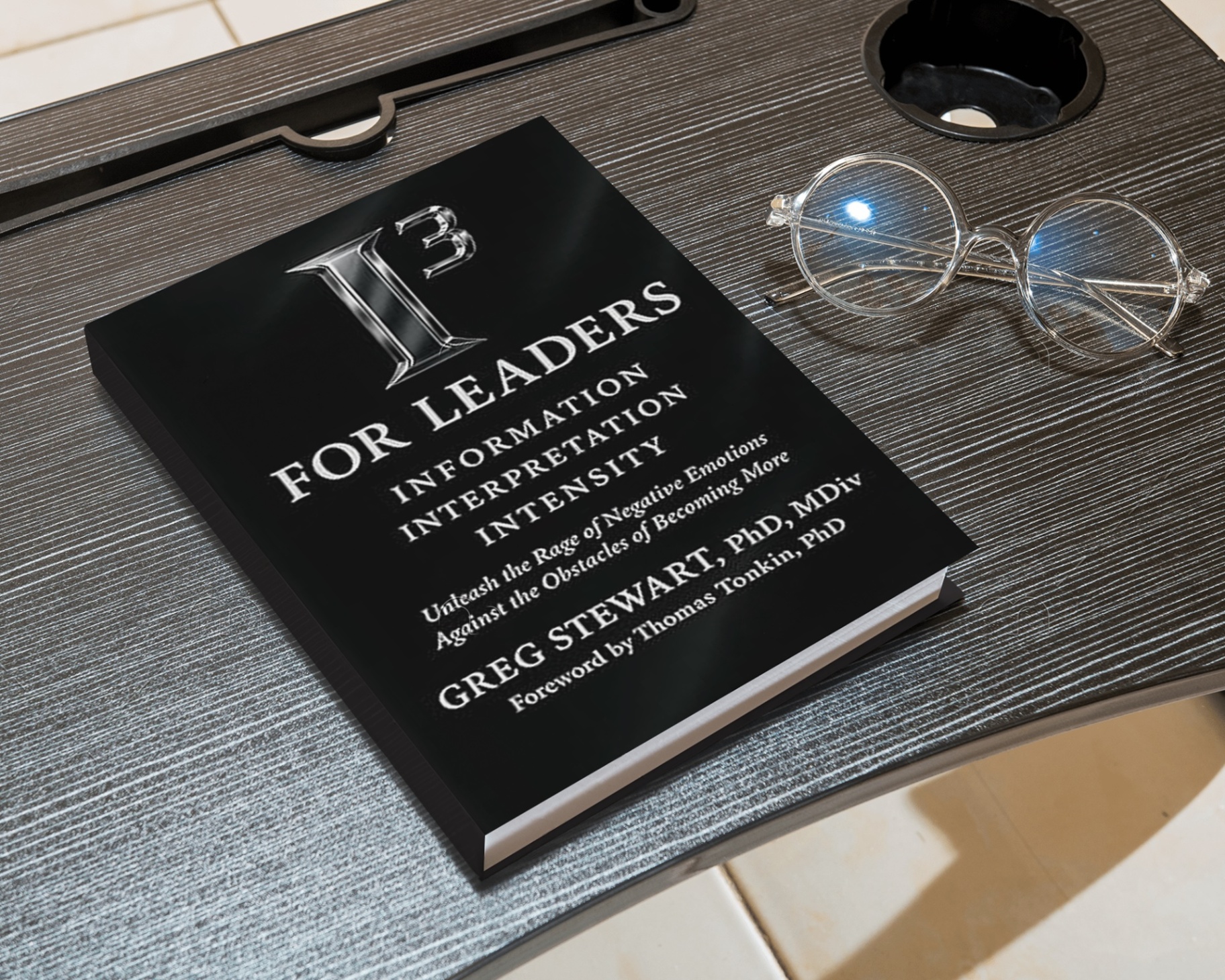
The I³ Framework: The Architecture of Influence
To influence a board without being in the room, you must master three specific dimensions. This is the core of our leadership coaching for executives.
1. Information: The Foundation of Credibility
Information is the "what." It is the data, the strategy, and the facts. But at the board level, everyone has the information. The secret to influence is how you curate it.
When you provide a board with too much data, you lose control of the narrative. Influence requires discipline. You must provide the exact amount of information necessary to build a bridge to your desired outcome. This is where "Duty and Discipline before Dopamine" comes into play. It is tempting to share everything to prove how hard you have worked: that is a dopamine hit for your ego. Discipline is giving the board only what they need to make the right decision.
2. Interpretation: The 10% Advantage
This is where most leaders fail. They present the information and assume the board will reach the same conclusion they did. They leave a gap. We call this the Interpretation Gap.
Interpretation is the "so what." It is the meaning you assign to the data. If you are not in the room, your interpretation must be so clear and compelling that it becomes the lens through which the board views the entire problem. You are not just providing facts; you are providing a perspective.
In my book, I³ – Unlock the Inner Strength Behind Your Negative Emotions, I discuss how "everyone becomes what they want to, only some people think about becoming more." To become more in the eyes of a board, you must be the master of interpretation. You must anticipate their fears and address them before they are even voiced.

3. Intensity: The Iron Man Core
Intensity is the "how it feels." It is the emotional resonance of your leadership. This is not about being loud or aggressive. It is about a calm, focused energy that people can feel through a screen or a written report.
Intensity is rooted in emotional regulation. When a board senses a leader is anxious, defensive, or uncertain, they pull back. When they sense a leader has an "Iron Man Core": a spiritual and emotional strength developed in the refiner's fire: they lean in.
"Leadership is defined not by the best of times, but the worst of times." If you can maintain your intensity when the pressure is highest, your influence will transcend the physical room. You must learn to "unleash the rage of your negative emotions against the obstacle of becoming more." Instead of letting frustration at a board's skepticism derail you, use that energy to refine your message and sharpen your resolve.
A Secret from the Silicon Prairie
Consider a CEO I coached recently in the Frisco, Texas, "Silicon Prairie." She was facing a board that was highly skeptical of a major pivot in her tech firm's strategy. She was a brilliant engineer but struggled to command the room.
We stopped focusing on her slides and started focusing on her internal state. We worked on her "Interpretation." Instead of presenting the pivot as a reaction to market losses, we framed it as an aggressive play for future dominance. We worked on her "Intensity." We used her underlying fear of failure not as a weight, but as fuel to project a composed, unshakable confidence.
She didn't win them over by talking more. She won them over by creating a narrative so robust that the board members began repeating her interpretation to each other when she wasn't even in the room. That is the secret of executive presence coaching.

Leading Through the Refiner's Fire
Boardrooms are high-pressure environments. They are designed to test the metal of a leader. If you view this pressure as a threat, you will shrink. If you view it as a refiner's fire, you will emerge stronger.
C-suite coaching is about building that resilience. It is about recognizing that "anger is just fear in a suit." When you encounter resistance from a board, it is usually because they are afraid of a specific outcome. Influence comes from identifying that fear and providing a path through it.
To do this effectively, you must have a personal mission. As I’ve written before, "If a leader lacks a personal mission, they are simply machines managing other machines." Your presence is defined by the depth of your conviction.
Practical Steps to Build Invisible Influence
How do you start influencing the board today without needing to be physically present?
- Refine Your Brand Clarity: Define your leadership story. What do you stand for? If a board member had to describe your leadership style in three words, what would they be? Consistency creates credibility.
- Master the 10% Advantage: Stop over-relying on data. Spend 10% more time on the interpretation of that data. Tell them why it matters.
- Audit Your Virtual Presence: If you are leading remotely, your vocal variety and articulation are your primary tools. Record yourself. Listen for filler words. Listen for the tone. Does it project authority or a need for approval?
- Use Stakeholder Alignment: Influence doesn't happen at the meeting; it happens before the meeting. Build consensus individually. By the time the board meets, your interpretation should already be the consensus.

The Path Forward
Executive presence is an inside-out job. You cannot fake it, and you cannot buy it. You have to build it through duty, discipline, and a willingness to face your own internal obstacles.
At Becoming More Counseling, Coaching, & Consulting, we specialize in helping leaders develop this "Iron Man Core." We help you move beyond the surface-level tactics and into the deep work that creates lasting influence.
"Everyone becomes what they want to, only some people think about becoming more." Are you ready to think about becoming more?
If you are ready to elevate your executive presence and master the art of board influence, we are here to help.
Call 469-485-0387 to schedule a consultation and start your journey toward becoming the leader your organization needs.
Don't Forget Our Free Webinar!
Join us on March 26th from 12:00-1:00 CT. We will be diving deeper into the I³ Framework and how it applies to the modern C-suite. Plus, one lucky attendee will win a $1,000 coaching package.

Lead Magnet Tie-in: Want to see where you stand? Download our I³ Executive Presence Audit. This PDF derived from the I³ Framework will help you identify exactly where your influence is leaking and how to plug the gaps before your next board interaction.
Call 469-485-0387 to learn more about our executive coaching programs.
How to Master Executive Presence Coaching in a Hybrid World (And Why Proximity is Overrated)
![[HERO] How to Master Executive Presence Coaching in a Hybrid World (And Why Proximity is Overrated)](https://cdn.marblism.com/Ju0gcWRMfnj.webp)
Free Webinar! March 26th, 12:00-1:00 CT with a chance to win a $1,000 coaching package!
The corner office is dead. Or at least, it is no longer the throne of power it used to be. For decades, executive presence was measured by how well you filled a room, the firmness of your handshake, and your ability to command a mahogany table.
In 2026, the room is a digital grid. The mahogany table is a standing desk in a home office. And the handshake? It has been replaced by your ability to project authority through a lens and a fiber-optic cable.
Many leaders are struggling. They feel like they have lost their "edge" because they aren't physically surrounded by their teams. They are falling into the trap of proximity bias: believing that if they can’t see the work, the work isn’t happening, or worse, that they aren't truly leading if they aren't "present."
Let's clear something up right now: Proximity is overrated. Proximity is a crutch for leaders who haven't mastered their internal game. True leadership influence doesn't depend on being in the same zip code as your team. It depends on your ability to master the I³ Blueprint: Information, Interpretation, and Intensity.
The Shift: From Presence to Impact
Recent research from Harvard Business Review (HBR) highlights a massive shift in 2026 leadership trends. The focus has moved entirely from "presence" to "impact." Impact is measured by outcomes, clarity, and the emotional resonance a leader leaves behind, regardless of the medium.
Forbes recently noted that the most successful C-Suite executives in 2026 are those who have abandoned the "management by walking around" philosophy in favor of "leadership by intentional connection."
If you are still trying to lead like it is 2019, you are already behind. To catch up, you need to rethink how you process the world around you. As I often say, "Everyone becomes what they want to, only some people think about becoming more." Mastery in a hybrid world requires thinking about leadership in a way your competitors aren't.
Information: Gathering Cues in a Virtual Space
In the physical world, information is easy to gather. You smell the tension in a meeting. You see the slumped shoulders in the breakroom. In a hybrid world, you have to be more calculated. You have to hunt for information.
Executive presence in a digital space starts with your ability to read the "digital room." This isn't just about looking at faces on Zoom; it’s about analyzing the data points available to you:
- Chat Sentiment: Are your team's messages short and clipped, or are they collaborative and expansive?
- Micro-expressions: On a high-definition call, you can actually see more micro-expressions than you can from across a large conference table. Mastering your own facial neutrality while reading others is a core component of digital gravitas.
- The Silence: In a hybrid meeting, silence isn't just a lack of noise. It is information. Is it a silence of contemplation or a silence of disengagement?
Leaders who master the Information pillar of the I³ framework know that internal change must precede external change. You cannot project presence if you are frustrated by the lack of physical data. Instead, you must adapt your "Information" gathering tools to the 2026 reality.
Interpretation: The Death of Proximity Bias
This is where most leaders fail. They receive information (e.g., "I haven't seen Sarah in the office for three days") and they interpret it through a lens of fear or control. This is proximity bias: the flawed interpretation that physical distance equals a lack of commitment.
Proximity bias is a failure of leadership interpretation. When you rely on seeing someone to trust them, you aren't leading; you’re supervising.
In the I³ Blueprint, Interpretation is about reframing. Instead of seeing a remote team as a "challenge to be managed," see it as an opportunity for high-intent communication. Every interaction in a hybrid world is intentional. There are no "accidental" meetings. This means every time you show up on a screen, you have the chance to be more impactful than you ever were in person.
As we discuss in our deep dive on 7 Mistakes You’re Making with Executive Presence Coaching, failing to adjust your interpretation of "visibility" is the fastest way to lose your top talent.
Intensity: Duty and Discipline Before Dopamine
Leading from a home office or a hybrid hub requires a different kind of Intensity. When you are in a corporate headquarters, the environment provides the energy. The lobby, the branding, and the buzz of the office give you a dopamine hit that fuels your "executive" persona.
When you are alone in your study, that external fuel is gone. This is where you must choose Duty and Discipline before Dopamine.
Intensity in the I³ framework isn't about yelling or being "intense" in the traditional sense. It is about the internal drive to maintain focus when nobody is watching. It is the "Iron Man Core": the spiritual and emotional development that allows a leader to stand firm when the environment is unstable.
"Leadership is defined not by the best of times, but the worst of times." Leading through the isolation of a hybrid schedule is one of those "worst of times" tests. If you can maintain your intensity and project it through a screen, you have achieved a level of presence that most leaders will never touch.
Lessons from the DFW Giants
We see this playing out right here in our backyard. Look at Plano-based giants like Toyota Motor North America and Liberty Mutual. These organizations have had to navigate the hybrid executive presence challenge at a massive scale.
The executives who thrived in these transitions weren't the ones demanding everyone get back to their desks by 8:00 AM. They were the ones who used the I³ principles to create a culture of accountability and emotional intelligence that transcended the office walls. They realized that their "presence" was felt through the clarity of their vision and the intensity of their support, not the occupancy of their parking spots.
Internal Obstacles and the Rage to Become More
If you find yourself struggling with hybrid leadership, the obstacle isn't the technology. It isn't the distance. The obstacle is internal.
You might feel a sense of loss or even anger that the "old way" of leading is gone. Good. Use that. "Unleash the rage of your negative emotions against the obstacle of becoming more." Use that frustration to fuel your growth into a 2026 leader.
Mastering executive presence in this new world means you are overcoming internal obstacles others wish they could. While your peers are complaining about "Zoom fatigue," you should be mastering the art of digital influence.
Your Path Forward
Executive presence is no longer about the suit you wear; it is about the "I³" you carry.
- Information: Are you gathering the right cues?
- Interpretation: Are you killing proximity bias and reframing distance as an opportunity?
- Intensity: Are you choosing discipline over the dopamine of physical validation?
If you're ready to master these skills and step into the highest version of your leadership potential, we have two immediate ways for you to dive deeper.
First, join us for our upcoming webinar. We will be breaking down the intersection of personality, emotional intelligence, and leadership in the modern world. Plus, one lucky attendee will walk away with a $1,000 coaching package.
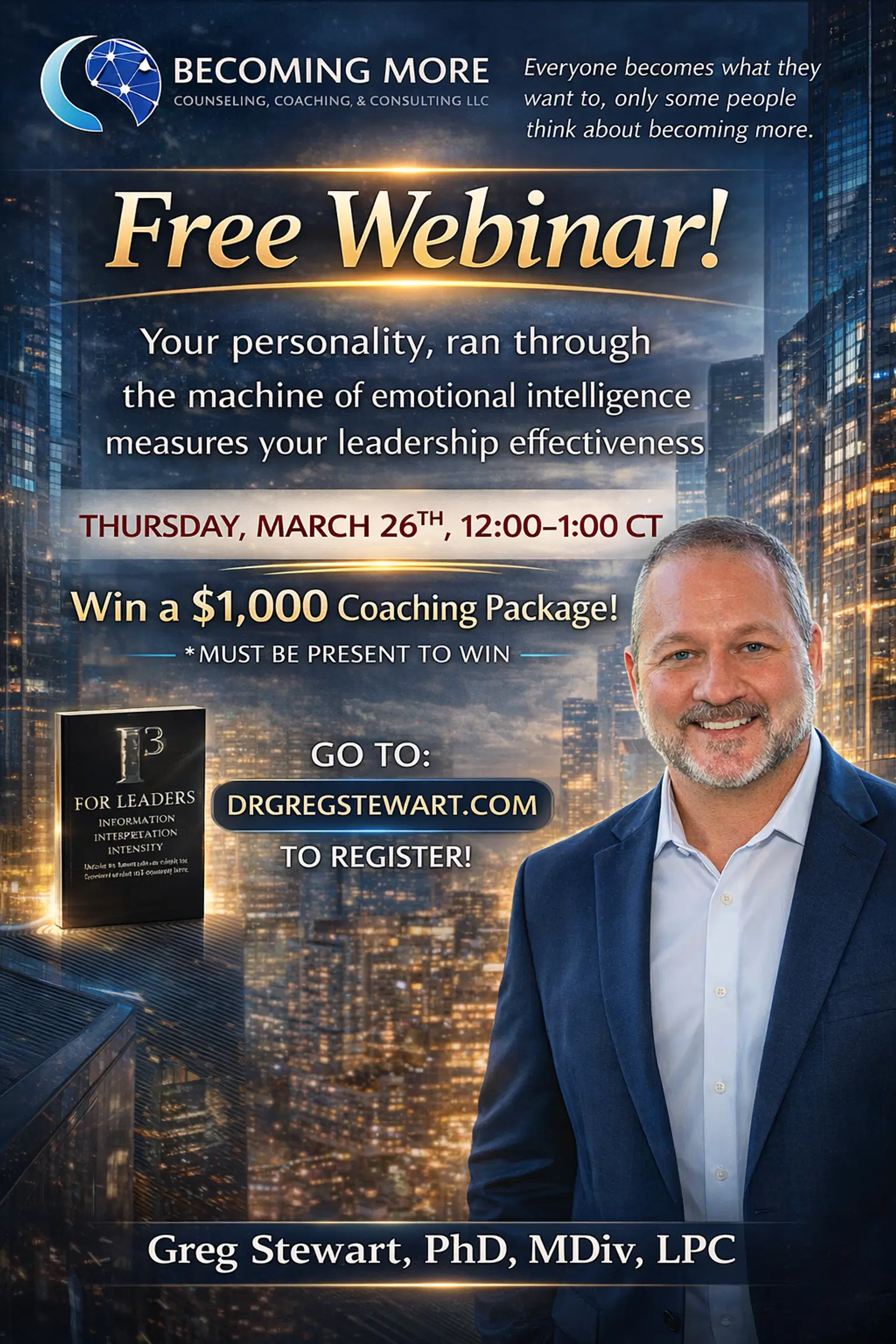
Free Webinar: Personality, EI, & Leadership March 26th, 12:00-1:00 CT
Second, if you want to skip the line and start your transformation today, let's talk. Our executive coaching is designed for the leader who knows that internal change is the only way to drive external results.
Call 469-485-0387 to schedule a consultation with Becoming More Counseling, Coaching, & Consulting.
Stop worrying about being in the room. Start focusing on being the leader the room (virtual or otherwise) can't ignore.
Teaser-Strategy Email: The Death of the Corner Office
Subject: Is your "Presence" stuck in 2019?
Body: Leader,
The world changed, but did your leadership style change with it?
Many executives are still trying to lead via proximity. They think if they aren't in the office, they aren't "present." They're wrong.
In our latest blog post, "How to Master Executive Presence Coaching in a Hybrid World," we break down why proximity is a crutch and how to use the I³ Blueprint (Information, Interpretation, Intensity) to command authority from anywhere.
We also have a huge announcement: We're hosting a free webinar on March 26th, and we're giving away a $1,000 coaching package.
Read the full post here: [Link]
Stop managing by walking around. Start leading by intentional impact.
Best, Dr. Greg Stewart
Micro-Post Social Snippets (Daily Schedule)
Day 1 (The Hook): Proximity is a crutch. If you need to be in the same room as your team to lead them, you aren't leading: you're supervising. Let's talk about 2026 Executive Presence. #ExecutiveCoaching #HybridWork #I3Blueprint
Day 2 (Information): Can you read a "digital room"? Mastering executive presence in 2026 means gathering information from chat sentiment and micro-expressions, not just handshakes. #LeadershipDevelopment #I3Framework
Day 3 (Interpretation): Proximity bias is a failure of interpretation. When you stop seeing distance as a hurdle and start seeing it as an opportunity for high-intent communication, your influence skyrockets. #BecomingMore #CSuite
Day 4 (Intensity): Duty and Discipline before Dopamine. Leading from a home office requires an internal "Iron Man Core." You have to bring the intensity even when there’s no audience. #DrGregStewart #LeadershipQuotes
Day 5 (The Big Event): March 26th. 12:00 PM CT. Personality, EI, & Leadership. Join the webinar for a chance to win a $1,000 coaching package. Don't lead like it's 2019. #Webinar #FreeCoaching #Leadership
Lead-Magnet Tie-In: The I³ Hybrid Leadership Audit (PDF)
Title: The I³ Hybrid Leadership Audit: 15 Minutes to Digital Gravitas
Description: A derived worksheet from the I³ For Leaders framework. This PDF guides leaders through:
- The Info Check: Auditing your digital data points.
- The Bias Filter: Identifying where proximity bias is clouding your judgment.
- The Intensity Scale: Measuring your "Duty vs. Dopamine" levels in a remote environment.
CTA inside PDF: Ready to take the next step? Call 469-485-0387 to discuss your results with Dr. Greg.
The Interpretation Gap: Why Data-Heavy Leadership is Failing in 2026
![[HERO] The Interpretation Gap: Why Data-Heavy Leadership is Failing in 2026](https://cdn.marblism.com/4awAdGQpFdV.webp)
Free Webinar! March 26th, 12:00-1:00 CT with a chance to win a $1,000 coaching package!
The year is 2026, and leadership has hit a wall.
It isn't a lack of information. In fact, most C-Suite executives are drowning in it. We have AI-driven analytics, real-time sentiment tracking, and more spreadsheets than we know what to do with. Yet, according to the McLean & Company 2026 HR Trends Report, 70% of organizations are still struggling to manage change. The pace of the world is simply moving faster than the leaders running it.
Here is the hard truth: Information is a commodity, but Interpretation is a scarcity.
Most leaders are stuck in what I call the "Information Trap." They gather data (I¹), but they fail to apply the strategic Interpretation (I²) and the disciplined Intensity (I³) required to move the needle.
If you feel like you are working harder than ever but the culture isn't shifting, you aren't alone. You’re just missing the framework to bridge the gap.
The Myth of "More Data"
We’ve been told for a decade that data is the new oil. But oil is useless if you don’t know how to refine it.
In my book, I³ for Leaders, I argue that "If a leader lacks a personal mission, they are simply machines managing other machines." When you rely solely on data (Information), you are acting like a machine. You are looking at what is, rather than interpreting what could be.
Recent research published in the Harvard Business Review highlights that high-stakes decision speed is often hindered, not helped, by an abundance of data. Leaders become paralyzed by the "Dopamine Hit" of a new report rather than the "Duty and Discipline" of making a hard call.
We see this across every industry. From tech hubs in California to the financial centers of New York, leaders are waiting for one more data point before they act. By the time that data arrives, the opportunity has passed.
The I² Factor: A Case Study in Strategic Interpretation
Let’s look at a prime example of Interpretation in action right here in the DFW area. Think about Charles Schwab’s massive move to Westlake, Texas.
When Schwab decided to move its headquarters from San Francisco to North Texas, they had the same information as everyone else: high taxes in California, rising costs of living, and a shifting workforce. But Schwab’s leadership applied a different level of Interpretation (I²).
They didn't just see a cost-cutting measure. They interpreted a long-term demographic shift. They saw the "Silicon Prairie" as the future of financial services talent. They interpreted the need for a central hub that could withstand the volatility of the coastal markets.
That wasn't a "data-driven" move in the traditional sense; it was an interpretation-driven move. It required the Intensity (I³) to execute a multi-year transition while maintaining corporate stability.
As I always say: "Everyone becomes what they want to, only some people think about becoming more." Schwab thought about becoming more, and they used the I³ framework: whether they called it that or not: to outpace their competitors.
Bridging the Gap with the "Iron Man Core"
To bridge the Interpretation Gap, a leader must develop what I call the Iron Man Core.
This isn't just about being "tough." It’s about spiritual and emotional development that allows you to see past the noise. Internal change must always precede external change. If you haven't done the work on your own internal obstacles, you will never be able to interpret external market data with clarity.
A peer-reviewed study in the Journal of Applied Psychology found that leaders with high emotional regulation and "interpretive clarity" significantly outperformed those who relied strictly on cognitive intelligence (IQ). This validates what we teach at Becoming More: your ability to handle negative emotions: like the fear of a wrong decision or the rage of a missed target: is actually your greatest leadership asset.
"Unleash the rage of your negative emotions against the obstacle of becoming more."
Instead of letting stress paralyze your decision-making, use that intensity to fuel your interpretation. Are you angry about your team's performance? Good. Don’t just look at the KPIs. Interpret why the culture is failing and have the discipline to fix the root cause, not the symptom.
Why You Need to Be at the Webinar on March 26th
If you are a Director, a VP, or sitting in the C-Suite, you don’t need more "tips and tricks." You need a fundamental shift in how you process the world.
On March 26th, I’m hosting a free webinar where we will dive deep into the I³ framework. We’re going to talk about:
- How to filter "Information" so you stop drowning in noise.
- The specific tools for "Interpretation" that separate the greats from the average.
- How to harness "Intensity" without burning out your team.
Free Webinar! March 26th, 12:00-1:00 CT with a chance to win a $1,000 coaching package!
Leadership is Defined in the Worst of Times
In 2026, the "best of times" are fleeting. Markets shift in an afternoon. AI disrupts entire departments in a weekend.
"Leadership is defined not by the best of times, but the worst of times."
When the data looks grim and the team is looking to you for answers, will you just read them the charts? Or will you provide the interpretation that gives them hope and a path forward?
Those who master the I³ framework are the ones who will lead the next decade. They are the ones who understand that their "Iron Man Core" is the only thing that can't be automated or outsourced.
Next Steps for Becoming More
If you are ready to stop managing and start leading, I want to help you. Whether it’s through our Executive Coaching or by simply starting the conversation, the time to move is now.
Don’t let the "Interpretation Gap" be the reason your organization plateaus in 2026.
- Register for the webinar on March 26th. It’s free, it’s an hour, and it could change your entire leadership trajectory. Plus, you might walk away with a $1,000 coaching package.
- Read the research. Check out our blog on 7 mistakes C-Suite leaders make with change management.
- Get the book. Pick up I³ for Leaders to get the full blueprint for Information, Interpretation, and Intensity.
Call 469-485-0387 to speak with our team about how we can bring the I³ framework to your organization.
Remember: Everyone becomes what they want to. Only some people think about becoming more.
Will you be one of them?
Teaser Strategy Email
Subject: The Data Trap (And why you're still stuck) Body: Hey [Name], You have more data than any leader in history. So why does it feel like making decisions is getting harder? In 2026, information is a commodity. It’s everywhere. But the ability to interpret that information: to see the "why" behind the "what": is the rarest skill in the C-Suite. I just posted a new deep dive on The Interpretation Gap and how DFW giants like Charles Schwab use it to dominate. Check it out here: [Link] Also, don't forget to grab your spot for our free webinar on March 26th. We’re giving away a $1,000 coaching package. See you there, Dr. Greg Stewart
Social Snippets
Day 1 (LinkedIn): Information is cheap. Interpretation is expensive. In 2026, C-Suite leaders are drowning in data but starving for clarity. It’s time to bridge the "Interpretation Gap" using the I³ framework. Read the latest blog: [Link] #Leadership #CSuite #I3Framework #BecomingMore
Day 2 (X/Twitter): "If a leader lacks a personal mission, they are simply machines managing other machines." Are you managing or leading? Learn why data-heavy leadership is failing in 2026. [Link] #DrGregStewart #LeadershipDevelopment
Day 3 (LinkedIn/Instagram): The Charles Schwab move to Westlake wasn't just about taxes. It was about I²: Strategic Interpretation. Learn how to apply this to your own industry in our latest post. [Link] #DFWBusiness #ExecutiveCoaching #Strategy
Day 4 (General): Free Webinar Alert! 🚨 Join Dr. Greg Stewart on March 26th to master the I³ framework. One attendee wins a $1,000 coaching package. Sign up here: [Link] #Webinar #LeadershipGrowth
Day 5 (Quote Image): "Leadership is defined not by the best of times, but the worst of times." – Dr. Greg Stewart. How are you leading through the noise of 2026? [Link]
Lead-Magnet Tie-in
PDF Title: The I³ Interpretive Audit: 5 Questions to Determine if Your Data is Lying to You. Description: A 2-page diagnostic tool based on the I³ framework to help leaders move from I¹ (Information) to I² (Interpretation) in their weekly strategy meetings. Reference this in the blog as: "Download the Interpretive Audit to see if your team is stuck in the data trap." (Call 469-485-0387 for the full guide).
7 Mistakes You’re Making with Executive Presence Coaching (And How to Command a Virtual Room)
![[HERO] 7 Mistakes You’re Making with Executive Presence Coaching (And How to Command a Virtual Room)](https://cdn.marblism.com/mnlK3-EmEU0.webp)
Free Webinar! March 26th, 12:00-1:00 CT with a chance to win a $1,000 coaching package!
We are living in an era where leadership is no longer confined to the head of a mahogany table. Today, your "stage" is often a 1080p webcam & a grid of silent faces on a screen. At Becoming More Counseling, Coaching, & Consulting, we are seeing a recurring challenge: brilliant leaders who commanded physical rooms for decades are suddenly feeling invisible in the digital space.
Executive presence isn’t a trait you’re born with: it’s a skill you refine. However, many of the traditional approaches to executive coaching are failing because they ignore the psychological shifts required for 2026 leadership. We are thrilled to help you navigate this transition using Dr. Greg Stewart’s I³ framework: Information, Interpretation, & Intensity.
As Dr. Greg often says, "Leadership is defined not by the best of times, but the worst of times." If you feel your influence waning in virtual environments, it’s time to look at the internal obstacles holding you back.
1. Prioritizing Content Over Connection
We often see leaders spend forty hours perfecting a slide deck & zero minutes thinking about how the audience will feel. This is a failure of Information. According to Harvard Business Review, executive presence is 20% about what you know & 80% about how you communicate it.
When you focus solely on data, you become a machine managing other machines. In the virtual room, Information must be curated for impact. If your input doesn’t move the needle or solve a core problem, it’s just digital noise.
2. Treating Coaching as a "Quick Fix"
Many C-Suite leaders enter coaching expecting a "personality transplant" in three sessions. Real transformation requires Duty & Discipline before Dopamine. Research published in the Journal of Applied Psychology suggests that behavioral changes in leadership take six to twelve months to stick.
We are convinced that internal change must precede external change. You cannot command a room: virtual or otherwise: until you have mastered the internal discipline to stay the course when the initial excitement of coaching fades.

3. Misinterpreting Virtual Silence
This is a classic Interpretation error. In a physical room, you can feel the energy. In a virtual room, silence is often interpreted as boredom or dissent. This leads to "over-talking" to fill the void, which erodes your authority.
Dr. Greg’s book, I³ for Leaders, teaches us that "Everyone becomes what they want to, only some people think about becoming more." A leader with high executive presence interprets silence as a space for reflection. They don’t panic; they use that space to ask high-value questions.
4. Ignoring the "Intensity" of the Screen
Virtual communication flattens your energy. If you bring "average" energy to a Zoom call, you appear lethargic. To command a virtual room, you must dial up your Intensity by about 20%. This isn’t about being loud; it’s about the intentionality of your eye contact (with the lens, not the screen) & the clarity of your voice.
We are seeing leaders in the DFW market: from the Frisco "Silicon Prairie" to the downtown Dallas towers: struggle with this "flatness." By utilizing the I³ framework, you learn to project an "Iron Man Core" of spiritual & emotional strength that penetrates the digital barrier.
5. Allowing Ego to Block Feedback
Even the most accomplished leaders can become defensive. When a coach points out that your virtual presence feels "cold" or "unapproachable," the ego often rationalizes it as "the technology's fault."
True executive presence requires the vulnerability to acknowledge your gaps. As outlined in our post on Mastering Emotional Intelligence, your influence is directly tied to your self-awareness. If you can’t lead yourself through a critique, you can’t lead a team through a crisis.
6. The "Human Skills" Gap
In 2026, AI can handle the data. What AI cannot do is provide the "Human Edge." Many executive coaching programs focus too much on tactical management & not enough on the human element.
Whether you are a manager who just lost a team during The Great Flattening or a CEO steering a global ship, your ability to interpret the underlying emotions of your team is your greatest asset. Dr. Greg’s I³ framework emphasizes perceiving these "hidden" signals to respond with clarity & calm.
7. Fearing Negative Emotions
Most leaders try to suppress frustration, fear, or anger, especially in a professional setting. We believe this is a mistake. In I³ – Unlock the Inner Strength Behind Your Negative Emotions, Dr. Greg encourages leaders to "unleash the rage of your negative emotions against the obstacle of becoming more."
In a virtual room, if you are feeling frustrated by a lack of engagement, don’t ignore it. Use that intensity to pivot the conversation. Authenticity: even when it's uncomfortable: is a cornerstone of modern executive presence.
How to Command the Virtual Room Using I³
To move from "just another face on the screen" to a leader who commands attention, you need a strategy rooted in the I³ framework.
Information: Be the Curator, Not the Cloud Before you log on, ask: "What is the one piece of information that changes the game today?" High-end leaders like those featured in Forbes understand that brevity is the soul of presence. Your virtual slides should be visual, but your words should be the primary source of value.
Interpretation: Master the Temperature Learn to read the "digital room." Are people multitasking? Is there a tension in the chat? A leader with presence acknowledges these realities. If the meeting is dragging, call it out. Your ability to interpret the group's state & shift it in real-time is what defines your strategic leadership.
Intensity: Focus Your Presence Your physical posture matters, even if they can only see your shoulders. Lean in. Use hand gestures that stay within the frame. Most importantly, use the "Intensity" of your mission to drive the meeting. If you lack a personal mission, you are simply a machine managing other machines.
The DFW Edge: Why Local Context Matters
In North Texas, we are seeing a massive influx of corporate headquarters. This growth brings a unique set of challenges. Executive presence in a DFW-based Fortune 500 company requires a blend of "Texas-sized" vision & global-scale agility. We have worked with leaders across the Metroplex who have used the I³ framework to navigate complex change management while maintaining their cultural identity.

Conclusion: Will You Become More?
Executive presence isn't about "acting" like a leader; it's about becoming one. It's about overcoming the internal obstacles that others wish they could. Whether you are leading a team of five or five thousand, the principles remain the same: Information must be filtered, Interpretation must be accurate, & Intensity must be intentional.
We are here to support your journey. If you are ready to stop "firefighting" & start leading with a presence that transcends the screen, let’s talk.
Call 469-485-0387
Join us for our upcoming webinar to dive deeper into these strategies & see how the I³ framework can transform your leadership culture.
Free Webinar! March 26th, 12:00-1:00 CT with a chance to win a $1,000 coaching package!
We look forward to seeing you there & helping you unlock the inner strength required to lead in the modern age. Remember: Everyone becomes what they want to, only some people think about becoming more.

For more insights on leadership & emotional intelligence, visit our Leadership Blog or listen to our latest episodes on the Becoming More Podcast.
The 10% Advantage: Master Influence and the Art of Being Heard
Free Webinar! March 26th, 12:00-1:00 CT with a chance to win a $1,000 coaching package!
![[HERO] The 10% Advantage: Master Influence and the Art of Being Heard](https://cdn.marblism.com/LwftztmTvBO.webp)
We are thrilled to dive into a concept that is currently transforming how executives across the country, from Silicon Valley to Wall Street, approach the dinner table and the boardroom. At Becoming More Counseling, Coaching, & Consulting, we believe that leadership is not a loud, sweeping gesture. Instead, it is found in the quiet, precise margins of how we communicate. We call this The 10% Advantage.
In our work with high-performing leaders, we often see a recurring frustration: "I’m saying the right things, but my team isn't following." Or, "I have the vision, but I can’t seem to get the buy-in I need." The problem isn't your vision; it’s the Information you are providing and the Interpretation your listeners are making.
As Dr. Greg Stewart writes in I³ for Leaders, “Leadership is defined not by the best of times, but the worst of times.” When the pressure is on, your ability to influence hinges on a tiny, 10% shift in your communication style.
The I³ Framework: Why Your 10% Matters
To master influence, you must first master the I³ framework: Information, Interpretation, and Intensity.
Most leaders focus 90% of their energy on the Information, the facts, the figures, the "what." However, influence happens in the Interpretation, the "so what" and the "how." When you communicate, your listener is constantly interpreting your words through their own emotional filters. If your Intensity (your emotional delivery) is misaligned with their needs, the message is lost.
The 10% Advantage is the qualitative shift in your vocabulary and listening skills that changes the listener's internal interpretation of your leadership. It’s about moving from being a "manager of machines" to a "leader of people."

The "Polly Wants a Cracker" Technique: Beyond Simple Mirroring
We are dynamic creatures, but our brains often revert to simple patterns. You’ve likely heard of "mirroring" in sales, repeating someone’s last three words. But at the executive level, that can feel manipulative and hollow.
In Dr. Greg’s books, he discusses the "Polly wants a cracker" technique with a sophisticated twist: the Synonym Shift.
When a team member or a peer shares a concern, your first 10% of influence comes from proving you heard the Information. But don’t just parrot them. Use a synonym. If they say they are "overwhelmed," you might say, "It sounds like you’re feeling encumbered by the current project load."
This small shift does two things:
- It validates that you were listening (The Information).
- It demonstrates a higher level of cognitive processing (The Interpretation), which builds instant credibility.
Research published in the Journal of Language and Social Psychology suggests that linguistic style matching, subtly aligning your vocabulary with your counterpart, leads to significantly higher levels of trust and rapport. When you use a synonym, you aren't just repeating; you are connecting.
The Power of the "Perhaps" Clause
The second part of the 10% Advantage is the "Perhaps" Clause.
High-intensity leaders often speak in absolutes. "This is the problem," or "We must do this." While this can sound decisive, it often triggers a defensive "Refiner’s Fire" in others, causing them to shut down.
Influence is the art of lowering resistance. By adding a "perhaps" or "it seems" to your delivery, you move from a dogmatic stance to a collaborative one.
- Absolute: "You are failing to meet the deadline because of poor time management."
- The 10% Advantage: "Perhaps the current workflow is creating a bottleneck that we haven't identified yet?"
This isn't about being weak; it’s about being strategic. By using "perhaps," you allow the other person to reach the conclusion with you. You are managing the Intensity of the conversation so that the Interpretation remains positive.
Real-World Proof: Lessons from DFW’s High-Performers
Even though we are looking at leadership on a national scale, we can see the 10% Advantage in action within some of the country’s most respected organizations right in the Dallas-Fort Worth area.
Take Texas Health Resources, for example. Repeatedly recognized by Fortune and Forbes as one of the best places to work, their leadership culture emphasizes "Active Listening and Emotional Intelligence." In high-stakes environments like healthcare, a leader’s ability to use the "Perhaps Clause" during a crisis can literally save lives. By lowering the emotional intensity of a room, they allow for clearer interpretation of medical information.
Similarly, Cook Children’s Health Care System has been lauded for its "Promise", a culture-wide commitment to communication. Their leaders don't just give orders; they use qualitative shifts in language to ensure every staff member feels heard. This is the 10% Advantage at scale.

The Science of Influence: Peer-Reviewed Validation
Does this qualitative shift actually work? Quantitative data says yes.
A study featured in the Harvard Business Review analyzed over 5,000 leadership interactions and found that leaders who were perceived as "highly influential" didn't necessarily talk more. Instead, they used "High-Relational Vocabulary." They spent more time interpreting the emotions of their subordinates (The "Intensity" of the I³ framework) and validating those emotions through refined language.
Furthermore, research in The Leadership Quarterly highlights that internal change must precede external change. As Dr. Greg says, “Everyone becomes what they want to, only some people think about becoming more.” If you haven't done the internal work to manage your own "Iron Man Core," your communication will always feel like a performance. True influence is an overflow of your internal discipline.
Why You Need the 10% Advantage Now
In 2026, the workforce is more fragmented than ever. With the rise of remote work and AI, the human element: the ability to be heard and to influence: is your greatest competitive advantage.
If you feel like you are shouting into a void, it’s time to stop looking at your team under a microscope and start looking at your communication in the mirror. Are you providing clear Information? Is your Interpretation helpful? Is your Intensity driving people away or drawing them in?
Remember: “Unleash the rage of your negative emotions against the obstacle of becoming more.” If you feel frustrated by your lack of influence, use that frustration as fuel to master these subtle shifts.
Join Us to Master Your Influence
We are committed to helping you become the leader your organization needs. This 10% Advantage is just the tip of the iceberg of what we teach in our I³ framework.
Free Webinar! March 26th, 12:00-1:00 CT Join Dr. Greg Stewart for an intensive session on Master Influence. We’ll go deeper into the "Perhaps" clause, the Synonym Shift, and how to build an Iron Man Core that commands respect without saying a word. Plus, one attendee will win a $1,000 coaching package!
If you’re ready to stop managing machines and start leading people, give us a call. Let’s work on your internal shift so you can see external results.
Call 469-485-0387
Teaser Strategy: The 10% Influence Email
Subject: Is your 90% effort missing the 10% that matters?
Body: Dr. Greg here.
Most leaders I coach are working at 110% capacity. They have the best data, the smartest strategy, and the most information.
But they still aren’t being heard.
The secret isn't more information. It's the 10% Advantage. It's the subtle, qualitative shift in how you speak that changes how people interpret your leadership.
In my latest blog, I break down:
- The "Polly wants a cracker" technique for instant rapport.
- Why the "Perhaps" clause is a high-level power move.
- How to use the I³ framework to lower resistance in your team.
Read the full post here: [Link]
Don’t forget: I’m hosting a Free Webinar on March 26th at 12:00 PM CT to deep-dive into these influence strategies. One person will win a $1,000 coaching package.
[Register for the Webinar]
Keep becoming more, Dr. Greg Stewart
Micro-Post Social Snippets (5-Day Schedule)
Day 1: Leadership isn't about being the loudest person in the room. It’s about the 10% Advantage: the subtle shift in your communication that builds massive influence. Are you using synonyms or just paring back words? #Leadership #Influence #I3Framework #BecomingMore
Day 2: "Everyone becomes what they want to, only some people think about becoming more." True influence starts with an internal shift. If you haven't mastered your "Iron Man Core," your team will feel the disconnect. #DrGregStewart #ExecutiveCoaching #PersonalGrowth
Day 3: The "Perhaps" Clause: The most powerful 7-letter word in an executive’s vocabulary. By shifting from absolutes to possibilities, you lower resistance and invite collaboration. Read more on the blog! [Link] #CommunicationSkills #HBR #LeadershipTips
Day 4: "Leadership is defined not by the best of times, but the worst of times." How do you show up when the pressure is high? Master the I³ framework: Information, Interpretation, and Intensity. Call 469-485-0387 to start your coaching journey.
Day 5: WIN A $1,000 COACHING PACKAGE! 🚨 Join our free webinar on March 26th (12:00-1:00 CT) to learn the Art of Master Influence. Don't miss your chance to level up. Register here: [Link] #Webinar #ProfessionalDevelopment #Coaching
Lead-Magnet Tie-In: PDF Guide
Title: The I³ Communication Blueprint: The 10% Shift for Maximum Influence
Content Outline:
- The Information Audit: Is your data clear or cluttered?
- The Interpretation Map: Common ways your team misinterprets "CEO-speak" and how to fix it.
- The Intensity Scale: A self-assessment tool to see if your emotional delivery is helping or hurting your message.
- The Synonym Cheat Sheet: High-level alternatives to common workplace phrases.
- The "Perhaps" Clause Practice: Three scenarios to practice lowering resistance today.
CTA included in PDF: "Ready to go deeper? Schedule a consultation with Dr. Greg Stewart. Call 469-485-0387."
10 Reasons Your Leadership Coaching for Managers Isn't Moving the Needle on Culture
![[HERO] 10 Reasons Your Leadership Coaching for Managers Isn't Moving the Needle on Culture](https://cdn.marblism.com/lwbxddeLCC4.webp)
Free Webinar! March 26th, 12:00-1:00 CT with a chance to win a $1,000 coaching package!
We are absolutely thrilled to tackle one of the most frustrating hurdles in the corporate world today: the "Culture Gap." You know the feeling. You invest heavily in leadership development, your managers attend every workshop, and your HR team rolls out the latest engagement surveys: yet the vibe in the office (or on Zoom) remains stagnant.
At Becoming More Counseling, Coaching, & Consulting, we believe that "everyone becomes what they want to, only some people think about becoming more." If your coaching isn't moving the needle, it’s likely because it’s skimming the surface of behavior rather than diving into the engine of change.
To bridge this gap, Dr. Greg Stewart utilizes the I³ Framework: Information, Interpretation, and Intensity. Without these three pillars, coaching is just a polite conversation that ends the moment the manager walks out the door.
Here are 10 reasons why your current leadership coaching for managers is failing to shift your culture: and how to fix it.
1. You’re Providing Information Without Insight
Most coaching programs focus on "Information": the first 'I' in our framework. They teach managers what to do (active listening, conflict resolution, KPI tracking). But as Dr. Greg notes in his book, I³ For Leaders, "If a leader lacks a personal mission, they are simply machines managing other machines."
According to research in the Journal of Applied Psychology, technical knowledge only accounts for a small fraction of leadership success compared to emotional intelligence. If your coaching is just a data dump, your managers are just better-informed machines, not cultural catalysts.
2. The "Interpretation" is Misaligned
The second 'I' is Interpretation. How does a manager interpret a missed deadline? As a personal affront? As a sign of incompetence? Or as an opportunity for growth? If coaching doesn’t address the internal lens through which a manager views their team, no amount of "strategy" will help.
Dr. Greg’s philosophy is clear: internal change must precede external change. If your managers haven't done the hard work of interpreting their own triggers, they will continue to project their insecurities onto the culture.
3. Lack of "Intensity" (The Iron Man Core)
The third 'I' is Intensity. This isn't about yelling; it’s about the emotional drive and discipline to see a transformation through. We often see "Intensity" dampened by a desire for quick hits of dopamine: praise for low-hanging fruit: rather than the "Duty and Discipline" required for long-term cultural health.
As highlighted in a recent Forbes profile of high-growth companies in the DFW area, like those shifting the landscape in the Frisco Silicon Prairie, the leaders who succeed are those who "unleash the rage of their negative emotions against the obstacle of becoming more." They don't shy away from the hard work; they lean into it with intensity.
4. You’re Ignoring the "Worst of Times"
Dr. Greg famously says, "Leadership is defined not by the best of times, but the worst of times." Many coaching programs are "fair-weather" programs. They work when the stock is up and turnover is low. But culture is built in the trenches.
If your coaching doesn't prepare managers to lead through a crisis with Executive Presence, the culture will crumble the moment pressure is applied.

5. Failure to Address "Anger in a Suit"
In our practice, we often say that anger is just fear in a suit. Many managers are coached to suppress their negative emotions to appear "professional." This is a massive mistake.
The I³ framework encourages leaders to acknowledge these emotions and use them as fuel. When managers learn to interpret their fear or frustration correctly, they stop creating a culture of anxiety and start creating one of authenticity.
6. The Coaching is Isolated from the C-Suite
Culture starts at the top, but it lives in the middle. However, if your senior leadership isn't modeling the same Intentionality and Integrity you expect from your managers, the coaching will feel like a "do as I say, not as I do" mandate.
A study cited by Harvard Business Review regarding executive congruence found that leadership development fails when there is a perceived gap between the organization's stated values and the actions of its top-tier executives. You cannot coach a manager to be better than the environment they are forced to work in.
7. Over-Prioritizing Resilience Over Adaptability
We’ve talked before about how adaptability beats resilience. Many coaching programs focus on "bouncing back" (resilience). But a healthy culture needs leaders who "bounce forward" (adaptability).
If your coaching teaches managers to just "endure" a toxic culture, you aren't fixing the culture: you’re just training people to survive it until they eventually burn out and leave.
8. Neglecting the "Great Flattening"
With the rise of AI and organizational restructuring, many managers have lost their traditional "teams" and are now managing processes or cross-functional projects. This is the "Great Flattening."
If your coaching is still based on 2015-style hierarchical management, it’s irrelevant. Modern culture requires a manager to lead through influence and emotional intelligence, not just authority.
9. No Spiritual or Internal "Core" Development
At Becoming More, we reference the "Iron Man Core." This isn't necessarily about religion, but about spiritual and internal development: the center of a leader’s being. If a manager's "core" is empty, they will seek to fill it with external validation, power, or ego.
A manager operating from a place of internal deficit will always create a culture of scarcity. True coaching must address the human edge in an AI world, focusing on the soul of the leader.
10. Lack of Accountability and "Duty Before Dopamine"
Finally, coaching often fails because it’s too "nice." Real growth requires the discipline to choose duty over the immediate dopamine hit of being liked.
If your coaching doesn't involve radical honesty and accountability, it’s just expensive therapy for the workplace. As Dr. Greg writes in I³ For Leaders, leaders must overcome internal obstacles that others only wish they could. This requires a level of discipline that most "off-the-shelf" coaching programs simply don't provide.

Join Our Free Webinar & Transform Your Leadership
Are you ready to stop checking boxes and start moving the needle? We’re hosting a deep-dive session to show you exactly how to implement the I³ framework in your organization.
Free Webinar! March 26th, 12:00-1:00 CT
- Topic: Moving the Culture Needle with I³ Leadership.
- The Big Prize: One lucky attendee will win a $1,000 coaching package for their team!
Don’t miss this chance to learn how to unleash the strength behind your leadership.
[Register for the Webinar Here]
Take the Next Step
If you’re tired of 7 mistakes you’re making with leadership development and are ready for a dynamic, inspirational shift in your company culture, let’s talk.
Whether you need Executive Coaching or a complete overhaul of your Change Management strategy, Dr. Greg Stewart and the team at Becoming More are here to help you become who you were meant to be.
Call 469-485-0387 to schedule a consultation.
Visit us at www.becomingmore.com to explore more about our Counseling and Leadership Blog.
Beyond the Breaking Point: Leading Through 'The Refiner's Fire'
![[HERO] Beyond the Breaking Point: Leading Through 'The Refiner's Fire'](https://cdn.marblism.com/X_mSaVrTrYO.webp)
Free Webinar! March 26th, 12:00-1:00 CT with a chance to win a $1,000 coaching package!
We are thrilled to dive into a topic that separates the world-class executives from the mere managers. In the high-stakes world of national leadership: whether you’re running a tech giant in Silicon Valley or a logistics hub in the Midwest: there is a moment every leader eventually faces. It’s that white-hot second where the pressure is so intense, you feel you might actually snap.
At Becoming More Counseling, Coaching, & Consulting, we call this "The Refiner's Fire." It’s a dynamic, often painful process, but it is the only way to transform raw potential into the "pure gold" of a seasoned leader. As Dr. Greg Stewart often says, "Leadership is defined not by the best of times, but the worst of times."
If you feel like you are standing in the heat right now, take heart. You aren’t being destroyed; you’re being refined.
The Difference Between Destruction and Refinement
When we look at the metaphors for crisis, most people think of a forest fire: indiscriminate, destructive, and leaving nothing but ash. But a refiner’s fire is different. It is controlled. It is purposeful. Its goal isn’t to consume the metal; it’s to burn away the impurities (the "dross") until the reflection of the refiner is visible in the molten gold.
In leadership, those impurities are often our unexamined biases, our reliance on "dopamine hits" from quick wins, and our lack of internal stability. Research published in the Journal of Applied Psychology suggests that leaders who experience "highly demanding" events often emerge with significantly higher levels of cognitive complexity and emotional resilience: but only if they have the right framework to interpret that stress.
Without a framework like Dr. Greg’s I³ (Information, Interpretation, Intensity), the fire just burns you out. With it, the fire builds your Iron Man Core.
Applying the I³ Framework to the Heat of Crisis
To survive and thrive through the breaking point, we have to look at how we process the heat. Dr. Greg’s book, I³ for Leaders, provides the roadmap:
1. Information: Gathering the Raw Data
In a crisis, most leaders panic because they have too much or too little information. The refiner knows exactly what temperature the fire needs to be. As a leader, you must gather objective data about the situation without letting the "smoke" of fear cloud your vision.
2. Interpretation: What Does the Heat Mean?
This is where the battle is won or lost. Do you see the pressure as an "incinerator" designed to end your career, or a "refiner" designed to sharpen your EQ? "Everyone becomes what they want to, only some people think about becoming more," Dr. Greg notes. Your interpretation determines whether you act as a victim of the circumstances or the master of your growth.
3. Intensity: Directing the Flame
In his book I³ – Unlock the Inner Strength Behind Your Negative Emotions, Dr. Greg teaches a revolutionary concept: "Unleash the rage of your negative emotions against the obstacle of becoming more." When the pressure hits, don't suppress the intensity. Use it. Use that frustration and that "white-hot" energy to fuel the discipline required to lead your team through the fire.
Learning from the Giants: The DFW Example
Even though we are looking at leadership on a national scale, we can learn a lot from major players like Dallas-based Southwest Airlines. In recent years, Southwest faced what many called a "breaking point" during massive operational disruptions. A Harvard Business Review analysis of their recovery highlighted that their success wasn't just about better software: it was about leadership doubling down on their core values under extreme pressure.
They used the fire to identify gaps in their "Interpretation" of customer service and logistics. Instead of crumbling, they refined their processes and emerged with a renewed focus on the human element of their "Warrior Spirit."
Similarly, Atmos Energy, another DFW-headquartered giant featured in Forbes for its infrastructure resilience, demonstrates how a "Refiner’s Fire" approach to safety and crisis management leads to long-term stability. They don't just wait for a crisis to pass; they use every high-pressure event to "burn away" outdated protocols and strengthen their organizational core.

The Science of Leading Under Pressure
It’s easy to talk about "staying calm," but the biology of leadership is more complex. A study in The Leadership Quarterly found that leaders with high Emotional Intelligence (EQ) are able to maintain "physiological coherence" during crises. This means their heart rate and nervous system stay regulated even when the "fire" is at its peak.
This aligns perfectly with the Iron Man Core philosophy. Internal change must precede external change. If you haven't done the internal work to build your spiritual and emotional core, you will reach a breaking point and actually break. But if you've practiced "Duty and Discipline before Dopamine," you have the structural integrity to withstand the heat.
Why Your "Breaking Point" is Your Greatest Opportunity
Most leaders spend their lives trying to avoid the fire. They want the title and the salary without the heat. But you cannot have the gold without the furnace.
If you are currently facing a challenge that feels like more than you can handle: whether it's a merger, a PR crisis, or a failing culture: remember that this is your moment of refinement. You are being given the chance to overcome internal obstacles that others wish they could.
We are here to help you navigate that process. At Becoming More, we don't just give you "tips"; we provide the psychological and strategic depth to help you "Become More" than the obstacles you face.
Take the Next Step Toward Your Refined Leadership
Are you ready to stop surviving the fire and start using it? We have several ways to help you move forward today:
- Register for our Free Webinar: Join us on March 26th, 12:00-1:00 CT. Not only will Dr. Greg dive deeper into the I³ framework, but you’ll also have a chance to win a $1,000 coaching package to help you refine your leadership team.
- Download our Lead Magnet: Get our exclusive PDF, "The I³ Crisis Navigator: 5 Steps to Lead When the Heat is On." (Reference: I³ for Leaders Framework).
- Book a Consultation: If your organization is in the middle of a "refining fire" right now and you need immediate, high-level executive coaching or consulting, reach out to us.
Call 469-485-0387 to speak with our team and start your journey of becoming more.
Remember, the fire is not your enemy. It is the tool that reveals the leader you were always meant to be.
Teaser Strategy Email
Subject: Is your leadership being refined or incinerated?
Body: Hi [Name],
Every leader eventually hits a breaking point. It’s that moment where the pressure from the board, the market, or your own team feels like it’s too much to bear.
In our latest blog post, "Beyond the Breaking Point: Leading Through 'The Refiner's Fire'," we explore how Dr. Greg Stewart’s I³ framework (Information, Interpretation, Intensity) can help you turn that pressure into your greatest competitive advantage.
Stop trying to put the fire out. Start using it to find the gold in your leadership.
[Read the full post here]
Don’t forget: Join our Free Webinar on March 26th at 12:00 PM CT for a chance to win a $1,000 coaching package!
Best, The Becoming More Team Call 469-485-0387
Social Media Snippets (Daily Schedule)
Day 1: "Leadership is defined not by the best of times, but the worst of times." – Dr. Greg Stewart. Are you in a "Refiner’s Fire" right now? Learn how to use that heat to build your Iron Man Core. [Link to Blog] #LeadershipDevelopment #ExecutiveCoaching #I3Framework
Day 2: The difference between a forest fire and a refiner’s fire? Purpose. A refiner’s fire burns away the "dross" to reveal the gold. Is your current crisis refining you or just burning you out? [Link to Blog] #Resilience #BecomingMore #DrGregStewart
Day 3: "Unleash the rage of your negative emotions against the obstacle of becoming more." Don't fear the pressure. Use the I³ framework to interpret and direct that intensity toward growth. [Link to Blog] #EQ #ExecutivePresence #NationalLeadership
Day 4: How did Southwest Airlines and Atmos Energy navigate their breaking points? It started with an internal shift. Learn why internal change must precede external change in our latest post. [Link to Blog] #BusinessStrategy #DFWBusiness #LeadershipSuccess
Day 5: FREE WEBINAR ALERT! 🚨 Join Dr. Greg Stewart on March 26th (12:00-1:00 CT) to master leading through the fire. Plus, one attendee will win a $1,000 coaching package! Register here: [Link] #FreeWebinar #CoachingGiveaway #LeadershipGrowth
Lead-Magnet Tie-In (PDF)
Title: The I³ Crisis Navigator: 5 Steps to Lead When the Heat is On. Description: A practical 5-page guide based on Dr. Greg Stewart’s I³ for Leaders framework. It includes a "Refinement Audit" to help executives identify which "impurities" in their leadership are currently being tested by the fire. CTA: "Call 469-485-0387 to schedule a deep-dive session on your results."
The Executive Mirror: Why Your Leadership Growth Starts Within
![[HERO] The Executive Mirror: Why Your Leadership Growth Starts Within](https://cdn.marblism.com/Oxj6WUX5Cm0.webp)
Free Webinar! March 26th, 12:00-1:00 CT with a chance to win a $1,000 coaching package!
We are thrilled to dive into a topic that sits at the very heart of high-impact leadership. At Becoming More Counseling, Coaching, & Consulting, we believe that the most dynamic shifts in any organization don’t start with a new spreadsheet or a revised org chart. They start with a mirror.
Most executives spend their careers becoming experts with a microscope. They are brilliant at dissecting the flaws of their teams, the inefficiencies in their supply chains, and the gaps in their market strategy. But as Dr. Greg Stewart often says, "Everyone becomes what they want to, only some people think about becoming more." To truly become more, you have to put down the microscope and pick up the mirror.
The Echo Chamber of the C-Suite
As you climb the corporate ladder, the air gets thinner and the feedback gets quieter. Research published in the Journal of Applied Psychology suggests a significant "self-awareness gap" among senior leaders. The study indicates that while 95% of people think they are self-aware, only about 10-15% actually are. This gap is even wider at the executive level because people are often afraid to tell the boss the truth.
This creates a dangerous "leadership echo chamber." When things go wrong, the natural instinct is to look outward, to blame the economy, the "quiet quitting" trend, or the lack of talent. But leadership is defined not by the best of times, but the worst of times. If your organization is struggling, the first place to look for the solution is the reflection staring back at you in the morning.
The I³ Framework: Information, Interpretation, & Intensity
To navigate this internal work, we use Dr. Greg’s signature I³ Framework, as detailed in his book I³ for Leaders. This isn't just theory; it’s a tactical approach to internal change that precedes external results.
- Information: This is the raw data of your leadership. It’s the feedback you get (or don’t get), the turnover rates in your department, and the tone of your last board meeting. Most leaders stop here.
- Interpretation: This is where the magic, or the disaster, happens. How are you interpreting that information? If a top performer leaves, do you interpret it as "they weren't a culture fit" (externalizing), or do you interpret it as "I failed to provide a compelling vision" (internalizing)?
- Intensity: This is the emotional fuel behind your reaction. Many leaders view negative emotions like frustration or fear as weaknesses. At Becoming More, we teach you to "Unleash the rage of your negative emotions against the obstacle of becoming more." Instead of letting frustration leak out onto your team, use that intensity as the drive to fix your own internal bottlenecks.
National Lessons from the DFW Powerhouse
While we work with leaders across the country and throughout every industry, we can look at some of the giants in our own backyard for inspiration. Take Toyota North America, headquartered in Plano. When they made the massive move to consolidate their operations, it wasn't just a logistics feat; it was a leadership triumph. As highlighted in Harvard Business Review, their success was rooted in "The Toyota Way," which emphasizes Hansei, relentless self-reflection.
Toyota’s leaders don't just look at what the machines are doing wrong; they look at how their own leadership philosophy is facilitating or hindering progress. This is the Mirror Test in action at a multi-billion-dollar scale.
Similarly, Irving-based Vizient has been recognized by Forbes for its exceptional corporate culture. You don't build a culture like that by pointing fingers. You build it by having leaders who are willing to do the hard, qualitative work of emotional intelligence. They understand that if the leader is "clogged" internally, the whole organization suffers from a lack of flow.
Duty & Discipline Before Dopamine
In a world addicted to the quick hit of "dopamine", the instant gratification of a "win" or the ego boost of being right, the Mirror Test requires a different approach: Duty & Discipline.
This is part of the Iron Man Core. It’s the spiritual and emotional discipline to stay in the fire of self-reflection even when it’s uncomfortable. It’s about choosing the duty of growth over the dopamine of being "the boss."
Peer-reviewed studies in the Leadership & Organization Development Journal confirm that leaders who practice "mindful self-regulation", a core component of our coaching, report lower levels of stress and higher levels of team engagement. When you change the way you interpret your world, you change the world itself.
Putting Down the Microscope: A Practical Step
Are you ready to take the Mirror Test? Start by identifying a recurring problem in your organization. Instead of asking "What is wrong with them?" ask these three I³ questions:
- Information: What am I seeing?
- Interpretation: Am I making this about their incompetence or my lack of clarity?
- Intensity: Am I using my frustration to blame, or am I using it to fuel my own development?
Internal change must precede external change. If you want a more resilient, adaptable, and high-performing team, you must first become a more resilient, adaptable, and high-performing leader.
 "https://cdn.marblism.com/fllbV61DzxD.png"
Join Us for the Journey
We are so excited to help you navigate this path. Leadership can be lonely, but it doesn't have to be stagnant. You have the power to overcome the internal obstacles that others only wish they could.
Free Webinar! March 26th, 12:00-1:00 CT Join Dr. Greg Stewart for a dynamic deep dive into the I³ Framework. We’ll be giving away a $1,000 coaching package to one lucky attendee! This is your chance to move from managing machines to leading people with purpose.
Ready to start your transformation today? Don't wait for the webinar to begin your journey toward "Becoming More." Our executive coaching is designed to give you the bold, honest mirror you need to break through the echo chamber.
Call 469-485-0387 to schedule a consultation.
Teaser-Strategy Email
Subject: Are you using a microscope or a mirror?
Hi [Name],
Most leaders are experts at finding flaws in everyone else. They have a microscope permanently fixed on their team, their systems, and their competition.
But what if the "bottleneck" in your organization is actually looking back at you in the mirror?
In our latest blog post, The Executive Mirror: Why Your Leadership Growth Starts Within, we explore why the highest level of leadership requires the deepest level of self-reflection. We’re breaking down Dr. Greg Stewart’s I³ Framework and looking at how national leaders (including heavy hitters like Toyota) use self-reflection to dominate their industries.
[Read the Blog Post Here]
Plus, don't forget to register for our Free Webinar on March 26th at 12:00 PM CT! One attendee will win a $1,000 coaching package.
Stop looking for excuses and start looking for growth.
Best, The Becoming More Team Call 469-485-0387
Social Snippets (Micro-posts)
Day 1: "Everyone becomes what they want to, only some people think about becoming more." – Dr. Greg Stewart. Is your leadership stuck in an echo chamber? It’s time to put down the microscope and pick up the mirror. Read why internal growth is the key to national success on our blog! #BecomingMore #ExecutiveCoaching #I3Framework
Day 2: Did you know that only 10-15% of leaders are actually self-aware? High-performing companies like Toyota & Vizient stay on top because their leaders pass "The Mirror Test." Learn how to apply the I³ Framework to your leadership today. Call 469-485-0387 for a consultation. #LeadershipDevelopment #SelfAwareness #CEO
Day 3: Negative emotions aren’t your enemy: they are your fuel. Unleash the rage of your negative emotions against the obstacle of becoming more. Learn how to turn frustration into leadership intensity in our latest post! [Link] #EmotionalIntelligence #IronManCore #DrGregStewart
Day 4: Duty & Discipline before Dopamine. The most successful leaders choose the hard work of growth over the easy hit of being "right." Join our Free Webinar on March 26th for a chance to win a $1,000 coaching package! #Webinar #LeadershipGrowth #BecomingMore
Day 5: Internal change must precede external change. If you want a better team, you need a better you. Let’s talk about how to get there. Call 469-485-0387 to start your executive coaching journey. #ExecutivePresence #BusinessGrowth #Coaching
Lead-Magnet Tie-In (PDF Idea)
Title: The I³ Leadership Audit: A 5-Minute Mirror Test for High-Stakes Executives. Description: A practical PDF guide based on Dr. Greg Stewart’s I³ for Leaders. This audit helps leaders categorize their current organizational challenges into Information, Interpretation, and Intensity, providing immediate clarity on whether the solution is external or internal. CTA: "Download the I³ Audit and start your internal shift today. For personalized guidance, call 469-485-0387."
Adaptability Over Resilience: Lessons from the Frisco 'Silicon Prairie' on Leading with the I³ Framework
![[HERO] Adaptability Over Resilience: Lessons from the Frisco 'Silicon Prairie' on Leading with the I³ Framework](https://cdn.marblism.com/ccHLHqjXzvN.webp)
We are thrilled to be witnessing one of the most significant shifts in corporate history. As we move through March 2026, the traditional concept of "resilience": the ability to bounce back from adversity: is being replaced by a more dynamic, aggressive requirement: Adaptability.
For national C-suite leaders, this is the new baseline. AI acceleration, margin pressure, talent volatility, and board-level expectations are converging. The question is no longer whether disruption is coming. It’s whether your leadership system can pivot fast enough when it does.
In the high-stakes environment of North Texas, specifically the "Silicon Prairie" of Frisco in the Greater Dallas–Fort Worth (DFW) area, the pace of change is no longer linear; it is exponential. While DFW has long been a hub for innovation, the Frisco corridor is currently setting a visible standard for how organizations must evolve to survive. But as we often tell our clients at Becoming More Counseling, Coaching, & Consulting, external evolution is impossible without internal transformation.
As Dr. Greg Stewart emphasizes in his cornerstone work, I³ for Leaders, "Leadership is defined not by the best of times, but the worst of times." In 2026, those "worst of times" often look like the sudden obsolescence of a business model, the rapid flattening of management structures, or a strategy that can’t keep up with AI-speed change. To lead effectively in this landscape, you need more than just a thick skin. You need a framework that creates congruence between who you are internally and how you execute externally. You need the I³ Framework.
The 2026 Shift: Why Resilience is Failing the C-Suite
Recent 2026 reports from Forbes and Harvard Business Review (HBR) have highlighted a trend C-suite leaders can’t ignore: companies that focus solely on resilience are falling behind. Why? Because resilience implies a return to a previous state. It’s defensive. In the 2026 market, there is no "previous state" to return to.
HBR recently noted that the "Strategic-AI Paradox" has forced leaders to stop managing tasks and start leading human energy. That’s the handoff point from headlines to execution. When disruption hits: whether it’s a market shift, a technological breakthrough, or a competitive leap: leaders who try to "grit their way through" end up burnt out and stagnant.
Adaptability is different. It’s congruence in motion. Your strategy, culture, and leadership presence stay aligned under pressure. That alignment is built from the inside out, using the I³ Framework: Information, Interpretation, and Intensity.
In Frisco’s "Silicon Prairie," we see this play out daily. From the massive developments along the North Platinum Corridor to the launch of the Origin innovation facility, the leaders who thrive are those who don't just survive the pressure: they let the pressure reshape them. This is what we call the "Iron Man Core."
Mastering the I³ Framework: Information, Interpretation, and Intensity
At Becoming More, we believe that internal change must precede external change. In Dr. Greg’s work, the path is clear: "Unleash the rage of your negative emotions against the obstacle of becoming more" when pressure hits, and channel that energy with "Duty and Discipline before Dopamine." That’s how leaders build the Iron Man Core and stay congruent when the market demands a pivot.
To become an adaptable leader, you must master the three pillars of the I³ Framework: Information, Interpretation, and Intensity.
1. Information: Beyond the Data Points
In an era where AI can synthesize millions of data points in seconds, the "Information" a leader needs is no longer just spreadsheets. It is the ability to sense the subtle shifts in organizational culture and internal emotional states.
Frisco executives are currently dealing with "The Great Flattening," where middle management layers are being stripped away by automation. The Information here isn't just that headcount is down; it’s the palpable fear and loss of identity within the remaining team. An adaptable leader gathers this "emotional information" before it manifests as a strike or a mass exodus.
2. Interpretation: The Lens of Emotional Intelligence
This is where the magic (or the disaster) happens. How do you process the information you receive? Most leaders interpret fear as a weakness to be managed. We see it differently.
In Chapters 4 and 5 of I³ for Leaders, Dr. Greg explores how our personality strengths and emotional intelligence dictate our interpretation. If you interpret a market pivot as a personal failure, you will freeze (resilience). If you interpret it as a requirement to unleash the rage of your negative emotions against the obstacle of becoming more, you will pivot (adaptability).
3. Intensity: The Energy of Execution
Intensity is the "Iron Man Core" in action. It’s the spiritual and emotional fuel that drives the pivot. It’s about "Duty and Discipline before Dopamine." While others are waiting for a "feel-good" moment to start changing, the adaptable leader uses the intensity of the crisis to forge a new path.

Lessons from Frisco: Leading Through the Noise
Frisco isn't just a place; it's a microcosm of the 2026 global economy. The rapid growth of the "Silicon Prairie" has created a unique pressure cooker for DFW leaders. We’ve worked with C-suite executives in Rockwall and Frisco who realized that their "Executive Presence" was being eroded by their inability to adapt to the new hybrid-AI workforce.
One tech leader in the North Platinum Corridor recently found himself struggling with a team that felt disconnected. His old "resilient" approach was to host more Zoom happy hours and wait for things to "normalize." It didn't work. By applying the I³ Framework, he realized his Interpretation of the situation was flawed. He was viewing the lack of connection as a logistical problem rather than an emotional one.
He shifted his Intensity. He stopped trying to "fix" the culture and started leading the change, becoming more transparent about his own frustrations and using that shared intensity to build a new, more agile team structure. He learned that "Everyone becomes what they want to, only some people think about becoming more."
Why DFW Leaders are Investing in Coaching Now
In 2026, executive presence coaching is no longer a luxury; it’s a survival requirement. Nationally, the C-suite is being asked to deliver transformation at AI-speed with fewer layers, tighter budgets, and higher expectations. In the Greater Dallas–Fort Worth (DFW) area, we see that pressure intensify every week: especially in Rockwall and the Frisco corridor.
The internal obstacles you face: fear, anger, hesitation: are the same obstacles your team is facing. If you haven't overcome them internally, you cannot lead others through them externally. That’s why the Iron Man Core matters. It’s not a vibe. It’s a practiced capacity to stay grounded, decisive, and emotionally honest under heat.
Many leaders make the mistake of thinking they can just "delegate" adaptability to their HR departments. This is one of the 7 mistakes C-suite leaders make with change management. True adaptability starts at the top. It requires Congruent Leadership: the alignment between your internal mission and your external actions. And the I³ Framework is the tool that makes that alignment repeatable.
Join Our Free Webinar: The Human Edge in an AI World
Are you ready to stop just "bouncing back" and start surging forward? We are hosting a special, high-impact event designed for leaders who are ready to master the I³ Framework.
Free Lunch and Learn Webinar: Topic: Adaptability Over Resilience: Mastering the I³ Framework for 2026 Date: Thursday, March 26th, 2026 Time: 12:00 PM – 1:00 PM CT Location: Online (Register for the link)
During this dynamic hour, we will break down the technical plan for internal transformation. We’ll show you how to identify the "Information" you're missing, refine your "Interpretation," and harness your "Intensity."
The $1,000 Coaching Package Giveaway
Because we are committed to the growth of the DFW leadership community, we are giving away a $1,000 Coaching Package to one lucky attendee. This package includes personalized sessions with our expert coaches to help you identify your internal obstacles and build your Iron Man Core.
[Click Here to Register for the Webinar]
Final Thoughts: The Choice to Become More
The world of 2026 doesn't care about your past successes. It only cares about your current ability to adapt. Whether you are leading a startup in Frisco, scaling a middle-market firm in Rockwall, or running a global enterprise, the requirement is the same: you must overcome the internal obstacles others wish they could.
That’s the real advantage in 2026: congruence. When your internal world is disciplined, your external leadership gets faster, cleaner, and more trusted. As Dr. Greg reminds us, "Everyone becomes what they want to, only some people think about becoming more" and adaptability is a decision you practice, not a trait you hope for.
Don't let the noise of the "Silicon Prairie" drown out your personal mission. If you’re ready to take the next step in your leadership journey, we are here to help.
Call 469-485-0387 today to schedule a consultation or learn more about our executive coaching programs.
Remember, the transition from resilience to adaptability isn't just a business strategy: it's a commitment to becoming more. We'll see you on March 26th!
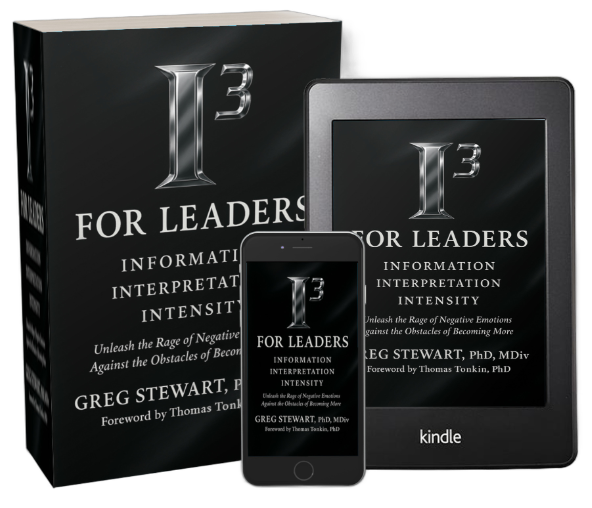
Interested in more insights? Explore our Leadership Blog or listen to Dr. Greg’s latest episodes on our Podcasts page.
The Human Edge in an AI World: Mastering the I³ Framework for 2026 Leadership
![[HERO] The Human Edge in an AI World: Mastering the I³ Framework for 2026 Leadership](https://cdn.marblism.com/Vho9vbO9s2X.webp)
We are living in an era where the digital and the biological are blurring faster than we ever anticipated. As we navigate the landscape of 2026, the question for every C-Suite executive, HR director, and frontline manager isn’t just "How do I use AI?" but rather "How do I lead the humans who are using it?"
At Becoming More Counseling, Coaching, & Consulting, we’ve seen the shift firsthand. The "Strategy-AI Paradox" is in full swing. While AI handles the heavy lifting of data synthesis and predictive modeling, the true competitive advantage has shifted back to the one thing a machine cannot replicate: the human edge.
We are thrilled to invite you to an exclusive event that dives deep into this evolution. On March 26th, from 12:00-1:00 PM CT, we are hosting a free webinar: The Human Edge in an AI World. This isn't just another theory-heavy lecture; it’s a technical plan for transformation. Plus, one lucky attendee will win a $1,000 coaching package to jumpstart their personal leadership journey.
The 2026 Leadership Shift: From Control to Stewardship
Recent reports from Forbes and Harvard Business Review have highlighted a massive shift in organizational dynamics. The old model of "command and control" is officially dead. In its place, we find the "Stewardship Model."
In 2026, leadership is no longer about having all the answers: AI usually has those. It’s about being a steward of the culture, the vision, and the emotional health of the team. As I often say in my book, I³ for Leaders, "Leadership is defined not by the best of times, but the worst of times." When the algorithms fail or the market shifts unexpectedly, your team won't look to a screen for hope; they will look to you.
The challenge is that many leaders are still stuck in a "Dopamine Loop": chasing quick wins and technological silver bullets. At Becoming More, we teach the principle of "Duty and Discipline before Dopamine." True leadership influence is built on the iron-clad core of your character, not the latest software update.
The Technical Plan for Transformation: The I³ Framework
So, how do you actually master this "Human Edge"? We use a specific methodology called the I³ Framework: Information, Interpretation, and Intensity.
1. Information
In the AI world, we are drowning in information. But as a leader, you need to distinguish between data and Information. Information, in the I³ sense, includes the internal signals your body and mind are sending you. Are you feeling burnout? Is there a subtle tension in the boardroom? AI can’t feel the room; you can.
2. Interpretation
This is where Chapters 4 and 5 of my book, I³ for Leaders, become your secret weapon. Interpretation is about how you process the Information you receive. This is heavily influenced by your personality strengths and your emotional intelligence (EI).
Most leaders think EI is just about being "nice." It’s actually the opposite. It’s the ability to perceive underlying emotions and respond with clarity and calm. It’s about knowing your personality's "default settings" and having the discipline to override them when the situation calls for stewardship over reaction.
3. Intensity
Intensity is the emotional fuel behind your actions. We often view negative emotions like anger or fear as things to be suppressed. But in the I³ Framework, we lean in. I tell my clients constantly: "Unleash the rage of your negative emotions against the obstacle of becoming more."
Don't let frustration paralyze you; use it as the energy to pivot. This is the "Iron Man Core" of spiritual and professional development: turning the heat of the moment into the strength of the movement.
Real-World Impact: The DFW Executive Perspective
Take, for example, a tech executive I recently coached in the Dallas-Fort Worth "Telecom Corridor" in Richardson. He was overseeing a massive integration of generative AI into their logistics platform. On paper, the efficiency was through the roof. On the floor, morale was at an all-time low. The managers felt redundant, and the "Great Flattening" of the middle management layer had everyone looking for the exit.
By applying the I³ Framework, he stopped focusing on the software's output and started focusing on his Interpretation of the team's fear. He realized that his "Information" (the data) was saying "success," but his "Intensity" (his gut feeling) was screaming "crisis."
He moved from a control mindset to a stewardship mindset. He utilized his personality strengths: specifically his ability to communicate complex visions: to reposition his managers as "Human-AI Orators." He didn't just give them a new job description; he gave them a new sense of purpose. He understood that "Everyone becomes what they want to, only some people think about becoming more."
Master Emotional Intelligence and Personality Strengths
In our upcoming webinar on March 26th, we are going to dive deep into how you can master emotional intelligence and use your personality strengths to increase your leadership influence.
We will explore:
- How to identify your "Internal Obstacles" before they become "External Failures."
- Techniques to manage the "Intensity" of 2026 market pressures without losing your cool.
- The shift from being a manager of tasks to a steward of human potential.
If you’ve felt like you’re losing your executive presence in the sea of automation, this session is designed specifically for you.
Why You Can’t Afford to Wait
The pace of change in 2026 is exponential. The leaders who are thriving are those who have invested in their own internal transformation. They understand that internal change must always precede external change. Whether you are in a Fort Worth logistics hub or a Dallas financial firm, the requirement is the same: you must become more than the systems you manage.
We see so many leaders making the same 7 mistakes with leadership development coaching right now: mostly by trying to outsource their growth to an app or a generic seminar. This webinar is the antidote to that. It is a live, dynamic session focused on the I³ Framework.
Join Us on March 26th
We are ready to help you unlock the "Human Edge." Whether you are a seasoned C-Suite veteran or a rising manager, this framework will change the way you see your role.
Webinar Details:
- Topic: The Human Edge in an AI World: Mastering the I³ Framework for 2026 Leadership
- Date: Thursday, March 26th, 2026
- Time: 12:00 PM – 1:00 PM CT
- Bonus: One attendee will win a $1,000 Coaching Package from Becoming More Counseling, Coaching, & Consulting.
Register by going to www.drgregstewart.com
Don't let 2026 leave you behind. Stop managing machines and start leading humans. It’s time to move beyond the dopamine of the "next big thing" and settle into the discipline of becoming more.
If you’re ready to take the next step in your leadership journey right now, don't wait for the webinar. Call 469-485-0387 to speak with our team about executive coaching or to learn more about how Dr. Greg Stewart can help your organization thrive.
See you on the 26th!
Want to learn more about the philosophy behind the I³ Framework? Check out our Leadership Blog or explore our Podcasts for more insights on high-performance leadership in the modern world.
Master Emotional Intelligence: Use Your Personality Strengths to Increase Your Leadership Influence!
Free Webinar! March 26th, 12:00-1:00 CT with a chance to win a $1,000 coaching package!
![[HERO] Master Emotional Intelligence: Use Your Personality Strengths to Increase Your Leadership Influence!](https://cdn.marblism.com/AMyRn_JsRmc.webp)
We are thrilled to announce a dynamic digital event that is designed to strengthen how you lead, relate, & influence with emotional intelligence. On Thursday, March 26th, 12:00-1:00 CT, Dr. Greg Stewart is hosting a free webinar for high-achievers, executives, & leaders across the country who want to understand their emotional patterns, leverage their personality strengths, & show up with steadier executive presence.
The stakes for this event are high: not just for your leadership growth, but for your wallet too. We are officially launching a giveaway during the webinar where one attendee will walk away with a $1,000 executive coaching package. This isn't just about "becoming more"; it’s about having the tools & the expert guidance to make it happen.
If you’ve ever felt like your emotions were driving the car while your logic was stuck in the backseat, this session is for you. We’ll be pulling core material from Chapters 4 & 5 of Dr. Greg’s book, I³ For Leaders, to help you strengthen your internal processor (Information, Interpretation, Intensity) so your emotional intelligence becomes a leadership advantage, not a liability. As Dr. Greg writes, "Everyone becomes what they want to, only some people think about becoming more."
Why Emotional Intelligence Breaks Down Under Pressure
Most leaders operate on autopilot. To become more, you have to look at what's happening under the hood, especially when your default personality strengths become overused under stress. As Dr. Greg points out in I³ For Leaders, "Everyone becomes what they want to, only some people think about becoming more."
Your "Internal Processor" is the mechanism that takes in Information, applies an Interpretation, & generates an Intensity. This is the I³ framework in action. Most of the time, this process happens in what psychologists call "System 1" thinking.
System 1 is fast, instinctive, & emotional. It’s your "lizard brain" reacting to a missed deadline or a difficult conversation with a board member. When you stay in System 1, you aren't leading; you’re reacting. You’re seeking the quick hit of dopamine that comes from being "right" or "winning" an argument, rather than focusing on the long-term health of your organization.
Emotional Intelligence + Personality Strengths: The Purposeful Leader
The goal of our Thursday, March 26th, 12:00-1:00 CT webinar is to teach you how to shift your processing into "System 2" so you can use emotional intelligence with intention, not impulse. This is the realm of purposeful, disciplined, & logical thinking. It is where true executive coaching begins.
In Chapter 4 of I³ For Leaders, Dr. Greg explores how the Information we receive is often neutral. It’s our Interpretation that gives it teeth. This is where your personality strengths show up. Your drive, precision, empathy, or decisiveness can become an asset or a liability depending on the story you attach to the moment. If a team member misses a goal, System 1 interprets that as disrespect, incompetence, or a threat to your standards. System 2 interprets it as a data point requiring investigation, coaching, & clarity.
By mastering your internal processor, you learn to put Duty & Discipline before Dopamine. You stop chasing the quick emotional payoff of being right, shutting down, or pushing harder, & start building the "Iron Man Core" necessary for spiritual & professional development.
The Power of Interpretation: Lessons from Chapter 5
Chapter 5 of the book focuses on the specific micro-choices we make every day, especially the ones that shape emotional intelligence in real time. We often think that leadership is defined by the big, sweeping decisions: mergers, layoffs, or pivots. But the reality is that "Leadership is defined not by the best of times, but the worst of times."
The "worst of times" usually consist of a thousand tiny moments where your interpretation went sideways. When you interpret a challenge as an insurmountable obstacle, your Intensity (the third 'I' in the framework) becomes negative, leading to burnout or anger.
However, when you learn to "Unleash the rage of your negative emotions against the obstacle of becoming more," you flip the script. You use the fuel of your frustration to power your discipline. This is the secret to leading through EI without losing your people.
Micro Choices Lead to Macro Outcomes
During the webinar, we will break down exactly how micro choices in your thinking lead to macro outcomes in your career. If you can change the way you interpret a single email (Information), you change the emotional response (Intensity) you bring to your next meeting.
Think about the "Great Flattening" occurring in many industries right now. Many managers are losing their teams or seeing their roles shift. The difference between the leader who thrives & the one who fails is their internal processor.

What You Will Learn in the Webinar
This isn't a passive lecture. This is a dynamic training session designed to give you immediate ROI. We’ll be covering:
- The I³ Framework Audit: How to identify what Information you’re taking in, how you’re Interpreting it, & what Intensity you’re bringing into the room.
- System 1 vs. System 2 Drills: Practical ways to slow down in high-pressure situations so your emotional intelligence stays online.
- Personality Strengths Under Stress: How your natural strengths can turn into blind spots, & how to redirect them into leadership influence.
- The Interpretation Shift: How to reframe negative information to fuel your "Iron Man Core."
We want to help you avoid common C-suite mistakes with change management. By fixing the internal processor first, the external strategy becomes much clearer.
The $1,000 Giveaway: Investing in Your Growth
We are serious about your success. That’s why we are giving away a $1,000 coaching package to one lucky attendee. This package includes deep-dive sessions with Dr. Greg Stewart, utilizing the principles of I³ For Leaders to tackle your specific organizational or personal hurdles.
Whether you are looking for executive presence coaching or need to navigate a difficult season in your personal life, this package provides the dedicated support needed to reach the next level.
To be eligible for the giveaway, you must:
- Register for the webinar via the link below.
- Attend the live session on Thursday, March 26th, 12:00-1:00 CT.
- Be ready to engage & apply the I³ principles.
Join the Movement of "Becoming More"
At Becoming More Counseling, Coaching, & Consulting, we believe that internal change must precede external change. Leaders who succeed are those who overcome the internal obstacles that others simply ignore. As Dr. Greg says, "Leadership is defined not by the best of times, but the worst of times."
The current business climate requires a new kind of intensity: one that is disciplined, purposeful, & rooted in emotional intelligence. Don't let your "Internal Processor" remain on the factory settings of System 1 thinking. It’s time to upgrade.

How to Register
Spaces for this free webinar are limited to ensure we can have a high-quality, interactive session.
Step 1: Visit https://www.drgregstewart.com to secure your spot.
Step 2: Mark your calendar for Thursday, March 26th, 12:00-1:00 CT.
Step 3: Show up ready to learn & win the $1,000 coaching package.
If you have questions about our coaching services or want to get started before the webinar, don't wait. Call 469-485-0387 today to speak with our team. Whether you need counseling to clear emotional blocks or executive coaching to sharpen your edge, we are here to help you become more.
We are looking forward to seeing you there & witnessing the transformation that happens when a leader finally takes control of their internal processor. See you on Thursday, March 26th, 12:00-1:00 CT.
7 Mistakes You’re Making with Leadership Development Coaching in 2026 (and How to Fix Them)
![[HERO] 7 Mistakes You’re Making with Leadership Development Coaching in 2026 (and How to Fix Them)](https://cdn.marblism.com/nChC4lgJAM1.webp)
We are absolutely thrilled to be navigating the complex, high-stakes world of 2026 leadership with you. At Becoming More Counseling, Coaching, & Consulting, we’ve watched the DFW business landscape shift rapidly over the last few years. Whether you’re running a tech giant in downtown Dallas or looking for leadership coaching for managers in Rockwall, one thing remains constant: the old ways of "checking the box" on professional development are dead.
In 2026, leadership development coaching isn't just about learning how to run a better meeting. It’s about the "Iron Man Core", the spiritual and psychological fortitude required to lead when the world feels like it’s spinning off its axis. As Dr. Greg Stewart often says, "Leadership is defined not by the best of times, but the worst of times."
If your current executive leadership coaching feels like a series of empty dopamine hits rather than a transformative journey, you’re likely falling into one of these seven common traps. Let’s break them down using the I³ framework: Information, Interpretation, & Intensity.
1. Prioritizing Information Over Interpretation
In our hyper-connected 2026 environment, we are drowning in data. Most C-suite coaching in DFW fails because it focuses solely on the first "I", Information. You read the books, you attend the seminars, and you look at the KPIs. But information without interpretation is just noise.
The Fix: You need to interpret how that information applies to your specific temperament and your team's unique dynamic. In I³ for Leaders, Dr. Greg emphasizes that "If a leader lacks a personal mission, they are simply machines managing other machines." True coaching helps you interpret the why behind the what.
2. Avoiding the "Intensity" of Negative Emotions
Most leadership development coaching programs try to "fix" or "silence" negative emotions. They want you to stay "positive" at all costs. But at Becoming More, we believe that anger is just fear in a suit. If you ignore the intensity of your frustration or your team’s anxiety, you’re ignoring the very fuel needed for change.
The Fix: You must learn to "unleash the rage of your negative emotions against the obstacle of becoming more." Don’t suppress the intensity; pivot it. When you feel that surge of frustration, interpret it as a signal that a boundary has been crossed or a goal is being blocked, then use that energy to dismantle the obstacle.
3. Chasing the Dopamine Hit of "Newness"
We see this constantly in the DFW corporate world: the "Flavor of the Month" leadership style. It feels good to start a new program. It gives you a quick hit of dopamine to announce a new initiative. But when the excitement wears off and the "Duty and Discipline" phase begins, many leaders check out.
The Fix: Adopt the Iron Man Core philosophy. Shift your focus from "Dopamine" (the high of the new) to "Duty and Discipline" (the grind of the growth). Real leadership coaching for managers in Rockwall isn't always fun; it’s a commitment to the process even when the results aren't immediately visible.
4. Neglecting the "Internal Before External" Rule
Many C-Suite leaders look for executive coaching to "fix their team" or "streamline the organization." They want external change. However, the foundational truth of Becoming More is that internal change must precede external change. You cannot lead others further than you have traveled yourself.
The Fix: Focus your coaching sessions on your own internal obstacles. What are the internal "glitches" in your personality or temperament that are manifesting as organizational friction? As Dr. Greg notes, "Everyone becomes what they want to, only some people think about becoming more." Becoming more starts with looking in the mirror.

5. Underestimating the Difficulty of Behavioral Change
In 2026, we’ve seen a rise in "micro-coaching", short, sporadic sessions that promise quick fixes. But human behavior is stubborn. Behavioral change requires extended practice and, quite frankly, a significant amount of discomfort.
The Fix: Commit to a long-form coaching journey. Whether it's executive leadership coaching or specialized c-suite coaching in DFW, you need a partner who will stay in the trenches with you for months, not just minutes. It takes time to rewire the neural pathways of a veteran leader.
6. Lacking Radical Transparency in the Feedback Loop
If your coach is just a "yes man," you’re wasting your money. Many leaders in the DFW area are surrounded by people who are afraid to tell them the truth. If your coaching doesn't involve some level of friction, you aren't growing.
The Fix: Lean into the I³ framework for feedback.
- Information: What are the hard facts about your performance?
- Interpretation: What does your team actually think of your leadership style?
- Intensity: How do you react when you hear something you don't like?
Use these sessions to build a culture of radical transparency that starts with you.
7. Leading Only for the "Best of Times"
It’s easy to be a great leader when the stock is up and the team is happy. But 2026 has brought its share of volatility. Many leaders fail because their coaching hasn't prepared them for the "worst of times." They have the tools for success, but not the armor for a crisis.
The Fix: Your coaching should include "stress testing" your leadership. How do you maintain your executive presence when a project fails? How do you manage your intensity when a key team member leaves? Authentic leadership is forged in the fire of adversity.
The Path Forward: Information, Interpretation, & Intensity
We are thrilled to see leaders in our community taking the leap to become more than they were yesterday. But remember, the path to greatness isn't found in a shortcut. It’s found in the I³ framework and the relentless pursuit of self-mastery.
If you’re ready to stop making these mistakes and start leading with a true Iron Man Core, we’re here to help. Whether you’re looking for executive coaching that challenges your status quo or leadership coaching for managers in Rockwall, the time to act is now.
Join Us for a Free Lunch and Learn
We are officially launching a special Free Lunch and Learn Webinar in mid-March! We’ll be diving deeper into the I³ framework and how to apply these principles to your specific organizational challenges in the Dallas–Fort Worth area. This is a great opportunity to get a taste of the "Becoming More" philosophy and see how it can transform your C-Suite.
Keep an eye on our leadership blog for the registration link coming soon!
Ready to Become More?
Don’t wait for the next crisis to realize your leadership development needs a reboot. Let’s build your Iron Man Core together.
Call 469-485-0387 to schedule your initial consultation with Dr. Greg Stewart and the team at Becoming More Counseling, Coaching, & Consulting.
Quick Links:
- Learn more about Dr. Greg Stewart
- Explore our Executive Coaching Services
- Check out our Podcasts for more insights on the I³ framework.
“Unleash the rage of your negative emotions against the obstacle of becoming more.” – Dr. Greg Stewart
Anger is Just Fear in a Suit
![[HERO] Anger is Just Fear in a Suit: Leading with Emotional Intelligence](https://cdn.marblism.com/R9WjckLVh3Q.webp)
The boardroom went silent. The VP of Operations had just torn into his team over missed Q1 projections. Everyone felt it—that electric charge of anger filling the room. But here's what nobody said out loud: he wasn't angry. He was terrified.
Terrified of losing credibility. Terrified of the CEO's scrutiny. Terrified of being exposed as the leader who couldn't deliver.
Anger is just fear in a suit.
As a leader, you've probably worn that suit yourself. We all have. The question isn't whether you experience anger or fear; it's whether you're going to let those emotions run your leadership or whether you're going to weaponize them against the real obstacles standing between you and becoming more.
The Hidden Architecture of Leadership Emotions
Here's what two decades of executive leadership coaching in the DFW area has taught me: the best leaders don't eliminate negative emotions. They decode them.
Research confirms what you've probably experienced firsthand: anger frequently functions as a protective response to more vulnerable feelings like fear (Lench et al., 2018). When fear goes unacknowledged—fear of failure, inadequacy, or loss of control—anger becomes the armor we wear instead of admitting vulnerability. This dynamic happens in seconds: fear triggers shame about feeling afraid, which then fuels anger, creating a reactive cycle before you even realize what's happening.
But emotional intelligence provides the circuit breaker. It's the difference between being hijacked by your emotions and harnessing them as strategic intelligence.
The I³ Framework: From Emotional Reaction to Strategic Response
In my book I³ for Leaders, I break down a framework that transforms how high-performers process negative emotions. The three components—Information, Interpretation, and Intensity—give you a systematic approach to leadership development coaching that goes beyond surface-level anger management.
Information: What Is Your Anger Actually Telling You?
Anger is a messenger, not an enemy. When that flash of rage hits during a budget meeting or a difficult personnel decision, your first move isn't to suppress it or express it; it's to interrogate it.
Information asks: What triggered this emotional response?
Was it the number on the spreadsheet? The tone someone used? The memory of a previous failure? Your anger carries data about what you value, what you fear, and where your boundaries have been crossed. Leaders who skip this step end up reacting to symptoms instead of addressing root causes.
A senior leader I worked with in Rockwall discovered her explosive responses during strategy sessions weren't about her team's performance—they were about her fear of becoming irrelevant as the organization scaled. That's Information. That's gold.
Interpretation: The Story You're Telling Yourself
Here's where most executive coaching Dallas professionals see leaders get stuck. You've identified the trigger, but now you're building a narrative around it. And that narrative? It's probably catastrophizing.
Interpretation asks: What meaning am I assigning to this situation?
Your brain is wired for survival, not accuracy. When fear activates, your interpretation defaults to worst-case scenarios. "They questioned my decision" becomes "They don't respect me." "We missed targets" becomes "I'm not cut out for this role."

According to Harvard Business Review research, emotionally intelligent leaders create space between stimulus and response—what Goleman (1998) identified as the hallmark of self-regulation. This pause allows you to challenge your initial interpretation. Is it accurate? Is it helpful? Is it moving you toward your mission or away from it?
One of the core principles in I³ for Leaders is this: "Everyone becomes what they want to, only some people think about becoming more." Your interpretation either locks you into reactive patterns or liberates you to become more than your fear suggests.
Intensity: Calibrating Your Response
The final component is Intensity—matching your emotional output to the actual threat level. Most leadership anger is radically out of proportion to the triggering event. A missed email generates the same physiological response as a genuine crisis.
Intensity asks: What level of response does this situation actually warrant?
Research on emotional intelligence and coping strategies shows that higher emotional intelligence correlates strongly with active, problem-focused coping rather than passive avoidance or disproportionate reactivity (Saklofske et al., 2012). Leaders with high emotional intelligence don't just feel less; they feel more accurately.
This is where executive presence coaching becomes critical. Your team is watching. They're calibrating their own anxiety levels based on yours. When you respond to a setback with appropriate intensity—concerned but not panicked, direct but not destructive—you model the emotional regulation your entire organization needs.
Weaponizing Negative Emotions Against Internal Obstacles
Let's be clear: the goal isn't to become an emotionless robot. The goal is to take the raw energy of negative emotions—anger, fear, frustration—and redirect it toward the obstacles that actually matter.
As I write in I³ for Leaders: "Unleash the rage of your negative emotions against the obstacle of becoming more."
Your anger at market conditions? Worthless. Your anger at your own complacency? That's fuel.
Your fear of what your board thinks? Paralyzing. Your fear of becoming the leader who played it safe when boldness was required? That's transformative.
The leaders we work with at Becoming More Counseling, Coaching, & Consulting aren't trying to eliminate negative emotions. They're learning to weaponize them against internal obstacles—the limiting beliefs, the comfort zones, the settled-for versions of leadership that keep them from becoming more.
This is what separates competent managers from transformational leaders. "Leadership is defined not by the best of times, but the worst of times." And the worst times reveal whether you're going to be controlled by your anger and fear or whether you're going to control them.
The Iron Man Core: Spiritual Strength in Leadership
There's a spiritual dimension to this work that gets overlooked in traditional leadership development coaching. I call it the Iron Man Core—the internal fortitude that comes from aligning your leadership with something bigger than quarterly results.
When you lead from mission instead of fear, the entire I³ framework shifts. Information becomes clearer because you're not defending ego. Interpretation becomes more accurate because you're anchored in purpose. Intensity becomes appropriate because you're focused on the long game, not immediate validation.

This is why so many C-suite leaders in the Greater Dallas–Fort Worth area are investing in this kind of deeper work. They're recognizing that external change—in their teams, their organizations, their markets—can only follow internal change. You can't lead others through transformation you haven't experienced yourself.
Practical Application: The Next Time Anger Shows Up
Here's your action plan for the next time that anger-fear cocktail hits:
- Pause. Physically step back. Take three deep breaths. Create space between stimulus and response.
- Information. Ask: "What exactly triggered this? What am I actually responding to?"
- Interpretation. Ask: "What story am I telling myself about this situation? Is it accurate?"
- Intensity. Ask: "Does my response match the actual threat level? What does appropriate leadership look like right now?"
- Redirect. Channel the energy toward the real obstacle—not the person, the circumstance, or the surface-level problem, but the internal barrier keeping you from leading with clarity and courage.
This isn't soft skills. This is survival skills for leaders navigating complexity, uncertainty, and high stakes.
Your Next Step
If you're a senior leader in the DFW area who's tired of being hijacked by emotions you can't name and reactions you can't control, it's time for a different approach. Executive leadership coaching isn't about becoming less human; it's about becoming more intentional with your humanity.
The leaders who master the I³ framework don't just manage their anger better. They transform their entire leadership presence. They make better decisions under pressure. They build stronger teams. They create cultures where emotional intelligence isn't a buzzword; it's a competitive advantage.
Ready to stop letting anger wear the suit and start leading with the emotional intelligence your role demands?
Call 469-485-0387 and let's talk about what executive coaching could look like for you. Or explore more leadership insights at our leadership blog.
Because at the end of the day, your anger isn't the problem. It's the unexamined fear underneath it. And the obstacle isn't out there in your organization. It's in here, in the gap between who you are as a leader and who you're capable of becoming.
References:
Goleman, D. (1998). Working with emotional intelligence. Bantam Books.
Lench, H. C., Tibbett, T. P., & Bench, S. W. (2018). Exploring the toolkit of emotion: What do fear and anger do for us? Social and Personality Psychology Compass, 12(11), e12419.
Saklofske, D. H., Austin, E. J., Mastoras, S. M., Beaton, L., & Osborne, S. E. (2012). Relationships of personality, affect, emotional intelligence and coping with student stress and academic success: Different patterns of association for stress and success. Learning and Individual Differences, 22(2), 251-257.